You Can Be Kind to Everyone Except Yourself
You probably would not talk to a friend the way you sometimes talk to yourself. If someone you care about made a mistake, you would probably remind them that one bad decision does not define them. Yet when the same thing happens to you, it can quickly become “I should have known better,” “I always mess things up,” or “Why can’t I get this right?”
That difference can be easy to miss because harsh self-judgment often feels like motivation. You tell yourself that being harder on yourself will keep you from making another mistake, disappointing someone, or falling behind. Instead, it can leave you constantly evaluating yourself and rarely feeling that you have done enough.

This is where books about self love can be genuinely useful. The goal is not to become self-absorbed or ignore your flaws. It is to build a way of treating yourself that allows growth without turning every mistake into evidence that something is wrong with you.
Self Love Is Not About Feeling Great All the Time
A lot of people have an idealized image of self love. It can sound like confidence, positive affirmations, or simply deciding to love everything about yourself.
Real life is usually much less polished.
Sometimes self love looks like admitting that you are tired instead of forcing yourself to keep going. Sometimes it means accepting that another person’s disappointment does not automatically make your decision wrong. It can also mean recognizing that you can regret something you did without spending the next six months punishing yourself for it.
That more practical view is much easier to carry into everyday life.
Break the Anxiety Circle Looks at What Happens Underneath Self-Doubt
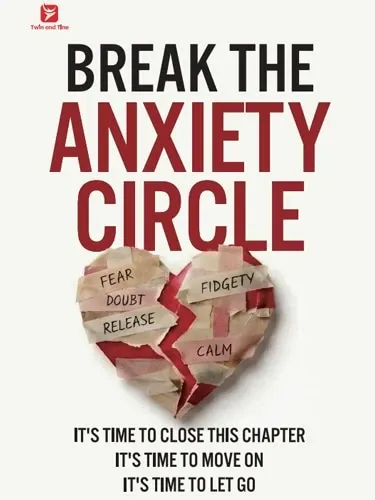
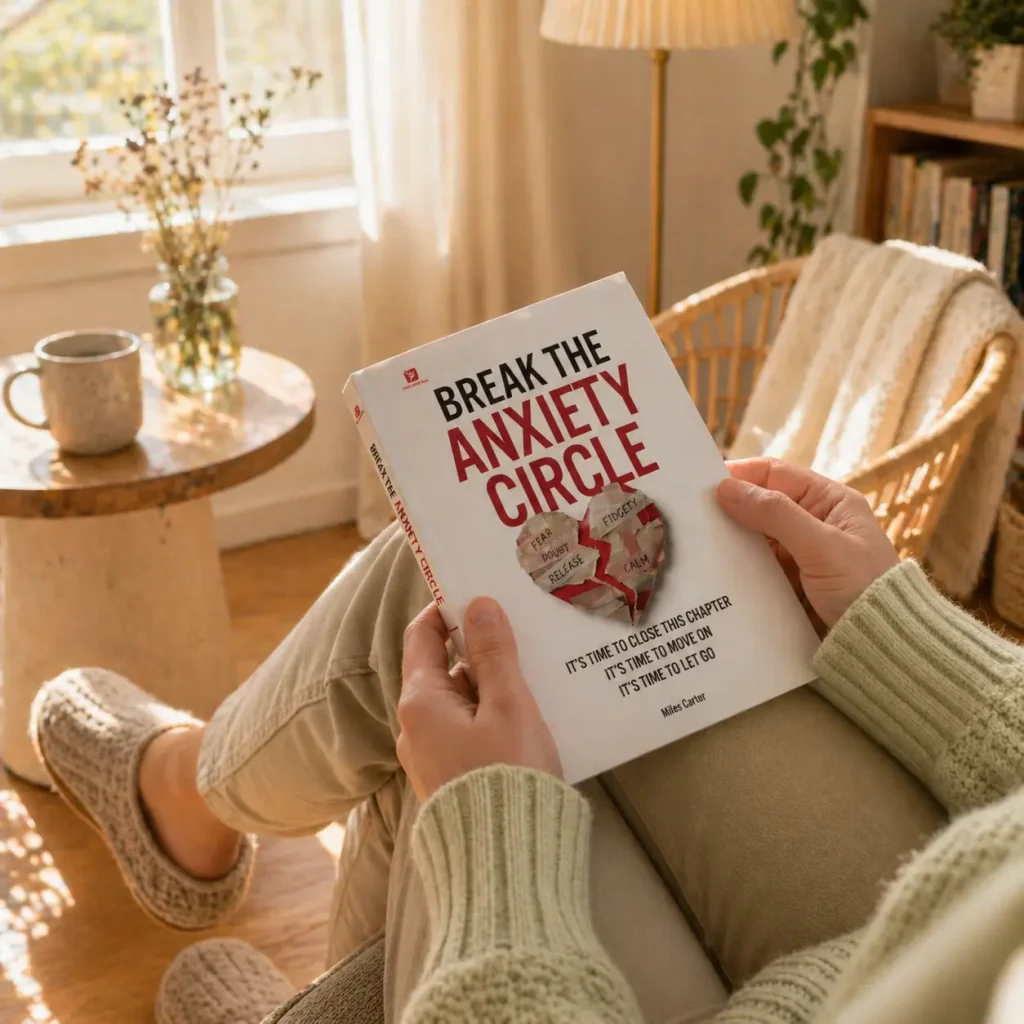
Break the Anxiety Circle by Miles Carter is especially relevant for readers whose difficulty with self love is tied to self-doubt, overthinking, people pleasing, perfectionism, and the need for reassurance.
The book explores how these patterns can reinforce one another. You doubt yourself, look for reassurance from other people, feel temporarily better, then question yourself again when something changes. Or you make one mistake, replay it repeatedly, and start treating that mistake as proof that you are not capable enough.
The problem is not simply that you need to think more positively. You need to understand the cycle that keeps making you question yourself in the first place.
That is one of the stronger aspects of Break the Anxiety Circle. It connects self-worth with the thought patterns and emotional habits that can quietly undermine it.
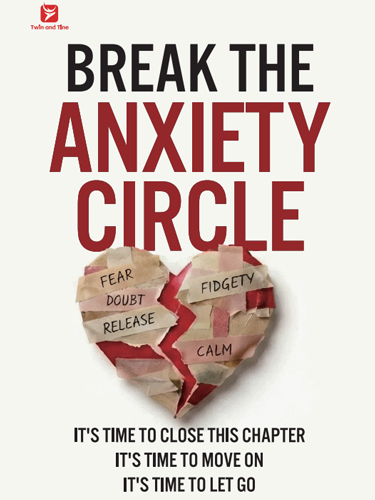
Break the Anxiety Circle
Miles CarterA mental reset for people trapped in the overthinking loop. Understand why your mind won’t stop racing — and how to break free from anxiety, people-pleasing, and emotional exhaustion.
Stop Measuring Yourself Through Other People’s Reactions
One of the clearest signs that self-worth needs attention is when other people’s reactions control your sense of security.
Someone is disappointed, and you immediately assume you did something wrong. Someone disagrees with you, and you start questioning your judgment. Someone does not respond warmly, and you spend the rest of the day wondering whether you said something inappropriate.

It is natural to care about how people respond to us. The problem begins when their reactions become the main evidence you use to decide whether you are doing okay.
Self love becomes much more stable when approval is allowed to be important without becoming the foundation of your self-image.
The Gifts of Imperfection
The Gifts of Imperfection by Brené Brown approaches this subject through self-acceptance, vulnerability, and letting go of the pressure to appear perfect.
It can be especially meaningful for readers who have learned to connect being worthy with being successful, useful, attractive, productive, or universally liked. The book offers a different perspective on what it means to live without constantly performing for approval.
That makes it a natural companion to Break the Anxiety Circle. One helps readers understand the anxious and self-critical loops that can undermine how they see themselves, while the other places more emphasis on accepting imperfection as part of being human.
Self-Compassion
Self-Compassion by Kristin Neff goes even more directly into the way people treat themselves when they fail or struggle.
Instead of asking you to convince yourself that everything is wonderful, the book encourages a more balanced response to difficulty. You can acknowledge that something went wrong while refusing to turn the mistake into an attack on your own character.
That distinction matters because self-criticism and self-improvement are not the same thing. One helps you learn from an experience. The other keeps you stuck inside it.
A Better Relationship With Yourself Changes Small Things First
You may notice that you stop apologizing for ordinary needs. You may recover more quickly from an awkward conversation instead of replaying it for hours. You may become more willing to make a decision without checking whether everyone around you approves.
Those changes are often more meaningful than suddenly feeling confident every day.
For readers using books about self love as a way to work on deeper self-doubt, Break the Anxiety Circle offers a particularly useful perspective because it does not separate self-worth from the thought patterns surrounding it. That makes the book relevant for people who understand intellectually that they should be kinder to themselves but still cannot seem to stop the mental habits that tell them they are falling short.

You Do Not Have to Earn the Right to Like Yourself
It is easy to postpone self-acceptance until the next achievement, the next relationship, or the next version of yourself.
Once you finish the project, lose the weight, become more confident, stop making mistakes, or finally get your life together, then you will feel good about yourself.
That finish line keeps moving.
Self love becomes more useful when it is not treated as a reward for becoming perfect. Break the Anxiety Circle gives readers a practical way to examine the anxiety, people pleasing, perfectionism, and self-doubt that can make that acceptance feel so difficult in the first place.