You have probably felt it before. Someone congratulates you on your success, but their smile does not quite reach their eyes. A friend asks about your new relationship, and the questions feel more like an interrogation. A colleague praises your work in a way that sounds like a backhanded compliment.
Jealousy does not always look like jealousy. It hides behind politeness, behind curiosity, behind jokes that sting just a little too much. It shows up in subtle signals—patterns of behavior that are easy to miss if you do not know what to look for.
These three books help you recognize the signs.
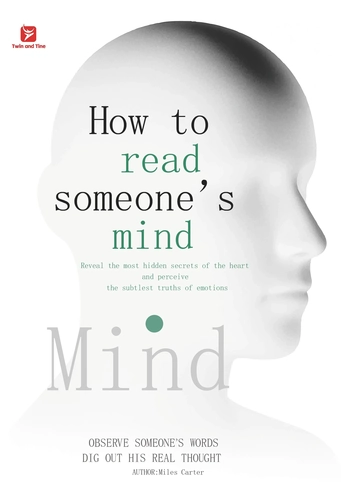
1. How to Read Someone’s Mind by Miles Carter
The book that teaches you to spot jealousy in real time.
Carter breaks reading people into four dimensions: the face, the body, the voice, and the context. You learn to notice the signals people send when they are jealous but not admitting it.
A tight smile that does not reach the eyes. A flicker of tension in the jaw when you share good news. A voice that goes flat when you mention an achievement. A shift in posture when someone else gets attention. These are not random. They are jealousy leaking out through the body.
The book also covers how jealousy shows up in context: how someone treats you differently after you succeed. How they minimize your wins or change the subject. How they compare themselves to you without being asked. How their compliments carry an edge.
Once you learn to see these signals, you stop being confused by behavior that feels off. You stop questioning yourself. You start recognizing jealousy for what it is—and you stop letting it affect you.
For anyone who has ever sensed envy but could not prove it.
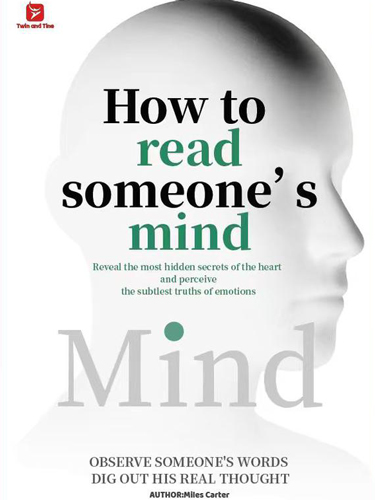
How to Read Someone’s Mind
Miles CarterPractical tools for reading body language, tone, and hidden intentions in real time. Spot what people aren’t saying — before you trust the wrong person.
2. Envy: A Theory of Social Behaviour by Helmut Schoeck
The classic study of how envy shapes society—and why it is so often hidden.
Schoeck was a German sociologist who argued that envy is one of the most powerful and least acknowledged forces in human society. His book is not a self-help guide. It is a broad examination of how envy operates across cultures, institutions, and everyday interactions.
He shows that envy is universal—but every society develops ways to suppress or disguise it. Religion calls it a sin. Morality calls it unfairness. Politics turns it into a demand for equality. In each case, the underlying emotion is the same: resentment at someone else’s advantage.
This matters for recognizing jealousy because it explains why it is so hard to spot. People rarely admit they are envious. They dress it up as concern, as justice, as constructive criticism. They form groups to bring down the person who stands out. They call it “leveling” or “fairness” when they are really trying to close the gap between themselves and someone who has more.
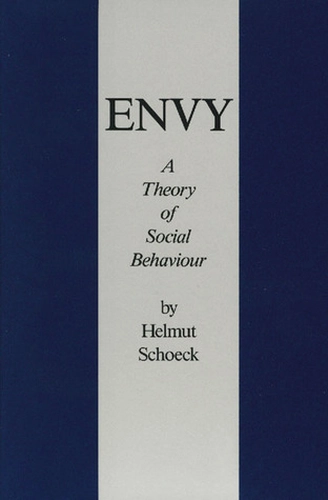
Schoeck’s book helps you see the patterns beneath the surface: the collective resentment that forms around successful people, the moral language used to justify envy, and the social mechanisms that keep people from rising too far above the group. Once you understand this, you stop being surprised when success attracts hostility—and you start recognizing envy even when it is wearing a respectable mask.
For anyone who wants to understand why envy is so common and so carefully hidden.
3. The Joy of Missing Out by Svend Brinkmann
How to stop comparing yourself to others—and why it matters.
Brinkmann argues that we live in a culture of comparison. Social media, advertising, and social pressure constantly push us to measure ourselves against everyone else. That comparison breeds envy—and envy breeds misery.
His book is not about suppressing envy. It is about understanding it as a symptom. When you feel envious, it is not a sign that something is wrong with you. It is a sign that you are caught in a comparison you did not choose. The more you can step out of that comparison, the less envy controls you.
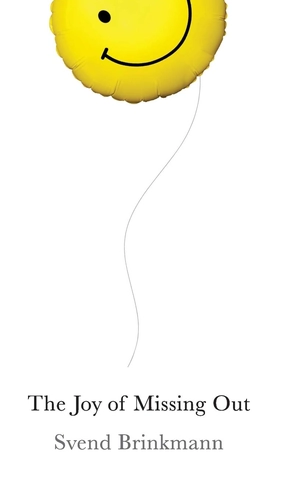
He covers how to recognize when you are comparing yourself to others, how to break the habit, and how to build a life that is defined by your own values—not someone else’s success. The same applies to recognizing envy in others: the people who are most envious are often the ones most trapped in comparison.
For anyone who wants to stop letting comparison and envy run their life.
| Best for | |
|---|---|
| How to Read Someone’s Mind | Spotting jealousy through signals in real time |
| Envy: A Theory of Social Behaviour | Understanding envy as a hidden social force |
| The Joy of Missing Out | Breaking the comparison habit that breeds envy |
These three books each help you see jealousy differently. Carter gives you the signals. Schoeck gives you the social and historical context. Brinkmann gives you the way out of the comparison trap.
If you are tired of being confused by behavior that feels off, start with the one that shows you what is actually happening beneath the surface.