You have seen it happen. Someone gets a title, a promotion, a platform. Suddenly people treat them differently. Doors open. Voices soften. Opinions carry more weight. The person themselves shifts too. And the people around them become drawn to them.
Why does power draw people in?
The answer is not as simple as “people want status.” Power touches something deeper. It signals security. It promises access. It offers protection. It creates a gravitational pull that even decent people can struggle to resist.
The three books below each address a different layer of this question. One explains the hidden motives beneath the pursuit of power. One reveals how power changes the people who have it. One exposes the subtle ways power operates in everyday relationships.
Awakening to Human Nature by Owen Pierce

Why do people pursue power in the first place?
The pursuit of power is rarely about power itself. It is usually about something underneath: the need for security, the fear of being insignificant, the desire to be recognized, or the terror of being controlled by others.
Pierce’s book strips away the polite illusions and exposes the real drivers of human behavior. Someone who constantly needs to be right may not be confident. They may be terrified of being seen as wrong. Someone who dominates conversations may not be arrogant. They may be desperate to be heard. Someone who hoards information may not be strategic. They may be afraid of becoming irrelevant.
The book explains why loyalty expires when needs change, why people reward flattery and punish honesty, and why smart people are often hated for telling the truth.
The pursuit of power is not about control. It is about safety. People chase power because they are afraid of being powerless.
Once you understand this, you stop reacting to power-seeking behavior and start seeing what is driving it.
For anyone who wants to understand why some people need power so badly.
The Power Paradox by Dacher Keltner
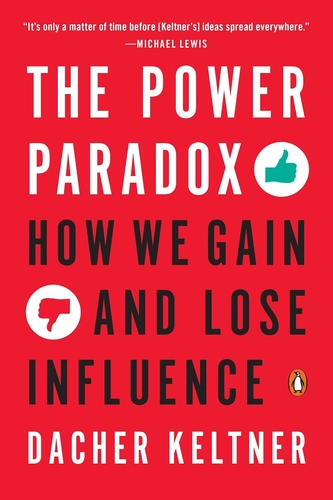
Why does power change the people who have it?
Here is something strange. The qualities that help people rise to power—empathy, generosity, social intelligence—are often the same qualities that power erodes once they have it.
Keltner, a Berkeley psychologist who spent two decades studying power, discovered this paradox. People who gain power tend to become more impulsive, less attentive to others, and more likely to see people as tools. They stop listening. They start interrupting. They assume their perspective is the only one that matters.
The skills that earn you power are not the skills that keep it. Power reveals who you really are.
What makes this book essential is the explanation of why people are drawn to powerful individuals. It is not just about status. It is about the signals power sends. Confidence. Decisiveness. The ability to protect and provide. These are deeply attractive qualities, even when the person wielding them is flawed.
The book also shows what prevents power from corrupting. Some people manage to hold onto their empathy and self-awareness. They are the ones who are trusted, respected, and ultimately more effective.
For anyone who has ever watched someone change after gaining power.
The 48 Laws of Power by Robert Greene
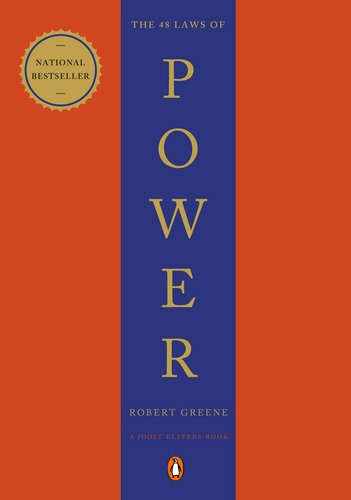
What hidden games do people play to gain and keep power?
Greene’s book is not a manual for manipulation. It is a study of how power actually operates beneath the surface of everyday life. It reveals the strategies people use to gain influence, protect their position, and outmaneuver others.
Some laws are subtle: never outshine the master. Others are blunt: crush your enemy totally. But all of them point to the same truth: people are constantly playing power games, whether they realize it or not.
What makes this book relevant here is the exposure. You learn to recognize the patterns of power-seeking behavior in others. The flattery that is really manipulation. The deference that is really strategy. The charm that is really calculation.
The people who are most attracted to power are often the least aware of why they want it. They just know they cannot live without it.
When you can see these patterns, you stop being naive about the people around you. You stop mistaking strategy for sincerity. You stop being surprised by power plays.
For anyone who wants to understand the hidden power dynamics in their relationships.
These three books each approach power from a different angle. Pierce explains why people seek it. Keltner explains how it changes them. Greene exposes how it operates in everyday life.
If you are tired of being confused by why people are drawn to power, start with the one that matches where you are stuck:
- Need to understand why people chase power? Start with Pierce.
- Need to understand why power changes people? Start with Keltner.
- Need to see how power operates around you? Start with Greene.
Power is not something that happens to you. It is something you can learn to see. And once you see it, you stop being run by it.
