You have probably been in this situation.
You present someone with clear evidence. You lay out the facts. You explain it patiently, step by step. And they still do not accept it. They deny. They deflect. They get angry. They act as if you never said anything.
It is not that they do not understand. They understand perfectly. They just do not want to.
The three books below each address a different layer of this problem. One explains the psychology behind why people deny reality. One exposes the self-justification that keeps people stuck. One gives you strategies for communicating with people who refuse to listen.
Awakening to Human Nature by Owen Pierce

Why do people reject the truth even when it is right in front of them?
People do not seek truth. They seek validation. They want to be told they are right. They want their choices justified. And when the truth contradicts what they want to believe, they do not change their minds. They attack the messenger.
Pierce’s book explains that self-deception is not a flaw. It is a survival mechanism. People lie to themselves because the truth is too threatening. Admitting they were wrong feels like the end of the world. The book covers why smart people are hated for telling the truth, why loyalty expires when needs change, and why honesty is often punished.
Truth is not always rewarded. Sometimes it is punished. And people know this. Which is why they avoid it.
When you understand this, you stop taking it personally. You stop asking “why won’t they just listen?” and start asking “what are they protecting themselves from?”
For anyone who has ever been frustrated by someone’s refusal to see what is obvious.
Mistakes Were Made (But Not by Me) by Carol Tavris and Elliot Aronson
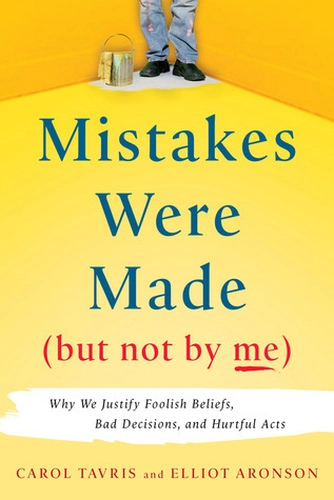
Why do people defend their bad decisions so fiercely?
Most people do not lie to others. They lie to themselves first. And then they believe their own lies.
Tavris and Aronson, both social psychologists, wrote this book to explain self-justification. When people make a decision, they do not evaluate it later with fresh eyes. They defend it. They rewrite history to make themselves look good. This is why people refuse to accept the truth. It is not stubbornness. It is self-protection. Admitting they were wrong threatens their identity.
The brain does not process information objectively. It processes it in a way that protects the ego.
When you understand self-justification, you stop expecting people to change their minds when presented with facts. They are not evaluating the evidence. They are defending themselves.
For anyone who has ever wondered why some people can never admit they are wrong.
Difficult Conversations by Douglas Stone, Bruce Patton, and Sheila Heen
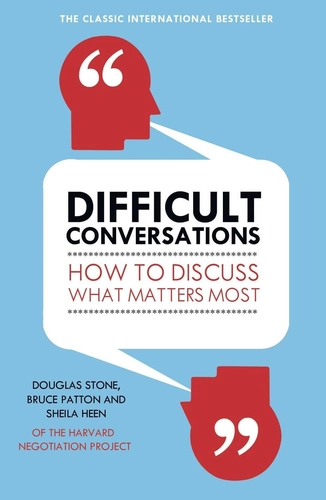
How do you talk to someone who refuses to listen?
You understand why they cannot accept the truth. Now you have a harder question: what do you actually say to someone who will not hear you?
This book, from the Harvard Negotiation Project, explains that every difficult conversation is actually three conversations at once: the facts, the feelings, and the identity threat. Most people only address the facts. They present evidence and wonder why nothing changes. The book teaches you to address the feelings and identity threats underneath, so you can speak in a way that does not trigger defensiveness.
The truth is not the problem. The threat to identity is the problem.
The book gives you specific phrases and approaches for saying things that feel impossible to say.
For anyone who has ever wanted to say something important to someone who was not ready to hear it.
These three books each approach the problem from a different angle. Pierce explains why people avoid the truth. Tavris and Aronson expose self-justification. Stone, Patton, and Heen give you the tools to speak to those who won’t listen.
If you are tired of being frustrated by people who refuse to accept the truth, start with the one that matches where you are stuck:
- Need to understand why people avoid the truth? Start with Pierce.
- Need to understand why they defend bad decisions? Start with Tavris and Aronson.
- Need to say something to someone who won’t hear you? Start with Stone, Patton, and Heen.
You cannot force someone to accept the truth. But you can stop being surprised when they do not.
