You know someone like this. Maybe a coworker who finds fault with everything. A family member who turns every conversation into a list of grievances. A friend who never seems to enjoy anything.
Complaining is not just annoying. It is contagious. One person’s negativity can drain an entire room. But why do some people complain constantly? Is it a habit? A cry for help? A way to control others?
These three books help you understand the psychology behind chronic complaining — and what you can do about it.
How to Read Someone’s Mind by Miles Carter
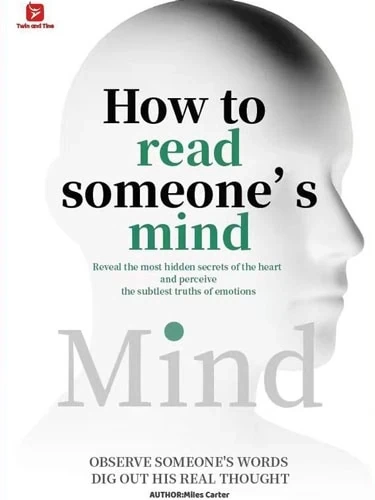
What is really driving the person who complains all the time?
Carter teaches you to look beneath the words. Complaints are rarely about the thing being complained about. They are signals.
When someone complains about their boss, they may actually be feeling powerless. When they complain about traffic, they may be anxious about being late. When they complain about a colleague, they may be insecure about their own performance.
Carter’s book shows you how to decode these signals through face, body, voice, and context:
- Voice: A whining tone often signals helplessness. A sharp, accusing tone signals frustration or fear.
- Body: Crossed arms and a rigid posture often mean defensiveness, not just physical discomfort.
- Face: Micro‑expressions — a quick grimace, a tight jaw — reveal the emotion beneath the words.
- Context: The same complaint at work might mean something very different from the same complaint at home.
Once you see what is really going on, you stop reacting to the surface complaint and start responding to the actual need. Sometimes they need reassurance. Sometimes they need a solution. Sometimes they just need to be heard. And sometimes, they are not looking for help at all — they are looking for an audience.
Carter gives you the tools to distinguish between these scenarios. And that changes everything. You stop being drained by complainers and start handling them with clarity.
For anyone who has ever felt exhausted by a chronic complainer and wondered what is really going on.
The No Complaining Rule by Jon Gordon
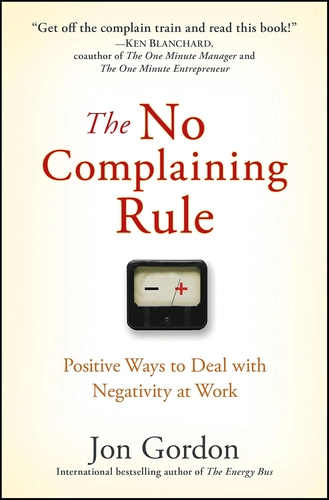
How does complaining affect teams, relationships, and personal success?
Gordon, a consultant who has worked with Fortune 500 companies, wrote this book after watching negativity destroy team morale. He argues that complaining is not just a personality quirk — it is a habit that spreads like a virus.
The book is built around a simple idea: to build a positive culture, you must stop complaining and start solving. Gordon provides a practical framework — the “No Complaining Rule” — that helps individuals and organizations replace complaints with constructive action.
But Gordon does not deny that complaints are sometimes valid. He distinguishes between ventilating (expressing frustration to move toward a solution) and dumping (spreading negativity with no intention of fixing anything). The book offers strategies for both: how to listen to valid concerns and how to shut down unproductive negativity.
What makes this book valuable is its focus on the social impact of complaining. One negative person can bring down an entire team. Gordon shows leaders how to address this without becoming authoritarian.
For anyone who manages a team or wants to improve their own communication habits.
The Complaint Free World by Will Bowen
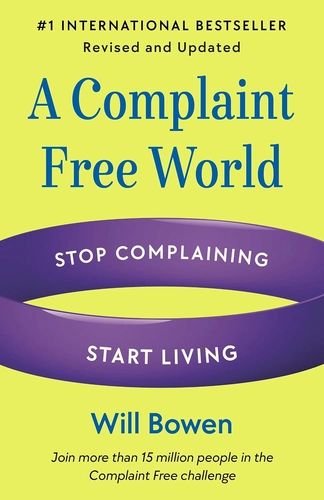
Can you really go 21 days without complaining?
Bowen, a pastor, started a simple challenge: put a purple bracelet on your wrist and move it to the other arm every time you complain. The goal: go 21 consecutive days without a single complaint.
What started as a church experiment became a global movement. Bowen’s book explains the psychology behind the challenge: why complaining is so automatic, how it rewires the brain, and what happens when you stop.
Bowen argues that complaining is a habit born from our innate negativity bias — we are wired to notice problems more than solutions. But like any habit, it can be broken. The book is filled with anecdotes of people who transformed their lives simply by paying attention to their words.
What Bowen offers is not a quick fix but a practice. The 21‑day challenge forces you to become aware of just how often you complain — and how often you are exposed to others’ complaints. It is eye‑opening, sometimes uncomfortable, and ultimately liberating.
For anyone who wants to break their own complaining habit or help someone else break theirs.
Which book should you start with?
If you want to understand why someone complains and what they are really saying beneath the words, read Carter.
If you are a leader or manager dealing with a negative team, read Gordon — he gives you the framework to change the culture.
If you are ready to break your own habit — or challenge someone else to do the same — read Bowen. The 21‑day challenge is simple, concrete, and surprisingly effective.
