You have met someone like this.
You sit down for coffee, and within ten minutes, you are talking like old friends. The conversation flows. There is no awkward pause, no effort to find the right words, no second-guessing. When you leave, you feel lighter. You think: I like that person.
Two days later, you meet someone else. On paper, they are equally interesting. Same background, same interests, same sense of humor. But something is off. You walk away feeling drained. You cannot explain why.
What is happening here?
The answer is not about personality compatibility or shared hobbies. It runs deeper. Something gets activated in your body when you are with certain people. You feel seen or invisible. Energized or depleted. Safe or unsettled. These reactions happen automatically, before your brain can interpret them.
The three books below each explain a different part of this puzzle. One teaches you to read the signals that tell you when someone is open to connecting. One explains the invisible dynamics that make some interactions feel effortless and others feel forced. One reveals the inner blocks that keep you from connecting even when the other person is trying.
How to Read Someone’s Mind by Miles Carter

Are you missing the signals that tell you whether someone is open to you?
Here is a scenario.
You are at a gathering. You approach someone. They smile. They say hello. The conversation starts. But something feels off. They are not asking questions. Their eyes drift to the side. Their feet point away from you. They reply, but the responses are short. You keep going, trying to find the right topic, and you end up walking away feeling like you did something wrong.
What if you did not have to do that?
Carter’s book teaches you to read the signals people reveal through their face, body, voice, and context. The smile that does not reach the eyes. The posture that closes off. The tone that stays flat no matter how enthusiastic you become. These are not random. They tell you how someone is really responding to you.
When you learn to read these signals, you stop pushing when you should stop. You stop staying when you should leave. And most importantly, you stop taking it personally.
The book also teaches you to recognize the opposite: the subtle signs that someone is open to you. The lean forward. The questions that follow your answers. The eyes that stay on you when others look away. These are the signals that tell you connection is possible.
When you can read both, you stop wasting time with people who are not open. And you stop missing opportunities with people who are.
For anyone who keeps walking away from interactions wondering what they did wrong.
The Art of Gathering by Priya Parker
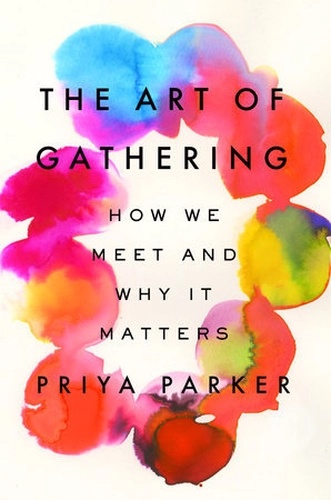
Why do some interactions feel effortless while others feel forced?
Here is something you might not have considered.
The problem is not you. It is not them. It is the container.
Parker is a facilitator who spent years studying how people connect in groups, from business meetings to weddings to dinner parties. Her central insight is that connection does not happen automatically. It requires conditions. And most of us create terrible conditions for connection without realizing it.
You invite people over, put on music, serve food, and hope conversation happens. Sometimes it does. Sometimes it does not. You assume that is just how it goes. But Parker argues that the difference between a flat interaction and a meaningful one often comes down to a single question:
Why are we here?
When you have clarity about why you are together, everything changes. The questions you ask. The way you listen. The energy you bring. This applies to one-on-one conversations, group settings, and even virtual gatherings. The people who make others feel connected quickly are not more interesting or charming. They are more intentional about creating the conditions for connection.
The book gives you a framework for doing this. How to set the tone before anyone arrives. How to invite participation without putting people on the spot. How to end an interaction on a note that leaves everyone feeling connected. These are specific, learnable strategies.
For anyone who wants to create the conditions where connection can actually happen.
You’re Not Listening by Kate Murphy
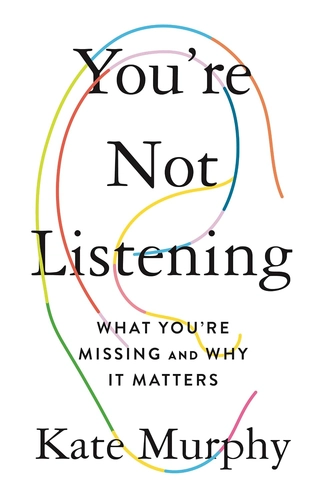
What are you missing when someone is trying to connect with you?
Here is a difficult question.
Think about the people you clicked with immediately. What did they do differently?
You might notice a pattern. They listened. Not the way most people listen—waiting for their turn to speak, nodding along, formulating a response while you are still talking. They listened in a way that made you feel heard. They asked questions that showed they were paying attention. They followed your tangents instead of steering the conversation back to themselves.
Murphy, a journalist who spent years interviewing people, became obsessed with one question: why has listening become so rare? Her book is built on the argument that we are losing the ability to truly listen to one another—and that this is why so many interactions feel disconnected.
You cannot connect with someone you are not really hearing.
The book explains the specific habits that make people feel heard. Being curious. Asking open-ended questions. Resisting the urge to jump in with your own stories. Managing your internal distractions. Tolerating silence without rushing to fill it. These are not natural for most people. They require practice.
When you learn to listen in this way, people feel different around you. They feel safe. They feel seen. They feel like they matter. And that is what makes them want to be around you.
For anyone who wants to stop missing what people are really saying.
These three books each approach the question from a different angle. Carter helps you read the signals that tell you whether someone is open to connecting. Parker helps you create the conditions where connection can actually happen. Murphy helps you listen in a way that makes people feel heard.
If you are tired of wondering why you click with some people but not others, start with the one that matches where you are stuck:
- Need to stop missing signals? Start with Carter.
- Need to create better conditions for connection? Start with Parker.
- Need to listen in a way that makes others feel seen? Start with Murphy.
Some connections will still feel natural, and others will still feel forced. That is okay. The goal is not to click with everyone. The goal is to stop wondering why—and to start seeing what is already in front of you.
