You finish a conversation and everything seems fine. Then, sometime later that evening, your mind brings it back. You start wondering whether your answer sounded strange, whether you should have responded differently, and what the other person might have thought. By the time you go to bed, you have reviewed the same few minutes so many times that it feels like you have experienced the conversation again.
That is the frustrating part of rumination. It can look like reflection because you are trying to understand what happened, but the same questions often come back without producing anything new. You are not necessarily solving the problem anymore; you are repeatedly returning to it.
A useful way to work on rumination is to learn how to recognize when thinking has stopped being productive, separate facts from interpretations, and redirect your attention before the same mental loop starts consuming another hour.
When Thinking Keeps Going After the Useful Part Is Over
There is a point where reflection has already done its job. You may have figured out what you would change next time, apologized for something you did, or realized that a situation was simply out of your control.
Rumination tends to ignore that stopping point. It keeps asking the same question in a slightly different form, as though one more round of analysis might finally produce certainty.
One helpful test is surprisingly simple: “Am I learning something new from this thought?” If the answer is no and you are still circling the same details, it may be time to stop looking for another explanation.
Do Not Let Your Mind Turn Interpretation Into Fact
Rumination often becomes more intense when the mind starts adding meaning to incomplete information.
Someone gives you a shorter reply than usual, and you begin wondering whether they are annoyed. You make a small mistake at work, and you start thinking about what your manager might now think of you. A friend does not invite you somewhere, and your mind immediately starts building a story around the reason.
The event is real. The interpretation may not be.
Learning to distinguish between “this happened” and “this is what I think it means” can create some distance from the loop. You do not have to convince yourself that your interpretation is wrong; you simply do not have to treat it as settled fact.
Three Books Worth Exploring
1. Break the Anxiety Circle by Miles Carter
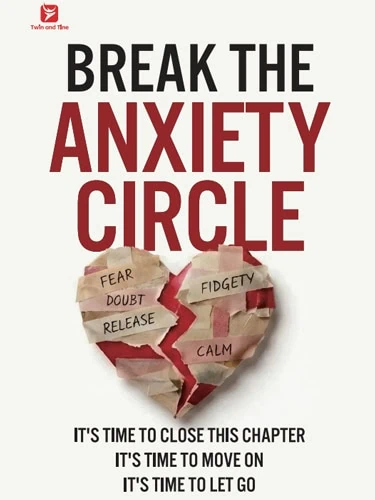
Break the Anxiety Circle focuses directly on repetitive mental patterns involving anxiety, overthinking, self-doubt, fear of judgment, and recurring worry. It is particularly relevant when rumination is not limited to one topic but becomes a general habit of revisiting conversations, decisions, mistakes, and possible problems.
The book looks at how these loops gain momentum and why the mind keeps returning to thoughts that do not seem to provide a useful answer. That makes it a practical choice for readers who feel mentally busy even when the situation itself is already over.
It also connects rumination with people-pleasing, uncertainty, and self-worth, which can help explain why some thoughts are especially difficult to let go of.

Break the Anxiety Circle
Miles CarterA mental reset for people trapped in the overthinking loop. Understand why your mind won’t stop racing — and how to break free from anxiety, people-pleasing, and emotional exhaustion.
2. Chatter by Ethan Kross
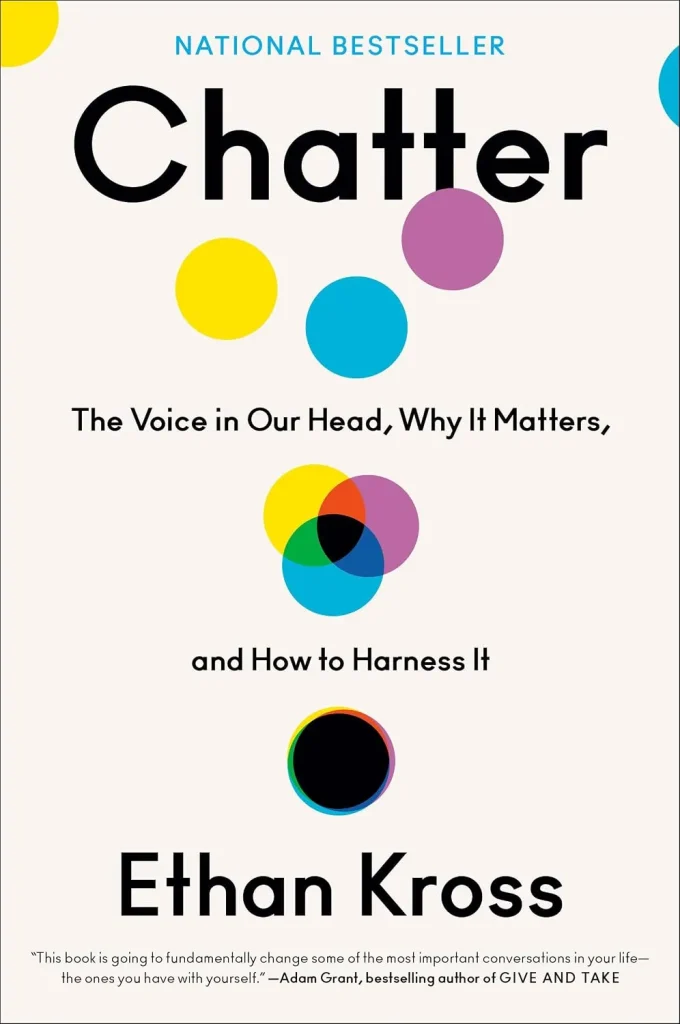
Chatter examines the repetitive inner conversations that can make stressful experiences harder to process. Ethan Kross explores why people get stuck in self-talk and how psychological distance can change the way we experience difficult thoughts.
One of the book’s strengths is that it does not treat internal dialogue as something that simply needs to disappear. Instead, it looks at how you can change your relationship with that dialogue so it becomes less consuming.
For readers who tend to mentally rehearse, replay, or argue with themselves for long periods, that perspective can be useful. It gives the problem a little more structure and offers practical ways to step outside the loop.
3. The Power of Now by Eckhart Tolle
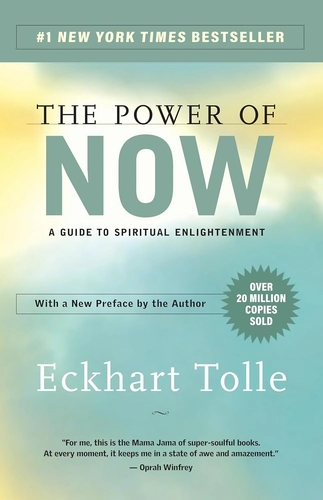
The Power of Now takes a broader philosophical approach to repetitive thinking. Eckhart Tolle focuses on the tendency to become absorbed in memories and imagined futures, often at the expense of the present moment.
That idea can resonate strongly with people who spend a lot of time revisiting old situations. A memory may be over, but each replay can bring back the emotional reaction as though the event were happening again.
The book encourages readers to notice thoughts without becoming completely identified with them. It is less about analyzing why you have a particular thought and more about creating some space between yourself and the stream of mental activity.
A Useful Way to Interrupt the Loop
When you catch yourself ruminating, try moving through a few questions rather than immediately searching for another explanation:
- What actually happened?
- What part of this is an interpretation?
- Is there anything I can still do about it?
- Have I already learned the lesson?
The last question is particularly important. Sometimes the mind continues because it mistakes repetition for progress.
If there is a practical action, take it. If there is nothing left to change, continuing to replay the situation may simply be keeping the emotional part alive.
Let the Thought Finish Without Following It Everywhere
Stopping rumination does not mean forcing yourself to have a completely quiet mind. Thoughts will come back, especially when a situation matters to you.
The change is in what happens next. You can notice the thought, decide whether it deserves your attention, and return to what you were doing instead of automatically opening another round of analysis.
That is where these three books can be useful from different directions. Break the Anxiety Circle focuses on the mental loop itself, Chatter explores the way inner dialogue affects us, and The Power of Now offers a broader way to step out of repetitive thinking and return to the present.
If you found this helpful, these books go deeper into the same themes.



Break the Anxiety Circle
$19.90

From Debt to Wealth
$19.90

