When Your Mind Feels Tired All the Time
Mental health can become difficult to manage when your mind never seems to switch off. You may spend too much time worrying about things that have not happened, replaying conversations, criticizing yourself, or trying to predict what could go wrong next.
Sometimes nothing dramatic has happened, yet you still feel mentally exhausted. Your thoughts keep moving even when you are supposed to be resting, and small problems can feel much heavier because you have already spent so much emotional energy.
Books can be useful here because they give you language for patterns that are hard to recognize when you are living inside them. The three books below approach mental and emotional well-being from different directions, but all of them offer ideas that can help you understand yourself more clearly.

What Does “Improving Your Mental Health” Actually Look Like?
It does not always mean feeling positive all the time. A healthier mental state can also mean understanding your emotions better, becoming less controlled by repetitive thoughts, responding to stress with more awareness, and treating yourself with more patience.
That is important because constantly trying to force yourself to “think positively” can become another source of pressure. Sometimes the more useful step is understanding why a particular thought keeps returning and what you usually do when it appears.
The right book can help you move from simply reacting to your emotions to noticing the patterns behind them.
1. Break the Anxiety Circle by Miles Carter
Break the Anxiety Circle is centered on the mental patterns that can keep people stuck in anxiety, overthinking, emotional exhaustion, and self-doubt. Rather than treating every difficult thought as a separate problem, the book looks at how these patterns can feed into one another.
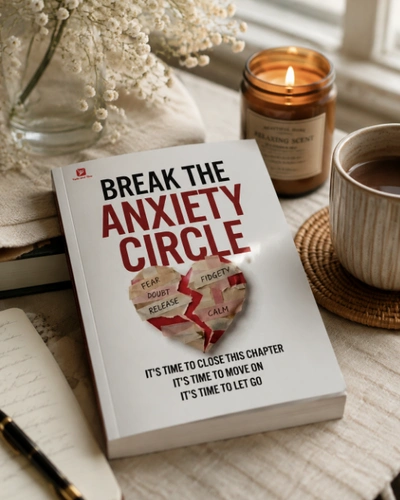
A major part of its appeal is that it does not focus only on the moment when anxiety appears. It also explores the thinking habits behind it, including constantly replaying the past, worrying about the future, struggling with uncertainty, and allowing other people’s opinions to shape how you feel about yourself.
The book also goes into people pleasing, self-worth, emotional regulation, and boundaries. These themes matter for mental well-being because emotional strain does not always come from one obvious source. Sometimes it builds from repeatedly ignoring your own needs, seeking reassurance, or feeling responsible for everyone else’s reactions.
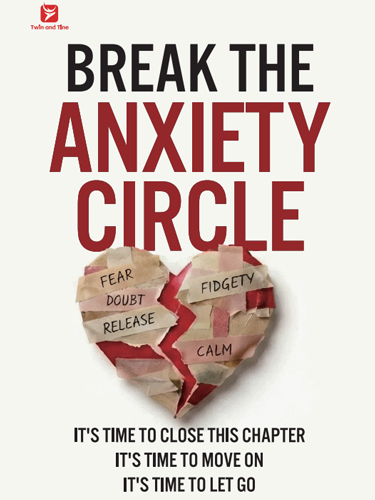
Break the Anxiety Circle
Miles CarterA mental reset for people trapped in the overthinking loop. Understand why your mind won’t stop racing — and how to break free from anxiety, people-pleasing, and emotional exhaustion.
Another useful aspect is the book’s focus on breaking recurring patterns instead of chasing temporary relief. When the same kind of thought keeps returning, understanding the cycle can be more useful than simply trying to push the thought away.
For anyone looking for books for improving your mental health, this makes Break the Anxiety Circle a natural starting point for readers whose biggest struggle is feeling mentally trapped in repetitive emotional patterns.
2. The Happiness Trap by Russ Harris
The Happiness Trap takes a different approach by challenging the idea that a good life requires you to eliminate uncomfortable thoughts and feelings.
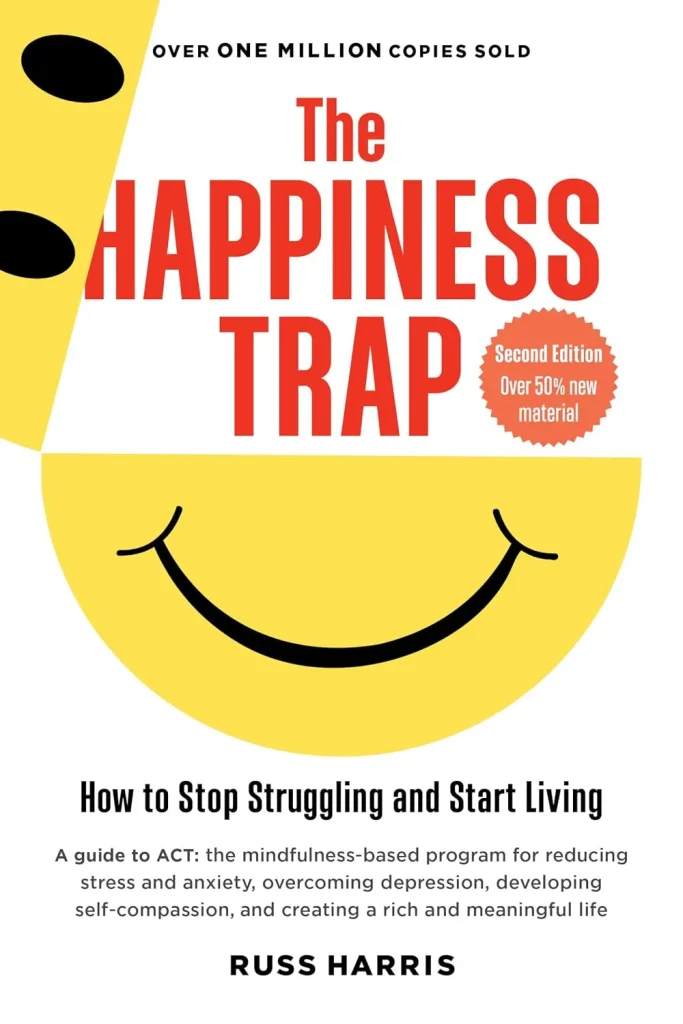
The book introduces ideas from Acceptance and Commitment Therapy and focuses on changing your relationship with difficult internal experiences. Instead of making “feeling good” the only goal, it encourages readers to make room for uncomfortable emotions while staying connected to what matters to them.
This can be useful for people who spend a lot of energy trying to control every negative thought or emotion. The approach offers a different perspective: some internal experiences do not need to disappear before you can move forward.
3. Self-Compassion by Kristin Neff
Self-Compassion focuses on the way people treat themselves when things go wrong. For readers who are highly self-critical, mental well-being can be made harder by the constant belief that every mistake needs to become a lesson, every weakness needs to be fixed, and every failure says something important about who they are.
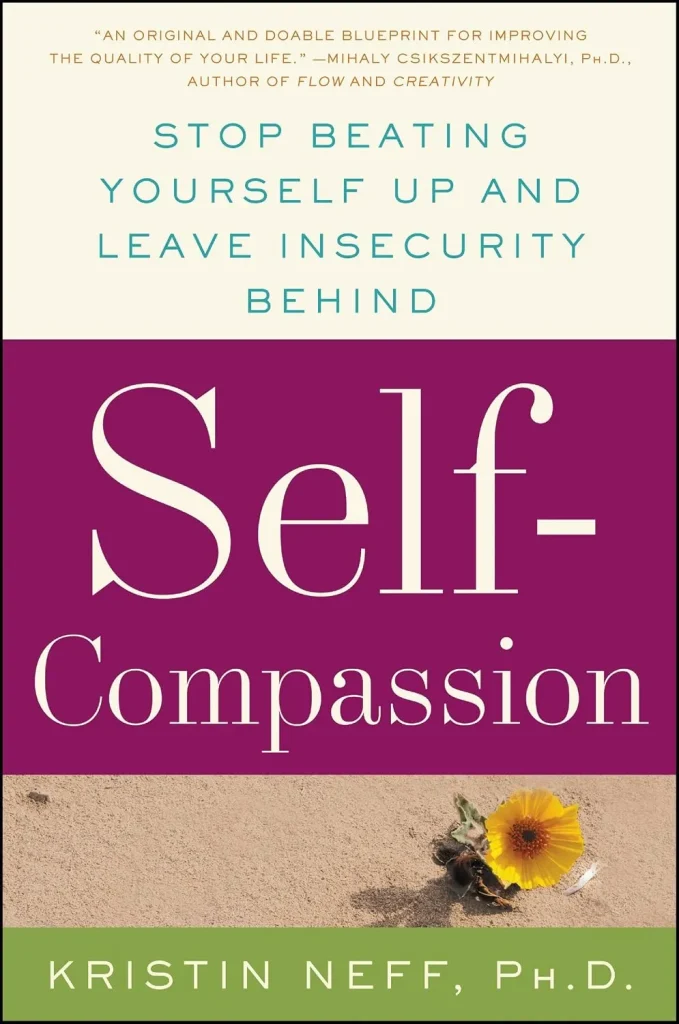
Neff’s work explores self-compassion as an alternative to harsh self-judgment. The book looks at how being more understanding toward yourself can coexist with personal growth rather than preventing it.
It is especially relevant for people who are outwardly functioning well but privately spend a great deal of time criticizing themselves.
Mental Health Is A Pattern, Not Just A Mood
One difficult day does not necessarily tell you much about your overall mental well-being. What often matters more is what keeps happening in the background: the same worries, the same self-criticism, the same avoidance, or the same emotional triggers appearing again and again.
That is why these books can be read as more than collections of comforting advice. They each encourage a different way of looking at your internal patterns and understanding what may be keeping them active.
Break the Anxiety Circle is particularly focused on those repeating cycles, especially when overthinking, anxiety, approval-seeking, and self-doubt begin reinforcing one another.

You Do Not Need to Fix Everything at Once
Trying to improve your mental health can become overwhelming if you treat every uncomfortable feeling as another problem that needs immediate attention. A more manageable approach is to start noticing one recurring pattern and understand how it affects the rest of your day.
Maybe you realize that you spend too much time replaying conversations. Maybe you notice that you automatically seek reassurance whenever you are uncertain. Or perhaps you recognize how quickly one mistake turns into a long period of self-criticism.
Once you can see the pattern, you have something much more concrete to work with.
The Goal Is More Space, Not a Perfect Mind
A healthier relationship with your mind does not mean never feeling anxious, sad, frustrated, or uncertain. Those experiences are part of being human.
The change comes when difficult thoughts no longer control every decision or consume so much of your attention. You can notice them, understand them, and keep moving through your day without allowing them to become the only story in your head.
That is the kind of shift these books can help you explore, each from a different angle.
Three Books for Different Mental Health Struggles
Break the Anxiety Circle is especially relevant to readers dealing with recurring anxiety, overthinking, self-doubt, people pleasing, and emotional patterns. The Happiness Trap focuses more on changing your relationship with difficult thoughts and feelings, while Self-Compassion addresses the harsh self-judgment that can quietly undermine emotional well-being.
For readers searching for books for improving your mental health, these different approaches can be useful because mental well-being is rarely affected by one issue alone. Sometimes the most helpful starting point is simply finding a book that helps you finally put words to what has been exhausting your mind.