You have probably done this before.
A friend does not reply to your message. Your brain fills in: they are angry at you. A colleague gives you a short answer. You assume they are undermining you. A partner seems distant. You are certain they are pulling away.
You are not trying to be negative. You are trying to protect yourself. If you assume the worst, you will not be caught off guard. You will be prepared. You will not be blindsided.
But here is the cost. You stop seeing people as they are. You see them as your fears imagine them to be. You push people away before they can hurt you. You miss connections because you misread intentions.
The three books below each address a different layer of this pattern. One helps you distinguish between what is real and what you are projecting. One explains why your brain jumps to the worst conclusion. One gives you tools to stop the spiral before it starts.
How to Read Someone’s Mind by Miles Carter
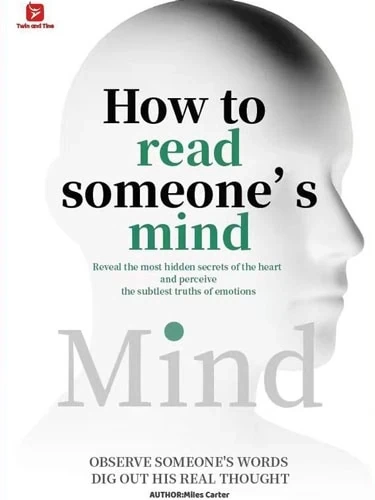
How do you tell the difference between a real warning sign and your imagination?
Here is the problem with assuming the worst. Sometimes you are right. Some people are untrustworthy. Some signals actually mean something. And if you dismiss all your instincts as paranoia, you miss real warnings.
Carter’s book teaches you to read the signals people reveal through their face, body, voice, and behavior over time. You learn to distinguish between actual patterns and random moments. A single short reply is not a pattern. A consistent shift in behavior is.
What makes this book essential is the focus on evidence. You stop reacting to every small signal and start paying attention to what actually matters. You learn to trust your instincts without letting them run your life.
For anyone who wants to stop overreacting to every small signal.
The CBT Workbook for Mental Health by Simon Rego and Sarah Fader
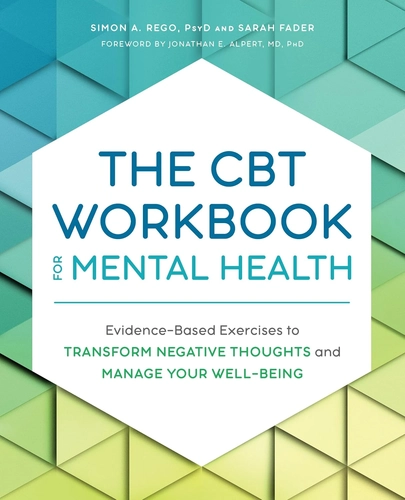
Why does your brain always jump to the worst conclusion?
Here is something that might surprise you.
Your brain is not trying to make you miserable. It is trying to keep you safe. It has learned, probably through experience, that danger exists. And it has decided that the safest option is to assume the worst and be pleasantly surprised than to assume the best and be devastated.
Rego and Fader’s workbook is built on cognitive behavioral therapy, which is one of the most effective approaches for changing thought patterns. It gives you specific exercises for identifying when your brain is jumping to conclusions. You learn to stop and ask: what is the evidence? What else could this mean? What would I tell a friend in this situation?
What makes this book valuable is the practicality. It is not a book you read once and put down. It is a workbook. You write in it. You practice. You train your brain to stop defaulting to worst-case scenarios.
For anyone who wants practical exercises to retrain their thinking.
Crucial Conversations by Kerry Patterson, Joseph Grenny, Ron McMillan, and Al Switzler
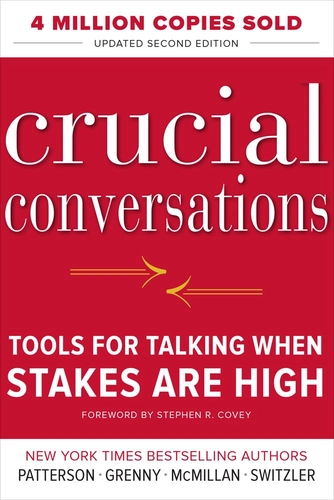
How do you stop assuming the worst in real-time conversations?
You understand why your brain jumps to conclusions. You have tools to challenge your thinking. But in the moment, when someone gives you a short answer or a dismissive look, your old pattern takes over.
This book, from the Harvard Negotiation Project, was written for high-stakes conversations where emotions run high and opinions differ. But its techniques apply just as well to everyday interactions where you are prone to misinterpretation.
One of the most useful tools is the “but why” technique. When someone says something that triggers your assumption, you ask: why might a reasonable, decent person say that? This simple question stops you from immediately assuming the worst and opens up other possibilities.
For anyone who wants practical tools to stop jumping to conclusions in real-time conversations.
These three books each approach the problem from a different angle. Carter teaches you to read actual signals versus imagined ones. Rego and Fader give you exercises to retrain your thinking. Patterson, Grenny, McMillan, and Switzler give you tools for real-time conversations.
If you are tired of assuming the worst and pushing people away, start with the one that matches where you are stuck. Need to separate real signals from imagination? Start with Carter. Need to retrain your thinking? Start with Rego and Fader. Need tools for the moment? Start with Crucial Conversations.
You cannot stop your brain from generating worst-case scenarios. But you can stop believing them.
