You get paid. You pay bills. You buy groceries. You cover rent.
You tell yourself you will save next month.
Then next month comes. And it happens again.
You know what you should do. Spend less. Save more. Stop relying on every paycheck to cover the next problem. But knowing and doing are two different things.
The problem is not that you lack information. The problem is that financial pressure changes how you think. It narrows your focus to the immediate. It makes long-term planning feel like a luxury you cannot afford.
Escaping the paycheck cycle requires more than earning more or spending less. It requires understanding why you are stuck, how scarcity affects your decisions, and what kind of system can replace willpower.
The three books below each address a different layer of that problem.
From Debt to Wealth by Owen Pierce

Understand why you are stuck and how to build a different financial system
Most personal finance advice assumes your problem is a math problem. Earn more, spend less, save the difference.
Pierce argues that this misses the deeper issue. Wealth is not built by optimizing your expenses. It is built by changing how you think about money, income, and opportunity.
He explains why a salary is a starting point, not a destination. Why luxury is often a display of money you do not have. Why simply trading more hours for income has a ceiling. Why increasing your ability to earn matters more than simply cutting expenses.
The book gives you a framework for building financial flexibility instead of depending only on one paycheck. It teaches you the mental models that separate wealth builders from people who stay stuck in the cycle.
Many people try to fix paycheck problems by focusing only on expenses. But if your entire financial strategy depends on cutting back forever, there is a limit to how far you can go. Wealth requires a shift from managing scarcity to building opportunity.
This is the foundation. Before you can fix the psychology or build the system, you need to understand what actually creates wealth.
Start here if you want to understand the mindset and systems behind wealth building.
Scarcity by Sendhil Mullainathan and Eldar Shafir
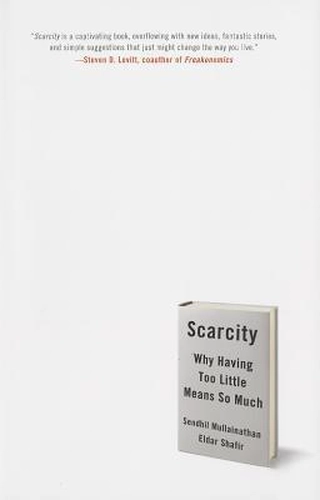
Understand why financial pressure changes your decisions
Many people assume that living paycheck to paycheck is about income or budgeting skills.
But Mullainathan and Shafir, both behavioral scientists, found something different. When people experience prolonged financial pressure, their minds change. They called it the “scarcity mindset.”
Scarcity captures your attention. When you are worried about rent, bills, and credit card balances, your brain focuses on the immediate problem. This is not simply a matter of discipline. It is what happens when your attention is constantly pulled toward immediate problems.
The problem is that this focus comes at a cost. You have less mental bandwidth for long-term planning. You make short-term decisions that feel necessary in the moment but keep you stuck in the long run.
This explains why people who know they should save still struggle to do it. It is not because they are lazy or bad with money. It is because financial pressure narrows their focus to the present.
Read this if you want to understand why financial stress makes it harder to think long term.
I Will Teach You to Be Rich by Ramit Sethi
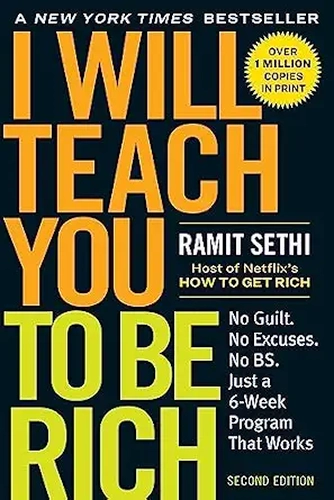
Build a money system that does not depend on willpower
Many people fail at saving because they rely on self-control. They budget. They try to cut back. They remind themselves not to spend.
But willpower is not a reliable system.
Sethi’s core insight is simple: stop fighting with money every day. Instead, build automated systems that make the right choices easy.
He teaches three core principles: automate your savings, invest automatically, and spend consciously on things that actually matter to you. The goal is not to become someone who never spends money. The goal is to stop making every financial decision from scratch.
His approach is not about deprivation. It is about designing a financial structure that works without constant effort. You do not need to be perfect every day. You need a system that makes the right choices the default.
Choose this if you are tired of constantly budgeting but still feel like money controls your life.
Quick comparison
| Book | What it helps you understand | Best for |
|---|---|---|
| From Debt to Wealth | The mindset and systems behind wealth building | You work hard but never seem to get ahead |
| Scarcity | Why financial stress changes your decisions | You know what to do but cannot seem to do it |
| I Will Teach You to Be Rich | How to build systems that work automatically | You are tired of relying on willpower |
How these books work together
These three books explain the paycheck cycle from three different levels.
First, understand the system.
From Debt to Wealth helps you rethink money, income, and wealth creation. You understand the mental models that keep people stuck and the ones that create freedom.
Second, understand the psychology.
Scarcity explains why financial pressure makes it harder to think long term. You understand why knowing what to do is not enough when your mind is focused on survival.
Third, build a structure.
I Will Teach You to Be Rich shows how to create systems that reduce the need for constant discipline. You stop relying on willpower and start relying on automation.
Together, they answer a deeper question: why do some people work hard, earn money, and still feel stuck? Because escaping the paycheck cycle requires more than earning more or spending less. It requires changing how you think, how you decide, and how you build your financial life.
FAQ
Why can’t I save money even when I try to budget?
Because budgeting only controls where your money goes. It does not change the habits and decisions that created the problem. You need to address the mindset, the psychology, and the systems behind the behavior.
Why does living paycheck to paycheck happen even with a good income?
Because financial pressure is not only about income level. It is about how you think about money, how you make decisions under pressure, and whether you have systems that protect you from your own habits.
How do I stop living paycheck to paycheck?
Start by understanding why you are stuck. Then build a system that makes the right choices automatic. The cycle does not break by trying harder. It breaks by thinking differently and designing a structure that works without constant effort.
What is the first step toward financial stability?
Start by tracking where your money actually goes for a month. Then automate a small savings amount before you can spend it. The system matters more than the amount.
