You notice a small change, and your mind immediately starts searching for an explanation. A pause in conversation. A reply that used to come quickly, now delayed. A tone that feels slightly different.
Is something wrong? Did their feelings change? Are they hiding something?
Your mind spins. You replay the conversation. You scan for clues. You try to find the hidden meaning behind their words.
The problem is not that you are too sensitive. The problem is that you are trying to find answers in incomplete information. Uncertainty creates space for your mind to fill in the blanks, and your mind does not always tell you the truth.
These three books will not stop you from noticing signals. They will help you stop turning every signal into a story.
How to Read Someone’s Mind by Miles Carter
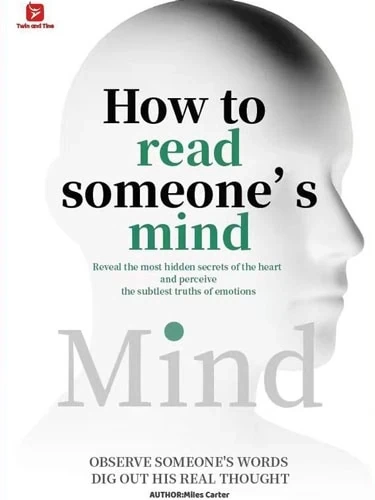
Learn what signals actually matter
Carter’s approach is not about assuming something is wrong. It is about learning how to separate meaningful patterns from isolated moments. He does not teach you to memorize gestures or decode micro-expressions. He teaches you to pay attention to patterns: changes in tone over time, shifts in behavior, inconsistencies between what someone says and what they repeatedly do.
A single off moment means very little. A consistent pattern tells you something worth paying attention to. Most people have patterns in how they communicate. When those patterns break, something has shifted underneath.
This book gives you a framework for distinguishing between a real signal and a random event. It helps you stop overanalyzing every interaction and start seeing what actually matters.
The Happiness Trap by Russ Harris
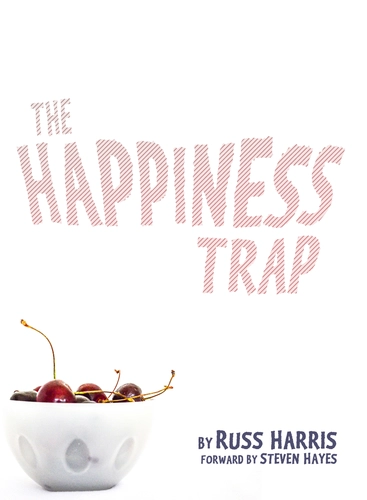
Understand why your thoughts feel true even when they are not
People who read too much into things often do not suffer from a lack of information. They suffer from being trapped inside their own thoughts.
Consider this scenario. A friend does not reply to a message. The facts: they have not replied yet. But your mind does not stop at the facts. It produces a story: “They must be upset with me. I probably said something wrong. Maybe they are pulling away.”
Harris, a psychologist, developed a framework called Acceptance and Commitment Therapy, or ACT. His book teaches you to recognize that thoughts are not always facts. They are mental events that often feel true but are not necessarily accurate. The goal is not to eliminate anxious thoughts. It is to stop being controlled by them.
This book helps you step back from your interpretations. You learn to say: “I notice I am having the thought that they are upset with me.” That small shift creates distance between you and the story your mind is telling you. It helps you create space between what happens and how you respond, so you stop getting caught in mental loops every time something feels uncertain.
Maybe You Should Talk to Someone by Lori Gottlieb
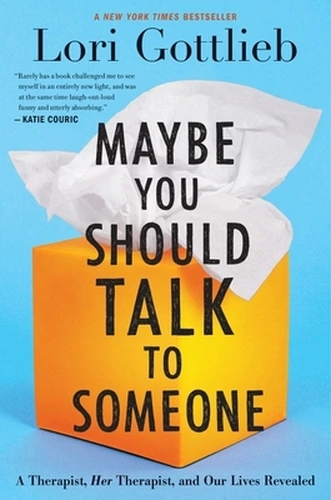
Understand the deeper patterns behind your interpretations
Sometimes the person who reads too much into things is not just analyzing others. They are also carrying long-standing patterns that shape how they interpret everything.
Gottlieb, a therapist, wrote this book about her patients and her own therapy. It is not a self-help manual. It is a series of stories about people who are stuck in interpretations of their lives that are painful, inaccurate, or incomplete.
One patient cannot stop analyzing her partner’s behavior. Another is trapped in a story of being unlovable. Gottlieb herself discovers that she has been telling herself a story about her own life that is not quite true. In each case, the pattern did not start with the current situation. It was shaped by past experiences, fears, and emotional history.
This book helps you see that the stories you create about others and yourself are often rooted in patterns you have been carrying for years. Recognizing that does not make the stories disappear. But it does give you a choice: continue believing the story, or start questioning it.
What these three books teach you together
Reading too much into things is not a character flaw. It is what happens when your mind tries to make sense of uncertainty.
The first book helps you replace guessing with observation. You stop assuming every signal is meaningful and start learning which patterns actually matter.
The second book helps you stop believing every thought your mind creates. You see that your interpretations are not always facts. You can notice them without being ruled by them.
The third book helps you understand the deeper patterns behind your interpretations. The ones shaped by past experiences, fears, and emotional history. Once you see those patterns, you can decide whether to keep repeating them.
The goal is not to stop noticing things. The goal is to stop letting your mind write the worst possible ending to every unfinished story.
FAQ
Why do I assume the worst when someone changes?
Because uncertainty creates discomfort. Your brain tries to protect you by creating explanations, but those explanations are not always accurate. The mind prefers a painful story to an open question.
Can overthinking make you misunderstand people?
Yes. When information is incomplete, your brain fills the gaps. The problem is that it often fills them with possibilities based on fear, past experiences, or assumptions rather than facts.
How do I stop analyzing everything someone says?
Start by distinguishing between what you know and what you are assuming. You know what they said. You do not know what they meant. The gap between those two things is where anxiety lives.
