Some people do not need a reason to start worrying. A small uncertainty is enough to get the process going, and once it starts, one concern quickly leads to another. You may think about what could go wrong tomorrow, something that happened yesterday, or a situation that you cannot even do anything about right now.
The hardest part is often knowing that you are doing it and still being unable to stop. You may tell yourself that you are overreacting, try to distract yourself, or promise that you will stop thinking about it, only to find the same concern waiting for you later. When worry becomes this repetitive, the problem is no longer just the individual things you are worried about. It is the habit of worrying itself.
When Worry Becomes Part of Your Routine
Worry often starts with something ordinary. You wonder whether a conversation went well, whether you made the right choice, or whether something might happen in the future, and your mind begins looking for an answer.
The problem is that there may not be an answer you can get right now. Instead of accepting that uncertainty, you keep thinking, checking, comparing, or imagining different possibilities. Because each round feels like an attempt to solve the problem, it can be difficult to recognize that the thinking has become repetitive.
Eventually, you may find yourself worrying even when there is no new information. At that point, worry has become less about solving a specific problem and more about responding to discomfort.
The Need to Feel Certain Can Keep You Worrying
A lot of excessive worry comes from the idea that you should be able to feel completely sure before you relax.
You want to know that everything will work out. You want to know that someone is not upset with you. You want to know that you made the right decision. You want to know that nothing unexpected is going to happen.
But everyday life cannot provide that level of certainty. The more you demand certainty from yourself, the more reasons your mind can find to keep asking questions.
This is why telling yourself to “stop worrying” often feels ineffective. The deeper issue may be your difficulty sitting with something that has not been completely resolved.
Look at What You Do With the Worry
A useful question is not only what you are worried about, but what you do once the worry appears.
Do you search for more information? Do you ask someone to reassure you? Do you replay the situation? Do you check something repeatedly? Do you avoid making a decision because you are afraid of getting it wrong?
These reactions can make sense in the moment. They give you a feeling that you are doing something about the uncertainty, even when the situation itself has not changed.
Break the Anxiety Circle by Miles Carter focuses on this relationship between anxious thoughts, emotional discomfort, and repeated responses. Looking at the full sequence can help you recognize that the thought may be only the beginning of the cycle.
The Same Worry Can Keep Coming Back in Different Forms
One of the most frustrating things about excessive worry is that solving one concern does not necessarily stop the next one from appearing.
You finally stop worrying about a conversation, and then you start worrying about a decision. That decision gets made, and now you are thinking about what might happen next week. The subject changes, but the way you respond remains familiar.
This can make it seem as though you simply have too many things to worry about. In reality, there may be a repeating pattern underneath all of them.
Recognizing that pattern can be a turning point because it gives you something more consistent to work on than whatever happens to be bothering you today.
Stop Treating Every Thought Like a Problem to Solve
Not every thought requires an answer.
Sometimes a thought is simply your mind noticing a possibility. You may think, “What if this goes badly?” without needing to spend the next hour constructing every possible scenario.
The challenge is learning to notice the difference between useful thinking and repetitive thinking. Useful thinking tends to lead somewhere: a decision, a plan, an action, or a clearer understanding. Repetitive worry keeps circling the same uncertainty without producing anything new.
Once you notice that difference, you can begin giving less attention to thoughts that do not actually require a response.
Break the Anxiety Circle by Miles Carter
Break the Anxiety Circle is written for readers who recognize this repeating pattern and want to understand what is keeping it going.
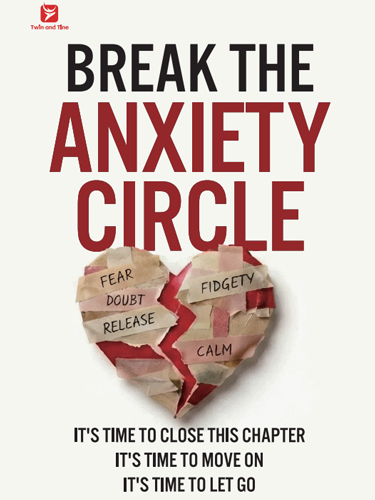
Break the Anxiety Circle
Miles CarterA mental reset for people trapped in the overthinking loop. Understand why your mind won’t stop racing — and how to break free from anxiety, people-pleasing, and emotional exhaustion.
Rather than approaching every worry as a separate problem, the book encourages readers to examine the connection between thoughts, feelings, and behaviors. That perspective can be especially useful when you already know that you worry too much but have never really understood why the same process keeps happening.
The book can help you step back from the immediate content of a thought and pay attention to the pattern around it. You begin to notice what triggers the worry, what you do to make yourself feel safer, and whether those responses are actually helping in the long run.
That can change the way you approach future worries. Instead of immediately asking, “How do I solve this?”, you can first ask whether you are being pulled into a familiar cycle.
You Do Not Need to Eliminate Every Worry
The goal is not to become someone who never worries.
Some concerns deserve your attention. Problems sometimes need to be solved, decisions sometimes need to be reconsidered, and preparation can be genuinely useful.
The difference is learning when to stop. Once you have taken the reasonable action available to you, continuing to mentally revisit the situation does not necessarily make you more prepared.
Being able to say, “I have done what I can for now,” can be an important shift. You are not pretending the situation is guaranteed to work out. You are simply recognizing that more worrying will not give you more control.
What to Do When the Same Thought Returns
Recurring thoughts are easier to handle when you stop treating their return as a failure.
A worry may come back even after you have recognized it before. Instead of becoming frustrated and thinking, “Here I go again,” you can notice that the same pattern has appeared and decide whether you want to follow it.
That may mean postponing the urge to check something, resisting the temptation to ask for reassurance, or simply returning your attention to whatever you were doing before the thought appeared.
The important part is not making the thought disappear immediately. It is changing what happens after the thought arrives.
Why a Book Can Be More Useful Than Another Quick Tip
When worry is occasional, a simple coping strategy may be enough. But when the same pattern keeps appearing across different parts of your life, it helps to understand the pattern itself.
A book gives you room to see connections that are difficult to notice in the middle of an anxious moment. You can start recognizing how one thought leads to a reaction, how that reaction creates temporary relief, and how the whole process makes the next worry more likely to take over.
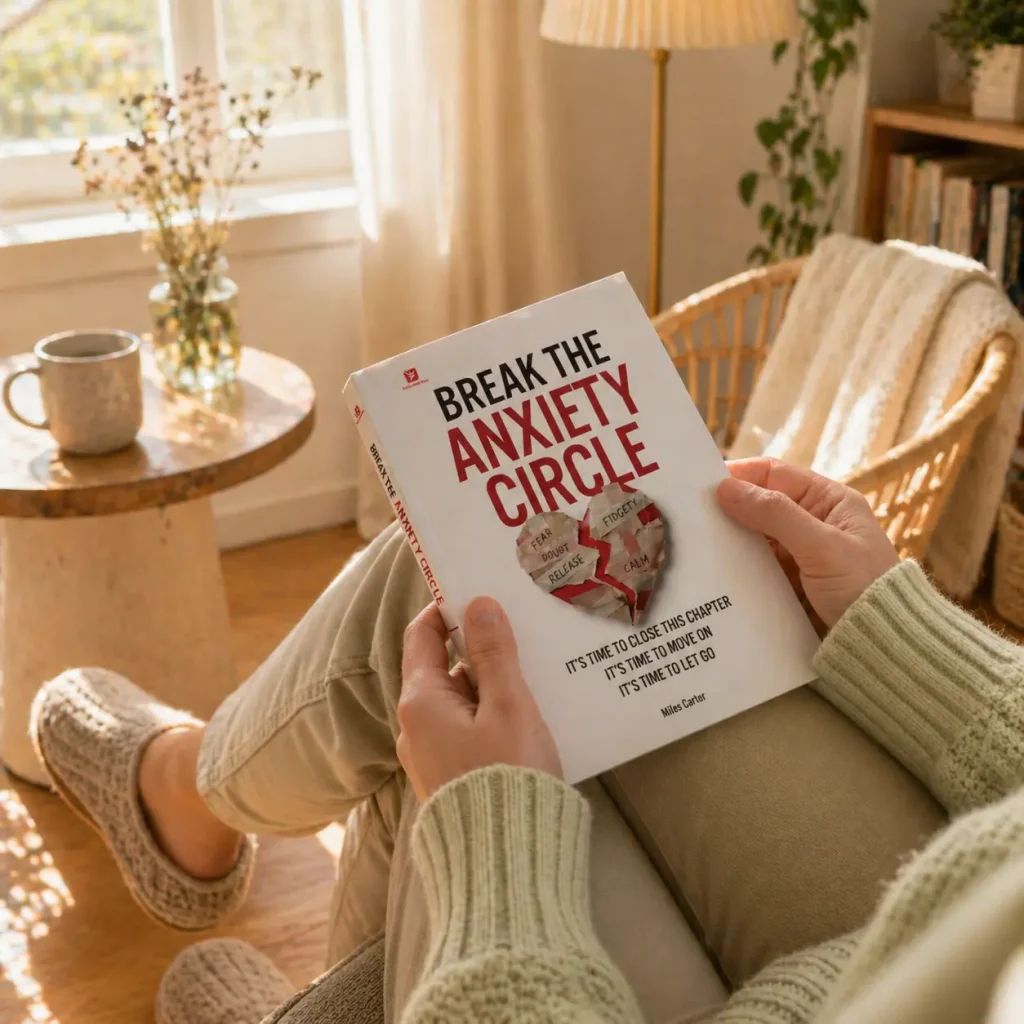
That is the kind of deeper perspective Break the Anxiety Circle is designed to provide. Instead of giving you one more instruction to remember whenever you worry, it encourages you to understand the cycle so you can recognize it when it happens.
Final Thoughts
Worrying too much is rarely about having one especially serious problem. More often, it is about falling into the same mental process again and again, with different concerns taking turns becoming the focus.
For readers searching for books for people who worry too much, Break the Anxiety Circle by Miles Carter offers a practical way to examine that process. It shifts the focus from solving every individual worry to recognizing the cycle between anxious thoughts, emotional discomfort, and the habits that keep bringing you back to the same place.
Once you can recognize the pattern, you have a better chance of deciding when a thought deserves your attention and when it is simply asking you to worry one more time.