Saying Yes Is Easy Until You Have to Live With It
You probably know the feeling. Someone asks you to take on another task at work, a friend wants to change plans for the third time, or a family member needs another favor when you are already exhausted. You want to say no, but instead you hear yourself saying, “Sure, I can do that,” and only afterward start wondering why you agreed so quickly.
For many people, the difficult part of saying no is not finding the word itself. It is everything that happens around it. You may worry that the other person will think you are selfish, become disappointed, or decide that you are no longer as helpful as you used to be. So you make yourself available, keep your frustration to yourself, and hope the discomfort will be worth it. Eventually, though, the constant yeses begin to turn into resentment.

The Habit Often Starts Before the Conversation
People who struggle with saying no often make the decision before they have actually considered what they want. Someone asks for something, and the instinct is to protect the relationship first and think about personal limits later. That is why pausing can be more helpful than trying to become dramatically more assertive overnight.
You do not have to answer every request on the spot. Saying that you need to check your schedule or think about it gives you enough space to notice what you are actually feeling. Maybe you genuinely want to help. Maybe you can help, but only if something else changes. Or maybe you simply do not want to do it, and that is useful information too.
A Clear No Does Not Need a Long Explanation
One reason people find refusal so exhausting is that they treat it like a case they need to prove. Instead of simply declining, they explain how busy they have been, apologize for disappointing the other person, offer several alternatives, and sometimes end up agreeing anyway.
A longer explanation is not automatically a kinder explanation. In many situations, a clear and respectful answer is easier for both people to understand. You can be warm without making your decision sound negotiable.
This is one area where Say It Right Every Time by Miles Carter becomes especially relevant. The book focuses on expressing thoughts, needs, feelings, and decisions in a way that makes your meaning easier to understand. For someone who tends to soften their message until it becomes unclear, that practical focus can make a noticeable difference.

What Happens When Someone Pushes Back?
The first no is often not the hardest part. The harder moment comes when the other person responds with another question, another request, or a reminder of all the times you have helped before. If you are used to keeping people happy, that pressure can make you doubt the decision you had just made.
You do not always need a stronger argument. Sometimes you need to become more comfortable with the fact that another person may not like your answer. Say It Right Every Time is useful here because better communication is not only about choosing polite words. It is also about keeping your message consistent instead of changing it as soon as someone reacts negatively.
Boundaries Become Easier When People Know Where You Stand
Clear communication can gradually change your relationships because people start to understand what they can and cannot expect from you. When you are always available, others may naturally continue asking. When you constantly agree and then complain later, they may never realize that there was a problem in the first place.
Saying no earlier can prevent that cycle. It gives the other person a realistic picture of what you can offer, and it gives you a chance to help because you genuinely chose to rather than because you were afraid of disappointing them.
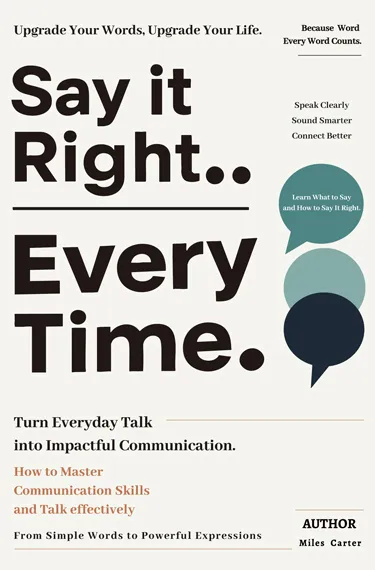
Say it Right..Every Time.
Miles CarterPractical communication tools for the moments that matter — say what you mean, calmly and confidently.
Feeling Guilty Does Not Mean You Made the Wrong Choice
The first few times you set a boundary, you may still feel uncomfortable afterward. You might replay the conversation, wonder whether you sounded rude, or even consider sending another message to make your answer softer.
That reaction is worth noticing without automatically obeying it. When you have spent a long time putting other people’s comfort ahead of your own, a healthier boundary can feel wrong simply because it is unfamiliar.
Say It Right Every Time can help readers work on the communication side of this problem: saying what they actually mean, making requests and refusals clearer, and becoming less dependent on excessive explanations. The bigger change is not learning one perfect way to say no. It is becoming more comfortable with honest communication in the first place.

You Can Be Considerate Without Always Giving In
Being a kind person does not require unlimited availability. You can care about people, help when you can, and still have times when the answer is no. In fact, your yes becomes more meaningful when the people around you know it is a genuine choice.
For readers who are tired of agreeing first and regretting it later, Say It Right Every Time offers a practical way to become clearer about what they want to say and more confident about saying it.