You read Influence. You loved it. The stories, the psychology, the way Cialdini pulled back the curtain on why people say yes. You saw the six principles everywhere — in ads, in conversations, in your own decisions.
Now you want more. Not more of the same, but the next level. Books that take you deeper into the mechanics of persuasion, that show you what happens before the ask, and that help you see influence happening in real time.
Here are three books that do exactly that.
How to Read Someone’s Mind by Miles Carter
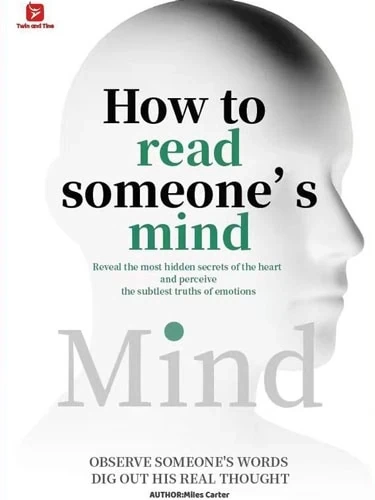
Cialdini gives you the theory. Carter gives you the eyes to see it happen.
Here is the difference between these two books. Influence teaches you the six principles — reciprocity, scarcity, authority, and the rest. You finish it understanding what makes people say yes.
But here is what Influence does not teach you: how to spot those principles being used on you, in real time, while the conversation is still happening.
Cialdini is a retrospective lens. You read his book, and afterward you start noticing how you were influenced in the past. You think: “Oh, that salesperson was using scarcity on me.” That is valuable. But it is backward‑looking.
Carter is a live lens. He teaches you to read the signals people send while they are trying to influence you. The flicker of impatience when you hesitate. The practiced rhythm of someone delivering a scripted pitch. The slight shift in posture that tells you they are about to push harder. These cues are happening in the moment. And most people miss them.
Think of it this way. Cialdini explains the rules of the game. Carter teaches you to watch the players as the game is being played. One gives you knowledge you apply afterward. The other gives you awareness you can use right now.
If you loved Influence and want to move from understanding persuasion to seeing it happen in real interactions, this is the book that bridges that gap.
For anyone who finished Influence and thought: “Now I understand the principles. But how do I actually see them playing out in real life?”
Pre‑Suasion by Robert Cialdini
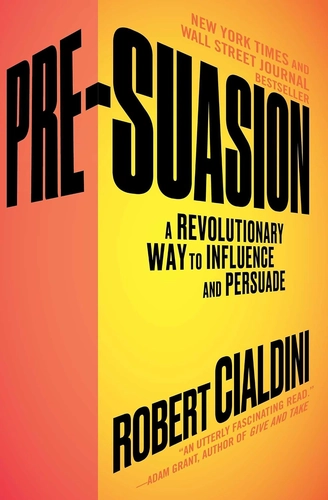
The moment before the ask matters more than the ask itself.
If you liked Influence, this is the logical next step. Cialdini’s later work focuses on the critical moments just before a persuasive attempt. He calls this “pre‑suasion” — the art of setting the stage so that the audience is already primed to say yes before you even make your request.
What makes this book valuable is its focus on timing. Cialdini shows that the window before a decision is often more important than the decision itself. If you can shape what people are thinking in that moment, the ask becomes almost automatic.
The book is packed with research and examples: how a simple question can redirect attention, how context shapes perception, and how to create moments of “privileged receptivity” where people are most open to influence.
For anyone who wants to understand the timing of persuasion — not just the principles.
Predictably Irrational by Dan Ariely
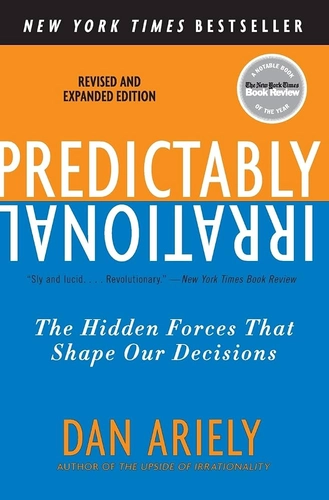
Why do people make decisions that are clearly not in their best interest?
Ariely, a behavioral economist, runs experiments that reveal the hidden forces behind everyday choices. His work helps answer a deeper question: why are we so easily influenced? The answer: because we are not rational.
Where Cialdini gives you the principles of persuasion, Ariely gives you the underlying biases that make those principles work. Why free things make us lose our minds. Why we overpay for things we do not need. Why we cheat a little but not a lot.
Understanding these biases gives you a more complete picture of why people do what they do — and how you can make better decisions yourself.
For anyone who wants to understand the why behind the principles Cialdini outlined.
Which book should you start with?
If you want to move from understanding the principles of persuasion to seeing them play out in real‑time interactions, read Carter — he gives you the awareness you can use while the conversation is still happening.
If you want to go deeper into the timing and strategy of persuasion, read Cialdini’s Pre‑Suasion — it is the logical next step after Influence.
If you want to understand the irrational biases that make persuasion work, read Ariely — he gives you the science.
