If you have read Robert Greene’s The Laws of Human Nature, you already know the feeling. You finish the book and suddenly see the world differently. You recognize envy in a colleague’s smile. You see status games playing out in meetings. You understand why people act the way they do—at least in theory.
But Greene’s book is dense. It is historical. It is about patterns that span centuries. And after you finish it, you might find yourself asking: “That is great, but what does this mean for the conversation I had yesterday?”
Understanding people is not one skill. It is a set of skills. There is understanding why people behave the way they do. There is understanding how to connect with them, how emotions shape their decisions, how different personalities communicate, and how charisma influences interactions.
The five books below cover these different layers. Each one helps you understand a different piece of human behavior. Together, they give you a complete picture of why people think, feel, and act the way they do.

Awakening to Human Nature
Owen PierceA practical guide for understanding hidden motives, social patterns, emotional pressure, and manipulation—so you can read situations more clearly and protect your boundaries with confidence.
Quick Comparison
| Book | What It Helps You Understand |
|---|---|
| Awakening to Human Nature | Why people behave the way they do |
| Emotional Intelligence | How emotions shape behavior |
| The Like Switch | How to build connections with others |
| Surrounded by Idiots | How different personalities communicate |
| The Charisma Myth | How presence and influence work |
1. Awakening to Human Nature by Owen Pierce

Best for: Understanding why people behave the way they do
Most books about human behavior explain it from one angle—biology, psychology, or social dynamics. Pierce takes a different approach. He focuses on the patterns behind why people act the way they do in everyday life.
You have probably had this experience. Someone says all the right things, but something underneath feels wrong. You trust people who later prove untrustworthy. You walk away from conversations feeling like you missed something obvious.
Pierce wrote this book for people who are tired of being confused by others. It focuses on motives, emotions, and patterns. Why do people react the way they do? What drives their choices beneath the surface? How do you read patterns instead of isolated actions?
The book is not about behavior in general. It is about the person in front of you right now. Because in real life, the hardest questions are rarely “How do humans behave?” They are “Why did this person behave this way?”
What makes this book different is the focus on real relationships. You learn to pay attention to consistency, repeated behavior, and the gap between what someone says and what they actually do. You stop making excuses for repeated behavior. You stop ignoring patterns because someone’s words sound convincing.
This is the book for you if: you want to understand the deeper patterns behind human behavior and stop being surprised by the people around you.
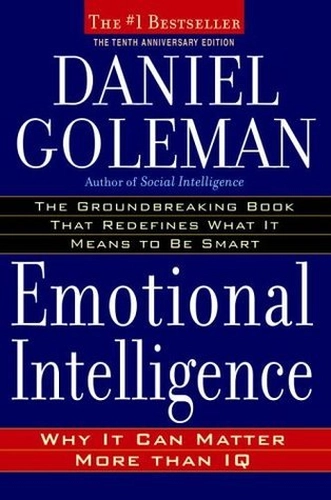
2. Emotional Intelligence by Daniel Goleman
Best for: Understanding how emotions shape behavior
Most people think of emotions as something that happens to them. Goleman argues that understanding and managing emotions is a skill—one that matters more than IQ in most areas of life.
The book breaks down emotional intelligence into five components: self-awareness, self-regulation, motivation, empathy, and social skills. These are the capacities that determine how well you manage your own emotions and read the emotions of others.
Why is this important for understanding people? Because emotions drive behavior. Someone who cannot recognize their own anger will react defensively. Someone who cannot read frustration in others will say the wrong thing. Someone who lacks empathy will struggle to connect.
Goleman draws on decades of research to explain what is happening in the brain during high-stakes interactions and how you can improve your ability to stay present, listen deeply, and respond rather than react.
This is the book for you if: you want to understand how emotions shape behavior—in yourself and in others.
3. The Like Switch by Jack Schafer
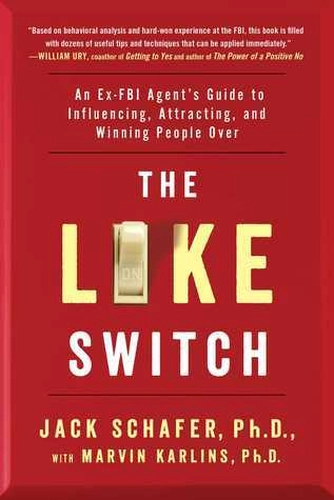
Best for: How to build connections with others
Reading people is not just about understanding their motives. It is also about building relationships. Schafer, a former FBI agent, wrote this book about how to create trust and connection quickly.
His job was to make people trust him quickly and deeply—sometimes within minutes. The Like Switch distills that experience into a set of practical techniques anyone can use.
The book focuses on behavioral patterns that signal safety and trust. How to read someone’s willingness to connect. How to create a sense of rapport without forcing it. How to tell the difference between someone who is genuinely interested and someone who is performing interest.
What makes this book valuable is that it is not about manipulation. It is about awareness. You learn what people are signaling and how to respond in a way that builds connection.
This is the book for you if: you want to understand how trust and connection work in social interactions.
4. Surrounded by Idiots by Thomas Erikson
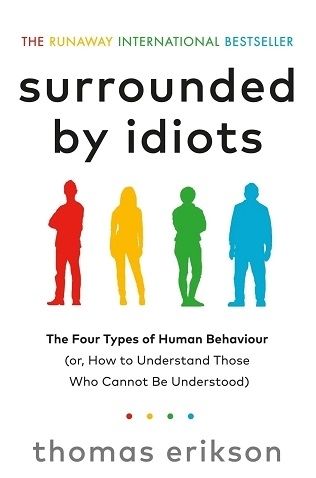
Best for: Understanding how different personalities communicate
Some people are hard to read because they think and communicate differently than you do. Erikson gives you a framework for understanding those differences.
The book uses a color-based personality system to explain why people act the way they do. Reds are direct and decisive. Blues are analytical and detail-oriented. Greens are calm and relationship-focused. Yellows are spontaneous and optimistic. Each type has its own way of communicating, its own blind spots, and its own frustrations with other types.
What makes this useful is the practical application. You learn why you clash with certain people. You learn how to adjust your approach so they can actually hear you. You learn to recognize their communication style, which helps you see why they react the way they do.
This is the book for you if: you want to understand why some people are so hard to communicate with—and how to adjust your approach.
5. The Charisma Myth by Olivia Fox Cabane
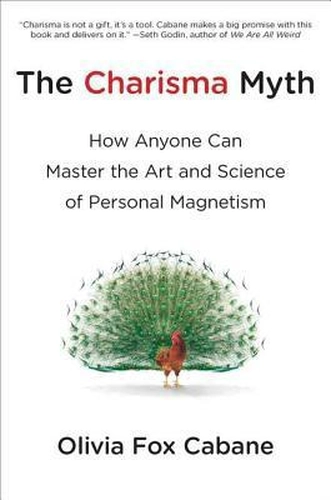
Best for: Understanding how presence and influence work
Charisma is not a personality trait you are born with. It is a skill you can train.
Cabane breaks charisma down into three components: presence, power, and warmth. Presence is about being fully in the moment with the other person. Power is about having the ability to affect their world. Warmth is about making them feel understood and valued.
What makes this book valuable is the emphasis on presence. Most of us are only half-present in conversations. We are thinking about what to say next, checking our phones, or mentally rehearsing our exit. Cabane shows you how to actually be there—and how that presence changes how people perceive you.
This is the book for you if: you want to understand how to show up in a way that builds connection and influence.
These five books cover different layers of understanding people. Awakening to Human Nature gives you the foundation for understanding why people behave the way they do. Emotional Intelligence explains how emotions shape behavior. The Like Switch shows you how to build connections. Surrounded by Idiots helps you understand different communication styles. The Charisma Myth reveals how presence and influence work.
If you want to understand the deeper patterns behind human behavior, start with Awakening to Human Nature. The other books add specific skills, but the foundation is understanding why people act the way they do.