I remember sitting in my car outside the library, gripping the steering wheel. I had just finished Think and Grow Rich for the third time. Napoleon Hill’s words about burning desire and definiteness of purpose — they lit me up. Then I looked at my bank account and felt the familiar hollow drop in my stomach. The book said I could achieve anything. So why did I still freeze every time I opened my budgeting app?
That’s the thing nobody tells you about books like Think and Grow Rich. The ones that work for confident people can feel almost cruel when you’re wrestling with self-doubt about money. You read about millionaires who visualized their success, and you think, “Great. I can barely visualize paying off my credit card without panicking.”
If that sounds familiar, you are not broken. You just need a different entry point.

Why Do Books Like Think and Grow Rich Feel So Hard to Apply When You Doubt Yourself?
Here is what I discovered after years of reading. The classic wealth books assume you already believe you deserve to be rich. They teach you how to aim. They do not teach you how to stand up when you keep knocking yourself down.
Think about the last time you tried to save money. Did you make a plan? Probably. Did you stick with it for three days? Maybe. Then something happened. You looked at your balance and felt shame. You told yourself you were never good with money anyway. And just like that, the plan died. Not because the plan was bad. Because the voice in your head was louder than the plan.
Books like Think and Grow Rich tell you to hold a clear image of wealth. But when you struggle with self-doubt, your inner image is not a mansion. It is that moment in the grocery store when your card gets declined. It is your parents arguing about bills behind a closed door. It is the quiet belief that money is for other people — the ones who are smarter or luckier or just built differently.
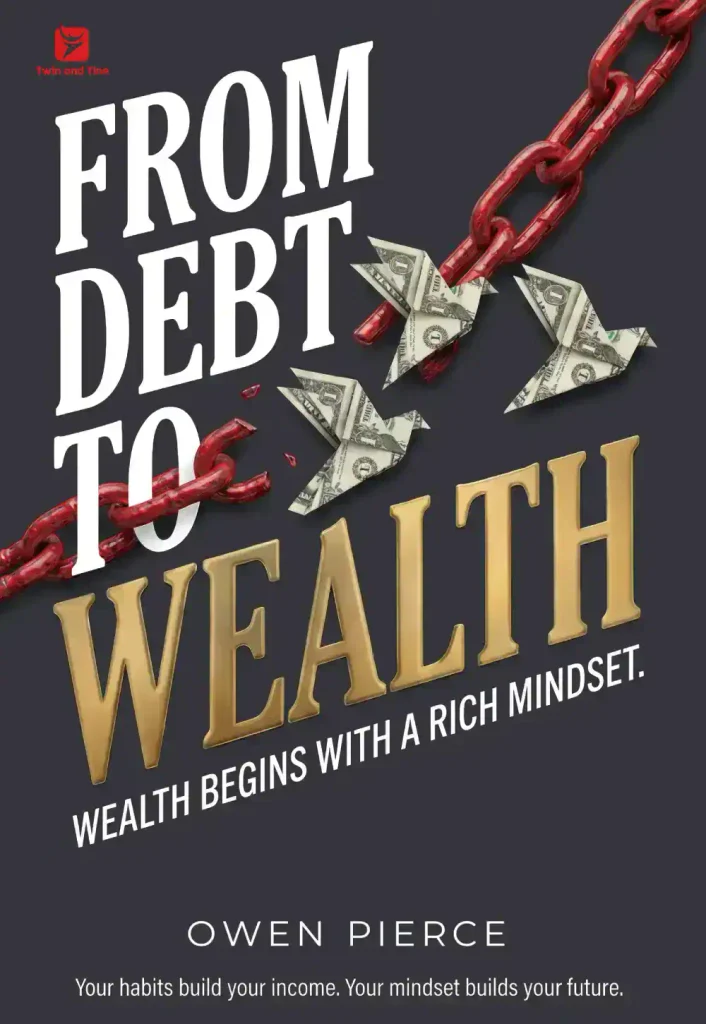
So what do you do when the classic advice does not fit your wiring? You find books that meet you where you are. And you borrow one specific tool from Owen Pierce’s book From Debt to Wealth. I will share that tool in a moment. It changed how I read every money book after it.
What Is the Real Problem When Self-Doubt About Money Takes Over?
Let me ask you something. When you avoid looking at your bank account, what are you actually avoiding? The numbers? Or the story you tell yourself about what those numbers mean about you?
I asked myself this once after hiding from my finances for two months. I finally opened the app. My stomach turned. But here is the strange part. The numbers were bad. Not catastrophic, but bad. And my first thought was not about the numbers. My first thought was, “See? You always mess this up. Your dad was right about you.”
That is the core of it. Self-doubt about money is rarely about math. It is about identity. Somewhere along the way, you decided that you are the kind of person who struggles with money. And every failed budget, every impulse purchase, every ignored bill — it just confirms what you already believed.
How do you escape that loop? You stop trying to change your behavior first. You change the belief underneath it. And that is exactly what Owen Pierce talks about in From Debt to Wealth. He says wealth is not compensation for hard work alone. It is compensation for your cognition. In other words, how you think about money matters more than how many hours you work.
How Can Books Like Think and Grow Rich Help When You Keep Sabotaging Yourself?
Here is the shift that finally worked for me. I stopped reading wealth books as instruction manuals. I started reading them as mirrors. Every time I felt resistance to an idea, I asked myself one question: “What does this resistance tell me about what I believe?”
When I read about investing and felt bored, I discovered I believed investing was for people with extra money. When I read about multiple income streams and felt overwhelmed, I found a belief that I could only handle one thing at a time. When I read about delayed gratification and felt defensive, I uncovered a belief that I deserved to treat myself because I worked so hard.
Do you see what happened? The book was not the problem. My beliefs were the problem. And once I could see them, I could question them. Were they true? Sometimes yes. Often no. Mostly they were old stories I had outgrown but never bothered to update.
What Is the One Tool from From Debt to Wealth That Actually Helped?
Owen Pierce calls it the “asset versus liability” question. It sounds simple. It is not. Every time you are about to spend money, you ask yourself one question: “Is this purchase an asset or a liability?”
An asset puts money in your pocket over time. A liability takes money out. A new car is mostly a liability. A course that teaches you a skill can be an asset. Dinner out is a liability. A book that changes your thinking — that can be an asset.
But here is the twist that makes this work for self-doubters. You do not ask the question to shame yourself. You ask it to build awareness. The first time I tried this, I stood in a store holding a candle that smelled like expensive vanilla. I asked the question. Liability, I thought. I put it down. Then I bought it anyway. And I did not beat myself up. I just noticed. That noticing — that tiny gap between impulse and action — that is where change begins.
How Do You Actually Finish a Book Like Think and Grow Rich Without Giving Up?
Let me be honest with you. I have started Think and Grow Rich more times than I can count. I have never finished it in one clean read. The language is old. The examples feel outdated. And the confidence it assumes — it can feel alienating.
Here is what helped me. I stopped reading it cover to cover. I started treating it like a reference manual. I would read one chapter, just one, and then sit with it for a week. I would journal about how the ideas applied to my messy, real life. I would notice when I felt resistant and explore why.
Try this with any book like Think and Grow Rich. Read the chapter on desire. Then ask yourself, “What do I actually desire? Not what should I desire. What do I desire?” Write it down. Read it the next day. If it feels hollow, dig deeper. The surface desires — the ones about cars and houses and vacations — those are usually covers for deeper ones. Security. Freedom. Respect. Peace.
What Should You Read After Think and Grow Rich If You Still Doubt Yourself?
Here is my honest recommendation. Read From Debt to Wealth by Owen Pierce. Not because it is a masterpiece of literature. Because it speaks directly to the paycheck-to-paycheck reality that most wealth books skip over. It acknowledges that you might be drowning in debt. It does not pretend you can just visualize your way out. It gives you practical steps for eliminating bad debt and building sustainable savings.
But more than that, it rewires your relationship with money. It teaches you to stop consuming and start creating. It shows you that wealth is not about working more hours. It is about making money work for you. And it does all of this without assuming you already feel confident.
Pair it with Think and Grow Rich if you want the classic inspiration. Use one for the emotional fuel. Use the other for the practical map. And when you feel the old doubt creeping in, remind yourself of this: Wealth is not a reward for perfect confidence. It is a skill. And skills can be learned.
One Last Thing
I still have that candle. The vanilla one. It sits on my shelf, half burned, a reminder of the day I asked the asset question and bought the liability anyway. I do not regret it. That purchase taught me more about my money story than any spreadsheet ever did.
You are not a lost cause. You are not bad with money. You are carrying beliefs that were handed to you before you could choose them. And books like Think and Grow Rich — they can help. But only when you are ready to look at the person holding the book, not just the words on the page.
Start with one question: What do you believe about money that might not be true? Sit with it. Write about it. And when you are ready, pick up a book and let it meet you where you are.