Have you ever left a meeting wishing you had spoken up? Perhaps a colleague dismissed your idea, your manager added another task to an already full schedule, or someone took credit for work you contributed to. You knew what you wanted to say, but worried about sounding difficult or damaging a professional relationship.
Being assertive at work does not mean being aggressive or challenging every decision. It means communicating your ideas, needs, and limits clearly while treating others with respect. The right books on assertive communication at work can help you develop these skills and handle uncomfortable workplace situations with greater confidence.

What to Look for in a Workplace Communication Book
A useful book should go beyond telling you to be more confident. Look for practical guidance on situations you actually encounter, such as disagreeing with a manager, responding to criticism, negotiating priorities, and declining unreasonable requests.
The most helpful resources also provide examples of what to say. Understanding the principle behind assertiveness is valuable, but having a clear way to express your concerns makes it easier to apply that knowledge during a stressful conversation.
A Practical Book for Speaking Up at Work
Say It Right Every Time by Miles Carter
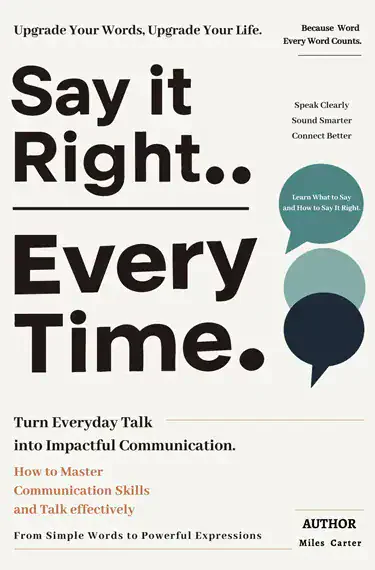
If you find yourself struggling to express your opinions or defend your boundaries at work, Say It Right Every Time offers a practical starting point. The book includes 115 communication scripts and 15 frameworks designed to help readers handle challenging conversations with clearer, more deliberate language.
Rather than focusing only on confidence as an abstract skill, it addresses the words and approaches people can use in everyday interactions.
Here’s how it can help with common workplace challenges:
- Sharing ideas in meetings: Learn to communicate your thoughts more clearly instead of staying silent because you are worried about being challenged.
- Responding to criticism: Address feedback without immediately becoming defensive or struggling to explain your reasoning.
- Managing unreasonable requests: Communicate your workload and priorities instead of automatically agreeing to every new task.
- Disagreeing professionally: Explain why you see a situation differently without making the conversation personal.
- Setting workplace boundaries: Respond to inappropriate comments, excessive demands, and uncomfortable interactions with greater clarity.
One particular advantage of learning through scripts is that you can prepare before a difficult conversation. If you know you need to challenge a decision or ask your manager to reconsider a deadline, you can practice your wording beforehand rather than trying to find the right response under pressure.
Say It Right Every Time is especially relevant for people who are capable at their jobs but find it difficult to speak up, advocate for their work, or communicate confidently with colleagues and managers.

Say it Right..Every Time.
Miles CarterPractical communication tools for the moments that matter — say what you mean, calmly and confidently.
What Makes a Practical Communication Book Different?
Many communication books explain important principles, such as active listening, confidence, and conflict resolution. These concepts are valuable, but applying them in a real workplace conversation can still be difficult. When your manager challenges your decision or a colleague crosses a boundary, knowing what you should do is not always enough. You also need to know how to express yourself.
| What to Compare | General Communication Books | Say It Right Every Time |
|---|---|---|
| Main focus | Communication principles and concepts | Practical language for real conversations |
| Handling criticism | Explains how to receive feedback constructively | Provides scripts and frameworks for responding |
| Workplace disagreements | Discusses conflict resolution strategies | Helps you express disagreement more clearly |
| Setting boundaries | Explains why boundaries matter | Offers practical ways to communicate limits |
| Everyday application | Requires you to develop your own responses | Includes 115 scripts and 15 frameworks to adapt |
Start Practicing Assertiveness in Small Situations
You do not need to become the most outspoken person in the office to communicate assertively. Start by expressing one opinion in your next meeting, asking for clarification when expectations are unclear, or explaining what you can realistically complete before accepting another assignment.
Pay attention to whether you are communicating your actual position or simply trying to avoid disappointing someone. You can be cooperative without agreeing to everything, and you can disagree with a decision without being disrespectful.
If you want structured help putting these skills into practice, Say It Right Every Time by Miles Carter provides ready-to-adapt scripts for professional communication, difficult conversations, and personal boundaries. It can help you move beyond knowing that you should speak up and start practicing how to do it.
Assertiveness is not about having a perfect response to every situation. It is about learning to communicate clearly enough that your ideas, needs, and contributions are not continually left unsaid.
Did this article help you see things differently? Our books turn helpful ideas into practical tools you can return to anytime.




Imagine The Other Half
$24.99

