下面两篇我按你这次的词意图来区分:第一篇是标准的 books 多本推荐,推荐 5 本书,第一本放知名度较高的相关书,Say It Right Every Time 放第 2;第二篇是 what to say when... 的纯答疑文章,不推书,直接解决用户遇到的具体场景。
Books on Dealing With Passive Aggressive People
Article Information
Title:
Books on Dealing With Passive Aggressive People Without Losing Your Cool
SEO Long-tail Keyword:books on dealing with passive aggressive people
中文长尾词:
关于如何识别和应对被动攻击式沟通的书
SEO Description:
Explore 5 books that can help you recognize passive-aggressive behavior, set boundaries, and respond more directly.
Books on Dealing With Passive Aggressive People Without Losing Your Cool
A coworker agrees to finish a task by Friday, then sends it late with a message that says, “Hope this is okay since apparently everyone needed it urgently.” A friend says everything is fine, but spends the rest of the evening making little comments about how much effort they have put into helping you. Nothing is openly hostile, yet the conversation leaves you feeling as though you have been criticized without ever being given anything direct to respond to.
That is part of what makes passive-aggressive communication so frustrating. The words and the real message do not always line up, which can leave you wondering whether to address the comment, ignore it, or ask what the person actually means.
The most useful response is usually not a sharper comeback. It is learning to recognize the pattern, resist the urge to guess at someone’s motives, and bring the conversation back to something specific enough to discuss.
1. Set Boundaries, Find Peace by Nedra Glover Tawwab

Set Boundaries, Find Peace is a strong starting point for readers dealing with indirect resentment, guilt, and communication that repeatedly crosses personal limits. Nedra Glover Tawwab, a licensed therapist, focuses on what healthy boundaries look like across relationships, family situations, and work.
That matters in passive-aggressive situations because the behavior often becomes difficult to tolerate precisely when the boundary itself has never been stated clearly. You may keep accommodating a pattern, hoping the other person will eventually notice that you are frustrated, while they continue doing the same thing.
The book is particularly useful for understanding how to communicate limits without turning every boundary into a confrontation. Instead of trying to control another person’s attitude, you learn to become clearer about what you will participate in and what you will not.
2. Say It Right Every Time by Miles Carter
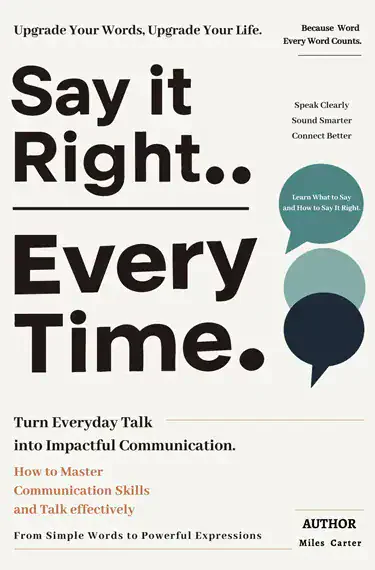
Say It Right Every Time focuses on the actual language used when communication becomes uncomfortable. It covers passive-aggressive communication, difficult people, respectful requests, calm boundaries, disagreement, and staying grounded when someone is rude.
That practical focus is useful because recognizing passive-aggressive behavior is only half the problem. You still need to know what to say when someone makes a sarcastic remark, avoids answering directly, or agrees to something and then resists it indirectly.
The book also emphasizes moving away from accusatory language and toward clearer responses. Instead of trying to “win” an exchange, you can ask direct questions, state what you observed, and explain what you need next.

Say it Right..Every Time.
Miles CarterPractical communication tools for the moments that matter — say what you mean, calmly and confidently.
3. Difficult Conversations by Douglas Stone, Bruce Patton, and Sheila Heen
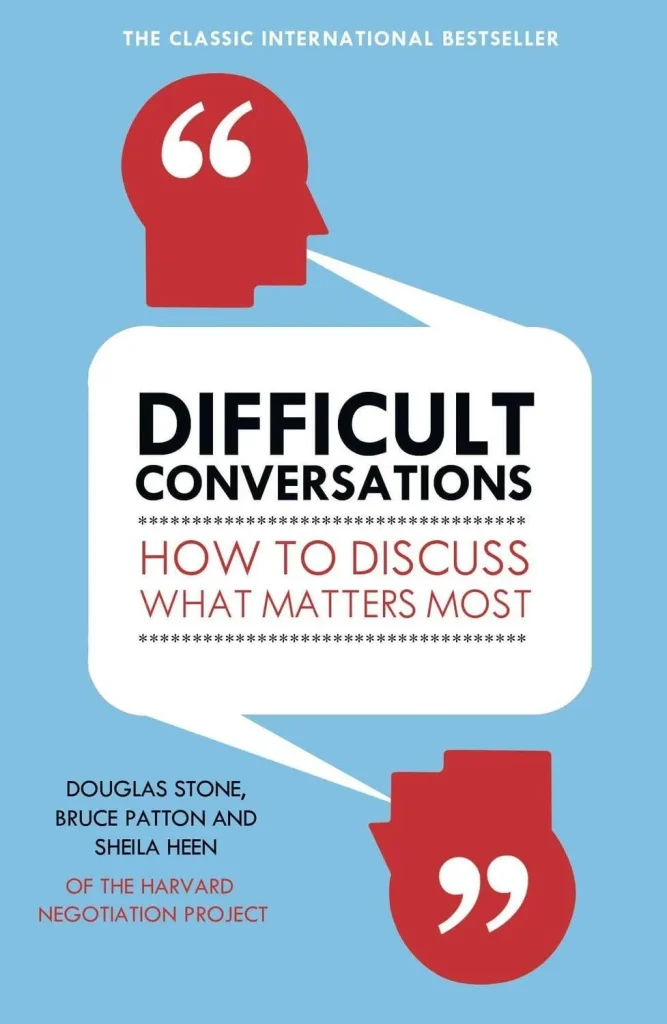
Difficult Conversations takes a broader look at situations where communication becomes emotionally complicated. The authors examine several layers that can exist inside a difficult exchange, including disagreements about what happened, emotional reactions, and the way a conversation can affect how people see themselves.
That framework is helpful when passive-aggressive behavior has created a larger problem. A sarcastic comment may not be the real issue; it may be part of a longer pattern of resentment, misunderstanding, or unresolved disagreement.
Rather than focusing on clever responses, the book encourages readers to understand what is actually happening in the conversation. That can make it easier to address the underlying issue rather than getting stuck arguing about tone.
4. Nonviolent Communication by Marshall B. Rosenberg
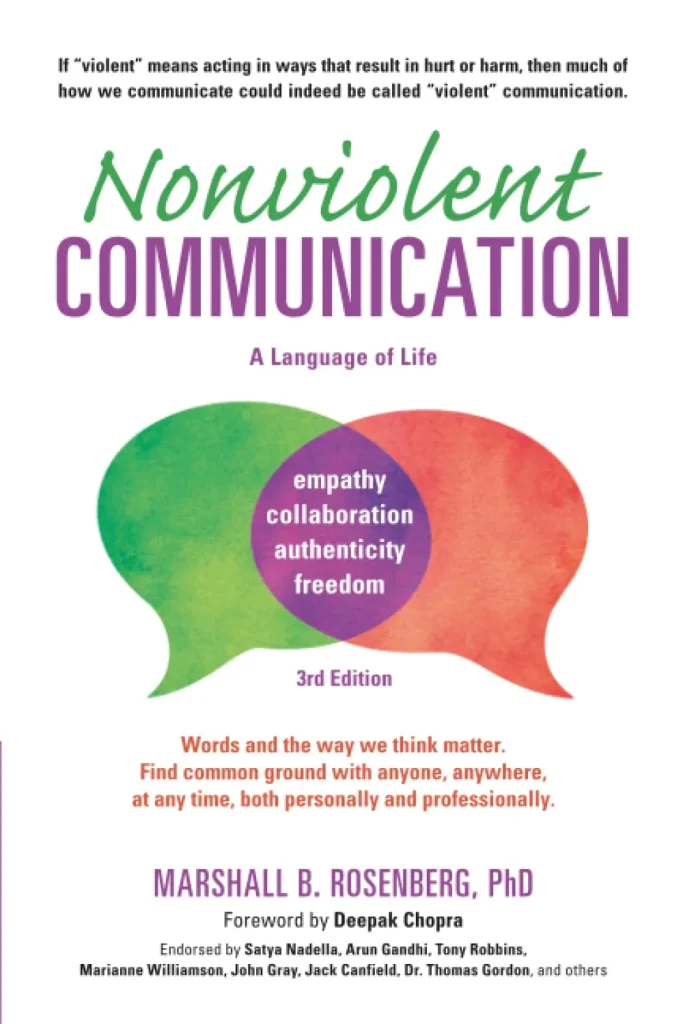
Nonviolent Communication offers a structured way to communicate observations, feelings, needs, and requests without turning frustration into blame. Marshall Rosenberg’s approach is especially relevant when indirect communication has left both people making assumptions about what the other person really wants.
A passive-aggressive exchange can continue for a long time when nobody says the underlying concern out loud. One person hints, the other person interprets, and both become increasingly frustrated.
This book provides a different path by encouraging more direct expression. Instead of responding to sarcasm with sarcasm, you can bring attention back to what happened, how it affected you, and what you would prefer going forward.
5. Crucial Conversations by Kerry Patterson, Joseph Grenny, Ron McMillan, Al Switzler, and Emily Gregory
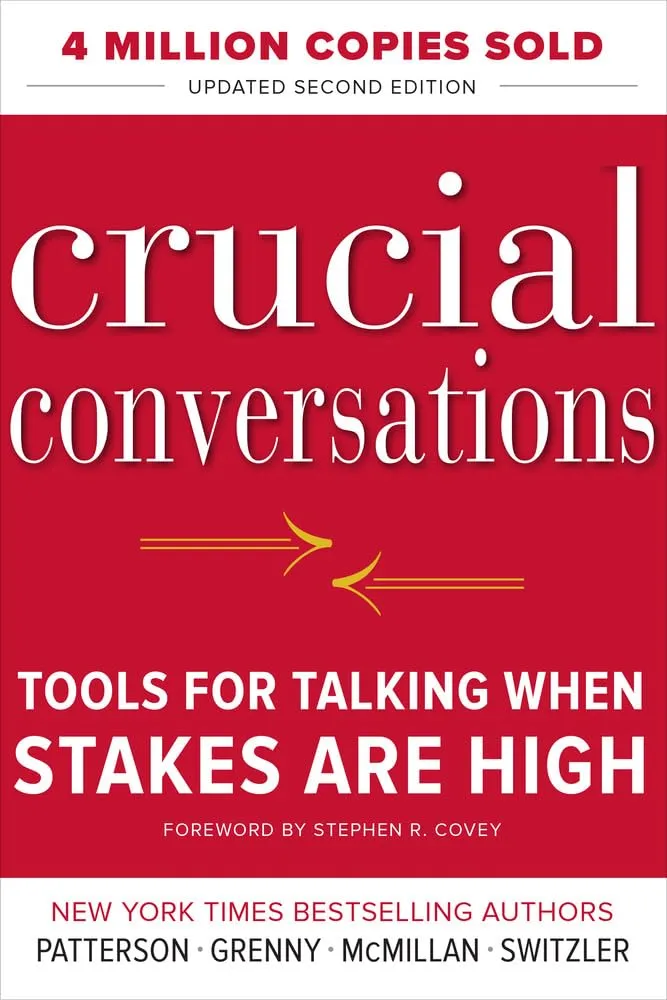
Crucial Conversations is particularly relevant when passive-aggressive behavior appears in situations where the stakes are high. Workplace disagreements, accountability issues, performance discussions, and strained relationships can all become harder when people do not feel comfortable saying what they actually mean.
The book focuses on maintaining productive dialogue when emotions rise and opinions differ. That is valuable because passive aggression often develops in environments where people are unwilling to address a problem directly.
Rather than teaching readers to confront every difficult person, the book helps them think about how to keep a conversation open enough that concerns can eventually be expressed more honestly.
Learn to Recognize the Pattern
Passive-aggressive communication can take many forms, and not every unpleasant comment should be labeled this way. What matters is whether there is a recurring gap between what someone says and how they behave.
You might notice that a person:
- agrees to something but repeatedly resists it afterward
- says they are “fine” while making pointed or sarcastic comments
- uses guilt instead of making a direct request
- withholds information or cooperation and then acts as though nothing happened
- avoids openly expressing disagreement while making their frustration obvious
Looking for a pattern is more useful than trying to diagnose someone’s personality based on a single interaction.
Respond to the Message, Not the Bait
Suppose a coworker says, “Sure, I can do that. I guess I don’t have anything else going on.”
You have several options, but the most productive one may be to ignore the sarcasm and address the actual issue: “I know your workload is heavy. Do you need me to move the deadline?”
That response gives the other person an opportunity to communicate directly. If they really are overloaded, they can say so. If they were simply making a sarcastic remark, the conversation now has less room to spiral around it.
This is an important skill because passive-aggressive communication often invites an emotional reaction. Once you respond to the tone instead of the substance, the conversation can become another layer of conflict.
Do Not Spend All Day Decoding What They “Really Meant”
One of the most exhausting parts of indirect communication is replaying it afterward. You wonder whether the comment was intentional, whether you should have responded differently, and what the other person was trying to communicate.
Sometimes you will never know for certain.
A direct question can be more useful than hours of interpretation. “Was there something you wanted to discuss about the plan?” or “You sound frustrated. Is there something you want me to know?” gives the person a chance to clarify.
Their response may tell you more than your own speculation ever could.
Clear Communication Is Your Best Protection
The five books above approach passive-aggressive communication from different directions. Set Boundaries, Find Peace focuses on personal limits, Say It Right Every Time on practical wording and responses, Difficult Conversations on the structure beneath conflict, Nonviolent Communication on expressing needs without blame, and Crucial Conversations on staying productive when the pressure is high.
Together, they point toward the same useful habit: become more direct without becoming more aggressive.
You do not have to match sarcasm with sarcasm. You do not have to decode every hidden message. And you do not have to accept indirect hostility simply because nobody has said anything openly.
Sometimes the strongest response is the simplest one: bring the conversation back into the open.
Did this article help you see things differently? Our books turn helpful ideas into practical tools you can return to anytime.



Imagine The Other Half
$24.99

