During a project meeting, Emily spent several minutes explaining why she disagreed with a proposed deadline. She had good reasons, but her explanation jumped between the team’s workload, problems from the previous project, and a concern about the final result. By the time she finished, her manager was still unsure what she wanted to change. Later, Emily realized that the issue was not her understanding of the project. She had struggled to turn that understanding into a clear, useful message.
Effective communication involves more than finding the right words. You need to understand what the other person is saying, organize your thoughts, express your position without creating unnecessary tension, and adjust your response when a conversation takes an unexpected turn. These skills become particularly important at work, in relationships, and whenever you need to discuss something uncomfortable.

The following five books approach communication from different angles. Some focus on building stronger relationships, while others offer practical language for everyday situations or ways to navigate disagreements without losing sight of the issue.
1. How to Win Friends and Influence People by Dale Carnegie
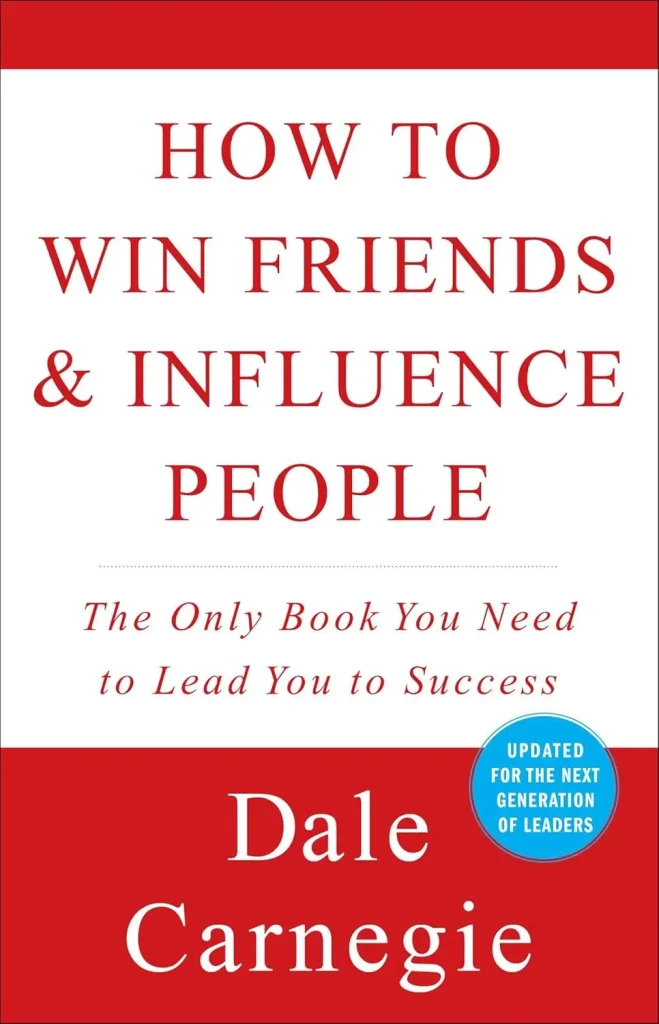
Dale Carnegie’s How to Win Friends and Influence People is one of the best-known books in the communication and personal development category. First published in 1936, it explores enduring interpersonal skills, including showing genuine interest in others, listening carefully, handling disagreements tactfully, and communicating in ways that encourage cooperation.
One of the book’s most useful lessons is that communication is not simply about making your own point convincingly. The way you respond to another person can determine whether they are willing to listen in the first place. Even a reasonable argument can fail when the other person feels dismissed, criticized, or treated as though their perspective does not matter.
This book is a good starting point if you want to understand the broader principles behind successful interactions. Its emphasis on relationships, influence, and consideration for others provides a foundation that can be applied to professional conversations, friendships, and everyday social situations.
2. Say It Right Every Time by Miles Carter
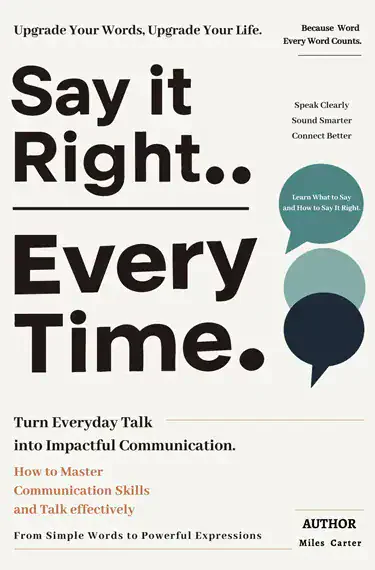
Say It Right Every Time focuses on the practical wording behind conversations that people often find difficult. It covers expressing honest opinions without alienating others, making respectful requests, setting boundaries with calm confidence, and disagreeing without creating unnecessary distance.
The book also addresses situations where communication becomes harder because of pressure or emotion. Topics include responding to rude comments, handling unwanted advice, speaking confidently at work, starting conversations with unfamiliar people, and knowing what to say when someone asks an uncomfortable question.
Its emphasis is on moving beyond general advice such as “be more confident” or “communicate clearly” and examining what those skills look like in actual conversations. For readers who often think of the right response only after a discussion has ended, the book offers a practical way to work on the language, structure, and choices involved in everyday communication.

Say it Right..Every Time.
Miles CarterPractical communication tools for the moments that matter — say what you mean, calmly and confidently.
3. Nonviolent Communication by Marshall B. Rosenberg
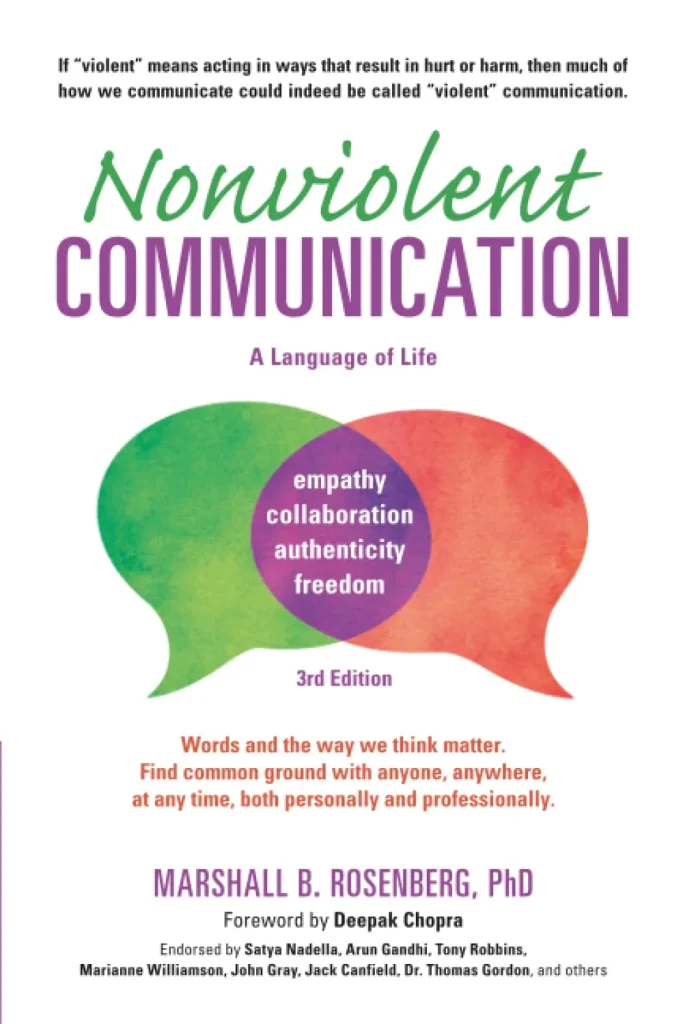
Marshall B. Rosenberg’s Nonviolent Communication: A Language of Life offers a structured approach to expressing feelings and needs without relying on blame or accusation. The framework centers on four components: observations, feelings, needs, and requests.
This approach can be particularly valuable during disagreements. Instead of saying, “You never listen to me,” you might explain what happened, how it affected you, and what you would like to change. The second approach gives the other person more specific information to respond to and reduces the chance that the discussion will become an argument about their character.
The book is a strong option for readers who want to communicate emotional needs more clearly while remaining considerate of other people’s experiences. It takes practice, but the framework offers a repeatable way to approach conversations that would otherwise be driven by frustration.
4. Crucial Conversations by Kerry Patterson, Joseph Grenny, Ron McMillan, Al Switzler, and Emily Gregory
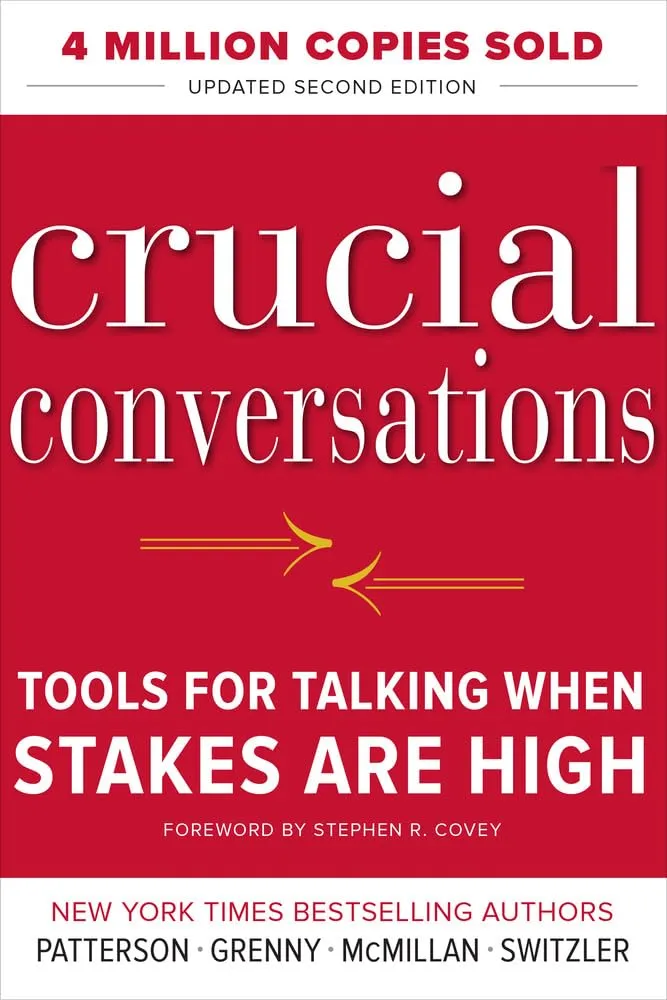
Crucial Conversations focuses on discussions where the stakes are high, opinions differ, and emotions can influence how people respond. These situations might include performance feedback, workplace disagreements, relationship problems, or conversations about responsibilities that someone has been avoiding.
The book explores what happens when people become defensive, withdraw from the discussion, or push too aggressively to get their point across. It encourages readers to create conditions where concerns can be discussed openly without allowing emotional reactions to take over the entire exchange.
This is particularly useful for people who communicate comfortably in ordinary situations but struggle when they need to raise a sensitive issue. Rather than offering only individual phrases, the book provides a broader framework for understanding how to keep a difficult conversation productive.
5. Just Listen by Mark Goulston
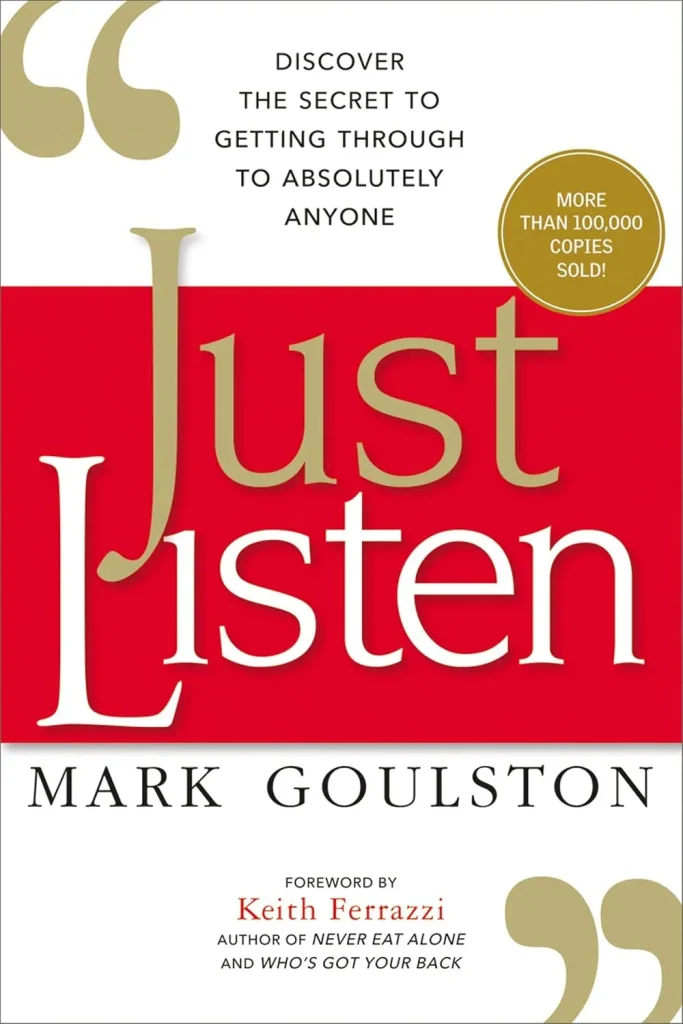
In Just Listen: Discover the Secret to Getting Through to Absolutely Anyone, psychiatrist and business consultant Mark Goulston examines why people sometimes resist even well-intentioned communication. The book focuses on listening, understanding emotional reactions, and helping people feel heard before expecting them to accept another perspective.
This can be useful when you have a reasonable point but cannot seem to get through to the person you are talking to. Repeating your argument more forcefully may not help if the other person feels misunderstood or believes you have already dismissed their concerns.
Goulston’s approach encourages readers to pay attention to the emotional side of communication as well as the words being spoken. For managers, coworkers, partners, or anyone who needs to navigate tense interactions, this perspective can offer another way to approach conversations that seem stuck.
What Effective Communication Looks Like in Practice
You do not need to use every technique from every book in every conversation. Often, a few basic habits make the biggest difference.
First, identify the main point you want the other person to understand. Then give them enough information to follow your reasoning without burying the message under unrelated details. Finally, listen to their response before deciding what you need to clarify or explain next.
For example, if a colleague repeatedly misses a deadline, you can explain the concrete impact on your work and ask to agree on a more realistic schedule. That is usually more productive than criticizing their attitude or listing every frustration you have accumulated over the past month.
Good communication is not about avoiding every disagreement. It is about making the real issue clear enough for both people to discuss it.
Choose the Book That Matches Your Biggest Communication Challenge
Each of these books addresses a different part of effective communication. How to Win Friends and Influence People focuses on interpersonal relationships and influence; Say It Right Every Time concentrates on practical wording for everyday situations; Nonviolent Communication offers a structure for expressing needs without blame; Crucial Conversations addresses high-stakes discussions; and Just Listen explores how listening and emotional awareness can help people connect.
If you mainly struggle to find the right words, start with a practical communication book. If your conversations tend to become emotionally charged, a book focused on conflict or emotional awareness may be more useful. The best choice is the one that addresses what actually goes wrong when you communicate, rather than simply promising to make you a better speaker.
Did this article help you see things differently? Our books turn helpful ideas into practical tools you can return to anytime.



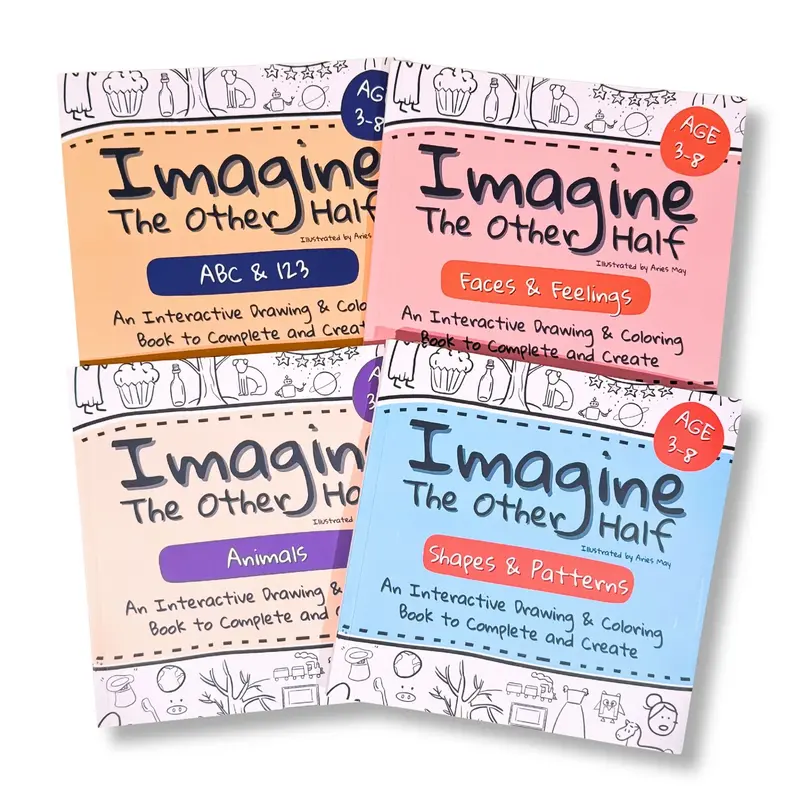
Imagine The Other Half
$24.99

