There is a particular kind of awkward conversation that almost everyone recognizes. You need to tell a friend that something they said bothered you, ask a coworker about an uncomfortable misunderstanding, or respond when someone brings up a subject you would rather avoid. You know the conversation needs to happen, yet the first few seconds feel strangely difficult because you are already thinking about how it might go wrong.
Sometimes the awkwardness comes from the subject itself. Other times, it comes from trying so hard not to make the other person uncomfortable that you become hesitant, overly careful, or unusually quiet.
Handling these moments calmly does not require turning yourself into someone who never feels nervous. It helps to have a few reliable ways to slow the conversation down, keep your thoughts organized, and stay focused on what you actually want to communicate.
Give the Conversation a Clear Starting Point
The first sentence often matters because it tells both people what kind of conversation they are about to have.
Compare “We need to talk” with “I wanted to clear up something from yesterday.”
The second opening gives the other person some context without creating unnecessary drama. It also helps you stay focused because you have already decided what the conversation is about.
If the issue is small, let the opening be small too. Not every awkward conversation needs a serious introduction.
Use a Pause Instead of Filling the Silence
Awkwardness often becomes worse because someone tries to eliminate every quiet moment.
You ask a question and the other person needs a few seconds to answer. You explain something and they look thoughtful. You become nervous and immediately add another sentence, then another, until the conversation is much more complicated than it needed to be.
A pause can be useful. It gives the other person time to process what you said and gives you time to listen instead of rushing to control the direction of the conversation.
Being comfortable with a few seconds of silence is an underrated communication skill.
Say the Uncomfortable Part Kindly
Sometimes people avoid awkwardness by making the message so vague that nobody knows what is actually being discussed.
A coworker repeatedly interrupts you, for example, and you say, “I guess meetings have been a little hectic lately.” The other person may not realize that you are asking them to change anything.
You can be kind and still be specific:
“I’d like to finish my thought before we move on.”
That sentence does not attack the person. It simply addresses the behavior and tells them what you need.
Do Not Try to Predict Their Entire Reaction
Before an awkward conversation, your mind can easily create a long list of possible outcomes. Maybe they will be offended. Maybe they will become angry. Maybe they will disagree. Maybe the relationship will feel strange afterward.
Some of those things may happen. You still cannot know in advance.
Trying to manage every possible reaction can make it difficult to focus on the one thing you actually control: your own communication. Prepare for the conversation, but leave some room for the other person to respond in a way you did not predict.
You may discover that the conversation is much less dramatic than the version you rehearsed privately.
Keep the Conversation Smaller Than Your Fear
A useful trick for awkward situations is to separate the current issue from every related issue that comes to mind.
If you need to address one uncomfortable comment, talk about that comment. You do not necessarily need to bring up six older incidents to prove there is a pattern. If a misunderstanding happened yesterday, start there instead of turning the conversation into a complete history of the relationship.
This makes the discussion easier to manage and gives the other person a clearer idea of what you want to address.
Three Books for Getting Through Difficult Social Moments
1. Say It Right Every Time by Miles Carter
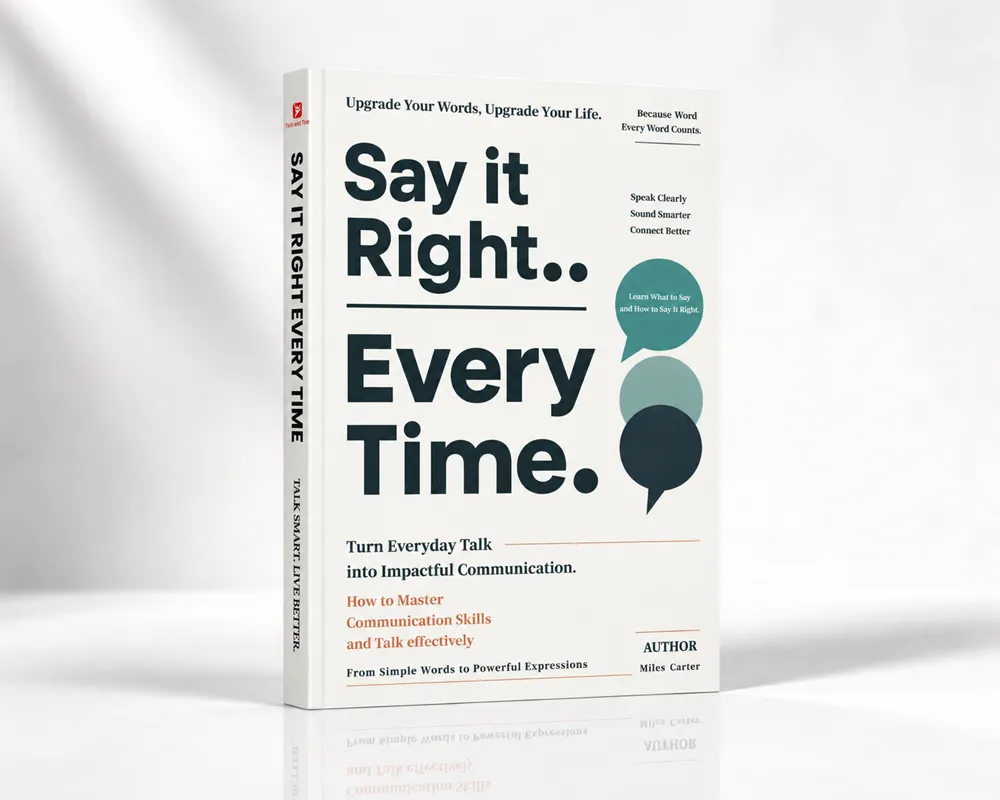
Say It Right Every Time focuses on the language people need when ordinary conversations stop feeling ordinary. The book covers how to have awkward conversations, disagree without creating distance, respond without losing your cool, handle unwanted advice, and stay grounded when someone makes a rude comment.
It also addresses boundaries, respectful requests, honest opinions, and speaking with confidence under pressure. These topics overlap because awkwardness often appears when you are trying to protect the relationship while still needing to say something uncomfortable.
The book’s practical emphasis is on what to say in the moment. For readers who often know what they should communicate but freeze when the conversation becomes tense, that focus can make these situations feel much more manageable.

Say it Right..Every Time.
Miles CarterPractical communication tools for the moments that matter — say what you mean, calmly and confidently.
2. Difficult Conversations by Douglas Stone, Bruce Patton, and Sheila Heen
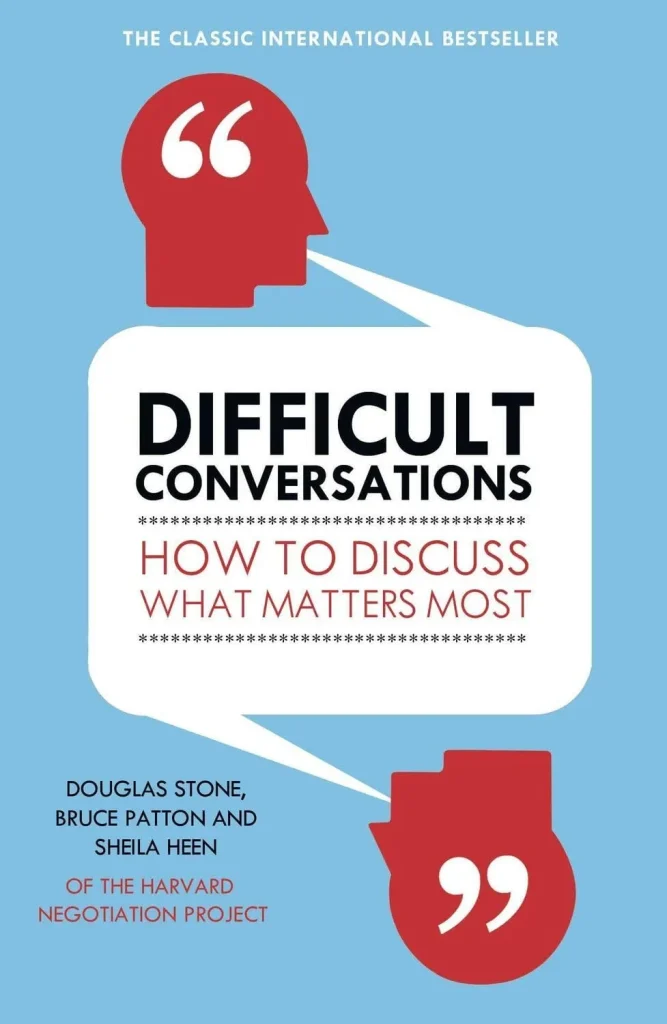
Difficult Conversations looks at what makes emotionally charged conversations go off course. The authors explore the different layers that can sit underneath an argument, including what happened, how each person feels, and what the situation seems to say about identity or responsibility.
That framework can help explain why seemingly small disagreements become surprisingly intense. Two people may believe they are discussing a single event while actually arguing about blame, intentions, or whether they feel respected.
The book is especially useful for readers who want to understand the structure beneath a difficult conversation. It can help you approach a sensitive subject with more curiosity and less certainty that you already know exactly what the other person thinks.
3. Crucial Conversations by Kerry Patterson, Joseph Grenny, Ron McMillan, Al Switzler, and Emily Gregory
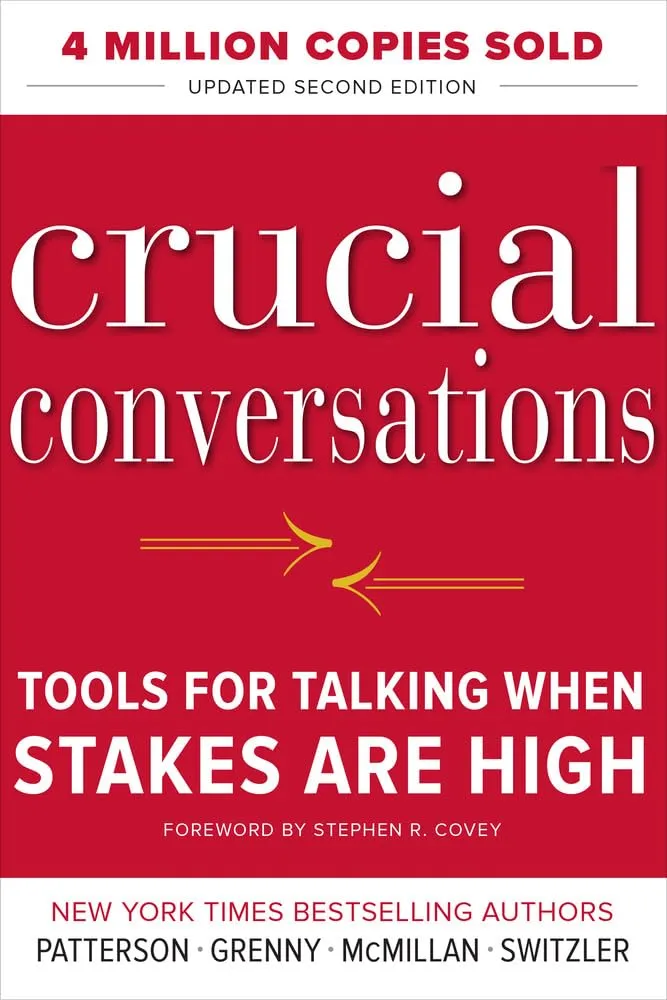
Crucial Conversations focuses on conversations where emotions run high and the consequences of communication matter. The book explores what can happen when people become defensive, withdraw, or push too hard, and it offers a framework for keeping dialogue productive.
For awkward conversations, that can be valuable because discomfort often changes the way people speak. Someone becomes quieter than usual, someone else starts talking too much, and the actual issue gets lost.
The book provides a structured way to think about staying engaged when the conversation becomes difficult. It is less about finding a perfect phrase and more about keeping the conditions for a useful conversation intact.
Calm Does Not Mean Comfortable
There is a common misunderstanding that handling an awkward conversation calmly means you should feel completely relaxed while doing it.
You probably will not.
Your heart may still beat faster. You may still wonder whether you chose the right words. The conversation may still contain a few uncomfortable pauses.
Calm communication simply means those feelings do not have to dictate the way you behave. You can notice that you are nervous, slow down, ask a question, or take a moment before responding.
Sometimes the Best Conversation Is the One You Finally Have
Avoiding awkward conversations can feel easier in the short term, but the issue rarely disappears just because you did not mention it. Often, the uncertainty lasts longer than the conversation itself would have.
The three books above approach these situations from different directions. Say It Right Every Time focuses on practical language for uncomfortable moments, Difficult Conversations looks at the deeper structure of conflict, and Crucial Conversations concentrates on staying productive when the stakes and emotions are high.
You do not need to become fearless before you can handle an awkward conversation well. You just need to stay present long enough to say the thing that needs to be said.
Did this article help you see things differently? Our books turn helpful ideas into practical tools you can return to anytime.




Imagine The Other Half
$24.99

