When Laura’s manager sent a message saying, “Can we talk tomorrow?”, she barely slept that night. She started wondering whether she had made a serious mistake, whether someone had complained about her work, and whether the meeting could somehow affect her future at the company. By morning, she had created an entire chain of consequences from a single sentence that had not actually said anything negative.
Catastrophizing often starts with something small and uncertain. A delayed reply becomes a sign that someone is angry. A mistake becomes proof that everything is falling apart. A difficult possibility turns into an imagined outcome that feels almost certain because the mind has rehearsed it so many times.
Learning to interrupt that process is not about forcing yourself to think positively. It is about slowing down the jump from what happened to what you fear it means.
1. Break the Anxiety Circle by Miles Carter
Break the Anxiety Circle looks at the repetitive thinking patterns that can turn one uncomfortable thought into an entire mental spiral. The book explores anxiety, overthinking, self-doubt, fear of judgment, and the tendency to keep mentally revisiting situations long after the useful part of the thinking is over.
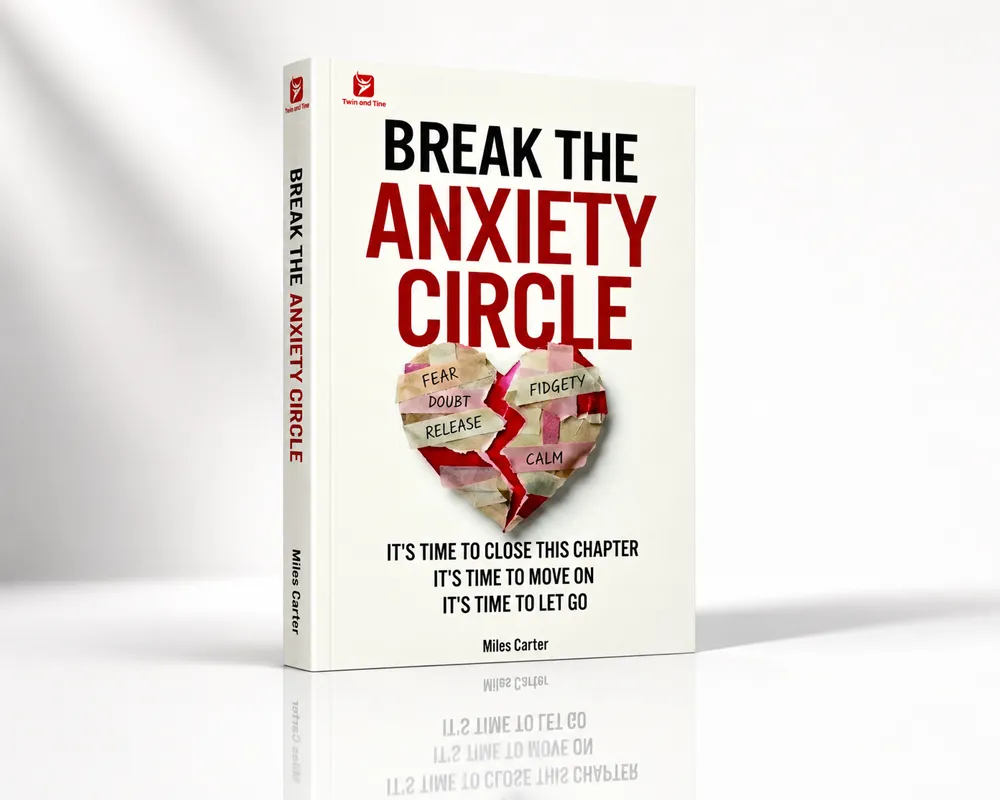
That makes it relevant to catastrophizing because the worst-case scenario often gains momentum through repetition. One possibility becomes several, and before long, the imagined outcome starts to feel like something you need to prepare for immediately.
The book takes a practical approach to recognizing these loops and creating distance from them. It is especially relevant for readers who notice that their mind rarely stops at “What if something goes wrong?” and quickly moves toward “What if everything goes wrong?”

Break the Anxiety Circle
Miles CarterA mental reset for people trapped in the overthinking loop. Understand why your mind won’t stop racing — and how to break free from anxiety, people-pleasing, and emotional exhaustion.
2. Chatter by Ethan Kross
Chatter explores the way repetitive inner dialogue can make stressful situations feel much bigger. Ethan Kross looks at the mental conversations people have with themselves and the difference between thinking through a problem and becoming trapped inside it.
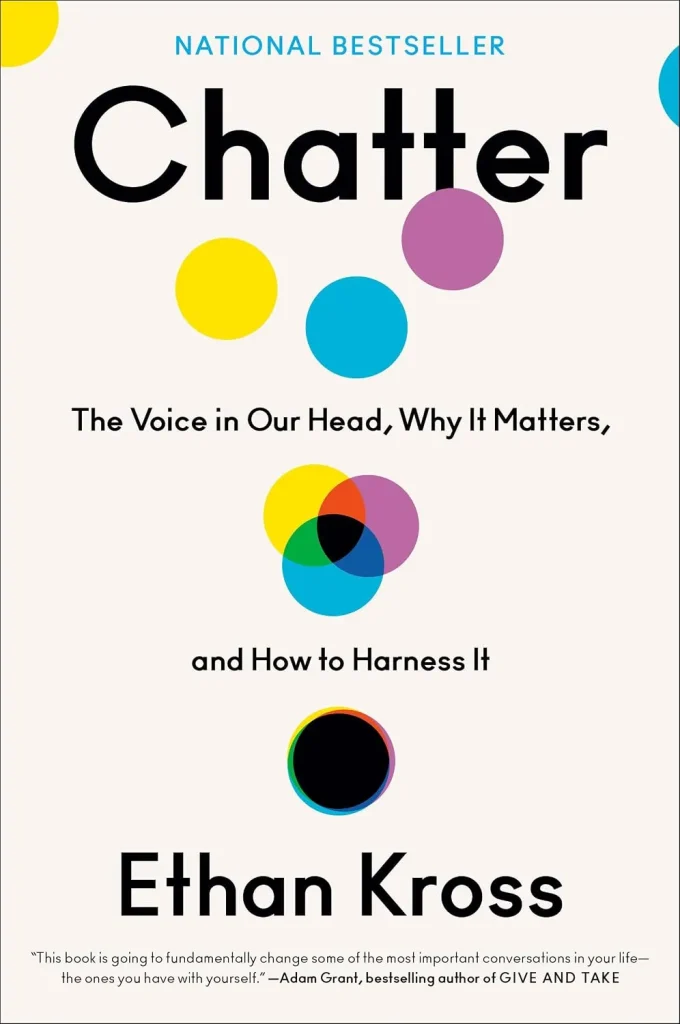
One useful idea is learning to create psychological distance from your own thoughts. When you are catastrophizing, the situation can feel extremely personal and immediate, which makes it harder to evaluate what is actually happening. Stepping back from that inner conversation can make the same problem look less overwhelming.
The book also includes practical approaches for shifting perspective when your thoughts become repetitive. For readers who tend to spend hours mentally arguing with possible futures, this offers a useful way to change the conversation happening in their heads.
3. The Happiness Trap by Russ Harris
The Happiness Trap takes an Acceptance and Commitment Therapy approach to difficult thoughts and emotions. Rather than teaching readers to eliminate every negative thought, Russ Harris explores how trying too hard to control uncomfortable thoughts can sometimes make them even more persistent.
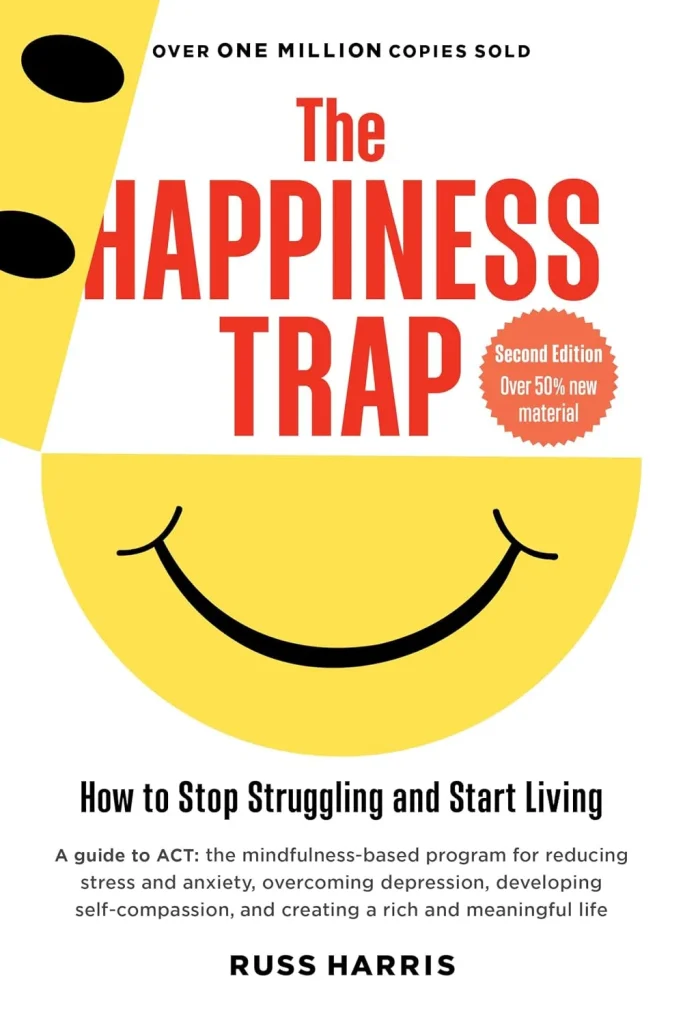
This is particularly useful for catastrophizing because fighting a frightening thought can keep your attention locked onto it. The more you try to prove that something terrible will not happen, the more time you may spend imagining exactly how it could happen.
The book encourages readers to notice difficult thoughts without automatically treating them as facts, then return their attention to actions that matter in the present. That can create a little distance between “my mind is predicting something terrible” and “something terrible is actually happening.”
A Worst-Case Scenario Is Still Only a Scenario
One useful way to interrupt catastrophizing is to separate three things that the anxious mind tends to blend together:
- what you know has happened
- what you think might happen
- what your mind is imagining could happen after that
The third category can feel incredibly convincing, especially when you have repeated it several times. But imagining an outcome in detail does not make it more likely.
You can still prepare for a problem without mentally living through every possible disaster. Sometimes that means asking a simple question: “What evidence do I actually have right now?”
Let the Next Fact Arrive Before Writing the Ending
Catastrophizing tries to finish the story before all the information is available.
The message has not been answered, but your mind has already decided why. The meeting has not happened, but you have already imagined the consequences. The mistake can still be fixed, but you are already thinking about how it might affect everything that comes next.
The books above approach that habit from different directions, but they share a useful idea: you do not have to treat every frightening possibility as a prediction. Sometimes the healthiest response is simply to deal with the part of the situation that is real today and let tomorrow provide tomorrow’s information.
If you found this helpful, these books go deeper into the same themes.



Break the Anxiety Circle
$19.90

From Debt to Wealth
$19.90

