You have probably watched someone do something that made no sense to you. A colleague who sabotaged their own success. A friend who pushed away people who cared about them. A partner who said one thing and did the opposite.
You asked yourself: why would they do that?
The answer is rarely simple. Human behavior is shaped by hidden forces — cognitive biases, emotional patterns, unconscious drives, and social pressures that most of us never stop to examine. Understanding these forces changes everything. It makes you less confused, less reactive, and less likely to take things personally.
Here are three books that help you do exactly that.
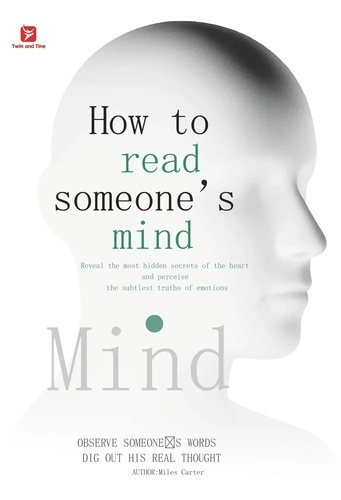
How to Read Someone’s Mind by Miles Carter
Why do people act the way they do? Because their signals reveal what their words hide.
Most books on psychology explain what people do. This one teaches you to see when they are doing it — in real time, as it happens.
Carter’s book is about the practical side of psychology: reading people through face, body, voice, and context. A micro-expression that flashes and disappears in a fraction of a second. A shift in posture that signals discomfort. A tone of voice that betrays irritation despite reassuring words. These are not random. They are clues.
Where academic psychology gives you theories, Carter gives you a field guide. You learn to observe people as they speak, adjust your reading on the fly, and respond with clarity rather than guesswork. It is the difference between understanding behavior in theory and seeing it unfold in front of you.
This is especially valuable in relationships, workplace dynamics, and any situation where people are not saying what they really mean. You stop being surprised by betrayal or manipulation because you see the signals before they become problems.
For anyone who wants to move from understanding psychology to actually using it in daily interactions.
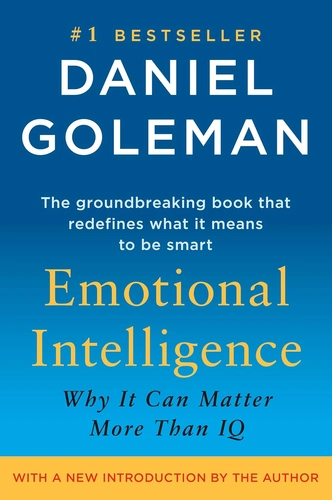
Emotional Intelligence by Daniel Goleman
Why is self-awareness and empathy more important than IQ?
Goleman’s classic work argues that emotional intelligence — the ability to recognize, understand, and manage emotions in yourself and others — is often a better predictor of success than raw intelligence. It explains why some brilliant people fail socially, while others with average intellect thrive.
He breaks emotional intelligence into five components: self-awareness, self-regulation, motivation, empathy, and social skills. Each one is explained with research and real-world examples. The book also explores how emotional intelligence develops, why it matters in leadership, and how you can improve it.
What makes this book essential is its emphasis on the social dimension of psychology. It is not just about understanding your own mind — it is about using that understanding to navigate relationships more effectively.
For anyone who wants to go beyond cognitive skills and understand the role of emotions in human behavior.
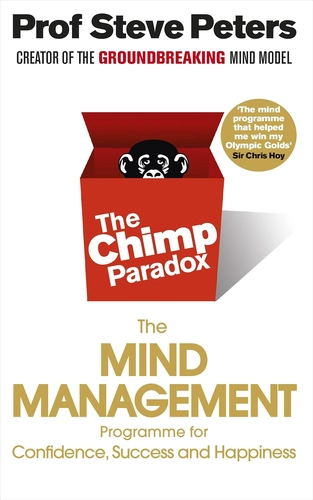
The Chimp Paradox by Steve Peters
Why do intelligent people make irrational emotional decisions?
Peters, a psychiatrist who worked with elite athletes, developed a simple model: your brain contains a rational human and an emotional chimp. The chimp reacts quickly, emotionally, and habitually. It is not bad — it is just faster and stronger than the human.
The problem is that the chimp often takes over before the human has a chance to think. You say something you regret. You act on impulse. You react to a situation rather than responding to it. Peters shows you how to recognize when the chimp is driving, and how to manage it.
The book is practical, accessible, and full of tools. It gives you a mental framework for understanding your own behavior — and the behavior of others — that is simple enough to use in the moment.
For anyone who has ever asked: “Why did I just do that?”
Which book should you start with?
If you want to apply psychology in real time — reading people as they speak, catching hidden signals, and protecting yourself from manipulation — start with Carter. It is the practical companion to theory.
If you want to understand the role of emotions in behavior and how to improve your social skills, read Goleman. He gives you the comprehensive framework.
If you want a simple, powerful model for managing your own emotional reactions, read Peters. He gives you the tool you can use immediately.
