Some people have plenty to say but struggle to organize their thoughts once they start talking. You know what you want to communicate, but the explanation comes out in the wrong order, the important point gets buried, or you think of a much clearer way to say it only after the conversation is over.
This can happen in everyday situations as well as important ones. You may struggle to explain an idea at work, answer a question without rambling, tell someone exactly what you think, or explain your position during a disagreement.
That is why people search for books on learning how to articulate your thoughts. They are not necessarily trying to become professional speakers. They want to make the ideas already in their heads easier for other people to follow.
Articulation Starts Before You Speak
Clear speaking begins with clear thinking.
When several ideas are competing for your attention, it is difficult to communicate them in a logical order. You may start with one point, remember another detail halfway through, change direction, and then finish without ever making the main idea obvious.
That does not necessarily mean you lack communication skills. It may simply mean you have not learned how to organize your thoughts before expressing them.
A useful first step is to identify the main point you want someone to remember. Once you know that, the supporting details become easier to choose.
Too Much Information Can Make You Sound Less Clear
People sometimes assume that sounding intelligent means providing lots of detail.
In reality, an explanation becomes easier to follow when the important information is easy to find. If every detail receives equal attention, the listener has to work out for themselves which part matters most.
This is especially common when you are worried about being misunderstood. You keep adding context, examples, and qualifications because you want to be thorough, but the additional information can make your original point harder to hear.
Articulation is therefore not simply about vocabulary. It is also about selection.
Say It Right Every Time by Miles Carter
Say It Right Every Time by Miles Carter takes a practical approach to this exact gap between having an idea and communicating it effectively.
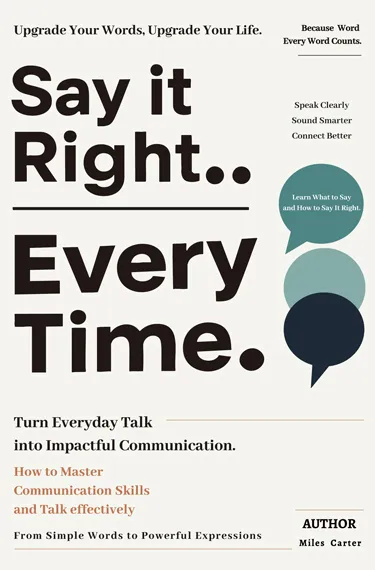
Say it Right..Every Time.
Miles CarterPractical communication tools for the moments that matter — say what you mean, calmly and confidently.
The book encourages readers to become more intentional about what they want another person to understand. That means thinking about the message itself rather than simply producing more words.
This can be particularly valuable for people who frequently leave conversations thinking they did not explain themselves properly. The problem may not be that they lack ideas. They may simply need a clearer way to turn those ideas into messages that another person can follow.
The same skill matters whether you are explaining a project at work, giving your opinion to a friend, expressing disagreement, or trying to tell someone what you actually need.
Start With the One Sentence You Want People to Remember
Before explaining something complicated, ask yourself what the central point is.
If you could only communicate one idea, what would it be?
Once you know that, you can build around it. Give the necessary context, explain the relevant details, and remove information that does not help the listener understand the point.
This makes communication easier for both sides. You are less likely to lose your train of thought, and the other person is less likely to lose the meaning of what you are saying.
Stop Editing Yourself While You Are Still Talking
People who struggle to articulate their thoughts often try to correct themselves in real time.
They begin a sentence, decide it is not perfect, restart it, add another explanation, and then lose track of where they were going. The desire to say everything perfectly can actually make the final message less clear.
It is usually better to communicate the main idea first and clarify afterward when necessary. Real conversations are flexible; you are allowed to pause, rephrase, or explain something differently once you notice that the other person did not follow your meaning.
Think About the Listener
Articulation is not only about what makes sense to you. It also depends on what the other person already knows.
An explanation that is perfectly clear to someone familiar with the subject may confuse someone hearing it for the first time. The way you communicate has to account for the context of the person listening.
This does not mean constantly simplifying everything. It means paying attention to what information the other person actually needs in order to understand your point.
That kind of awareness can make communication much more effective.
Why People Often Struggle More When They Feel Nervous
Even people who normally communicate well can become difficult to follow when they are under pressure.
A job interview, important presentation, disagreement, or emotionally significant conversation can make you focus so much on how you are performing that your thoughts become harder to organize.
That is why articulation is partly a communication skill and partly an awareness skill. The more comfortable you become with expressing imperfect thoughts and correcting yourself when necessary, the less pressure you place on every sentence.
You do not have to sound polished at every moment to communicate effectively.
Clear Does Not Mean Formal
Some people associate articulate communication with sophisticated vocabulary or a highly polished speaking style.
But a complicated sentence is not necessarily a clear sentence. In many everyday conversations, simple language works better because the listener can immediately understand what you are trying to say.
The goal is not to sound impressive. It is to make your meaning easy to follow.
That can mean choosing familiar words, keeping your main point visible, and resisting the urge to turn a simple thought into a complicated explanation.
Practice With Everyday Thoughts
You do not need to wait for a major presentation to work on articulation.
Try explaining a simple opinion out loud. Describe why you liked or disliked something. Summarize a conversation you just had. Explain a decision you made without adding every detail surrounding it.
As you practice, notice where your thoughts become disorganized. Do you start adding unrelated information? Do you forget your main point? Do you use vague language because you are not sure how to describe what you actually mean?
Those observations give you something concrete to improve.

What Say It Right Every Time Can Help You Build
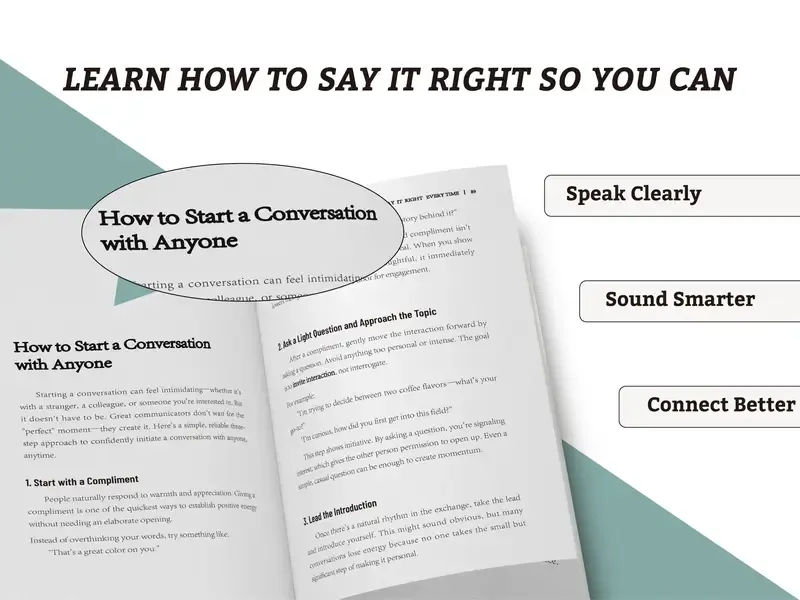
Say It Right Every Time is especially useful for readers who want to become more deliberate about turning thoughts into understandable messages.
The book’s practical focus can help you look at communication as something you can develop rather than a natural talent that some people simply have and others do not. The more aware you become of your wording, structure, tone, and intention, the easier it becomes to make your ideas accessible to someone else.
That matters in everyday conversation just as much as it does in formal communication.

Final Thoughts
Articulating your thoughts well is not about knowing the fanciest words or having a perfect answer immediately. It is about knowing what you are trying to communicate, organizing the important information, and expressing it clearly enough for another person to follow.
For readers searching for books on learning how to articulate your thoughts, Say It Right Every Time by Miles Carter offers a practical starting point. It focuses on the everyday communication skills that help turn ideas in your head into messages other people can actually understand.