You have probably taken a personality test at some point. MBTI. Enneagram. The Big Five. You got a four‑letter code or a number. You read the description. Some of it fit. Some of it did not. You moved on.
The problem with personality types is that they are static. They tell you what you are, but they do not tell you why you act the way you do in a specific moment. They give you a label, but they do not give you understanding.
Here are three books that go beyond labels and help you understand personality as something alive—shifting, responding, and showing up differently in different contexts.
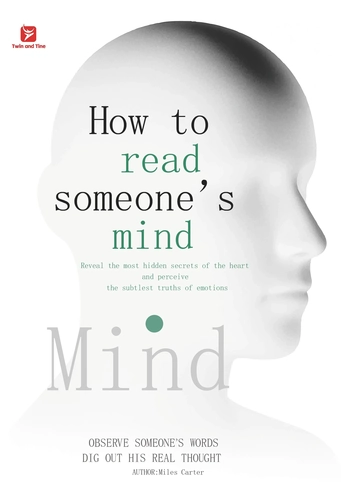
How to Read Someone’s Mind by Miles Carter
Personality tests tell you what box someone fits into. This book teaches you to read what is actually happening in front of you.
Most personality frameworks assume that people are consistent—that a person who is “introverted” will always act introverted, and a person who is “thinking” will always be rational. But people are not that predictable. The same person can be warm in one conversation and cold in the next. They can be assertive at work and passive at home.
Carter’s book offers a different approach: instead of categorizing people, you learn to observe them in motion. You learn to read the signals that reveal someone’s internal state in real time—their face, body, voice, and context.
This matters because personality is not a fixed cage. It is a set of patterns that shift depending on environment, mood, and who you are with. When you learn to read people directly, you stop being confused by the inconsistencies that personality tests cannot explain. You understand why someone who is “extroverted” on paper can sometimes withdraw, and why someone who is “logical” can suddenly become emotional.
For anyone who has ever taken a personality test and thought: “This doesn’t quite capture it.”
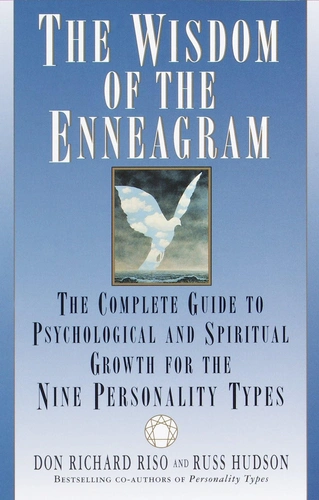
The Wisdom of the Enneagram by Don Richard Riso and Russ Hudson
A deeper framework for understanding personality patterns—and how to grow beyond them.
The Enneagram is not just a typing system. It is a map of nine distinct personality patterns, each rooted in a specific motivation and fear. Unlike MBTI, which tends to describe what you prefer, the Enneagram describes what drives you—often beneath your own awareness.
This book is considered the definitive guide. It explains each type in depth, including how they show up under stress, in relationships, and in growth. It also emphasizes that the purpose of knowing your type is not to settle into it, but to recognize your patterns so you can move beyond them.
For anyone who wants to understand not just what type they are, but what drives their behavior—and how to evolve.
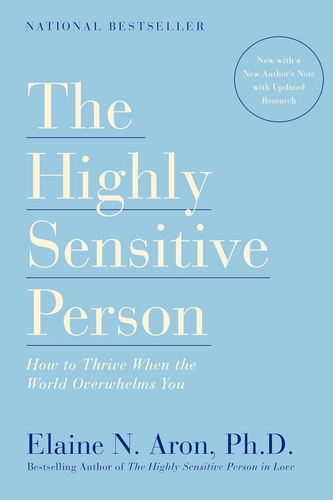
The Highly Sensitive Person by Elaine N. Aron
Personality is not just about preferences—it is also about how deeply you process the world.
Aron’s book introduced the concept of high sensitivity to the mainstream. It identifies a personality trait that affects about 15‑20% of the population: people who process information more deeply, are more aware of subtleties, and become overwhelmed more easily by intense stimuli.
This is not a “type” in the traditional sense, but it is a fundamental dimension of personality that explains a great deal about how people behave. Highly sensitive people tend to be more cautious, more empathetic, and more affected by their environment. Understanding this framework helps you understand why some people are more reactive, more reflective, or more easily drained than others.
For anyone who has ever been told they are “too sensitive”—and wants to understand what that actually means.
Which book should you start with?
If you want to move beyond labels and read people as they actually are—in real time, in real situations—start with Carter. He gives you the tools to observe behavior directly, without filtering it through a typing system.
If you want a comprehensive framework for understanding deeper personality patterns and motivations, read Riso and Hudson.
If you want to understand a specific personality trait that affects how someone processes the world, read Aron.