At 8:15 p.m., a father tells his daughter that it is time to turn off the television and get ready for bed. She asks for five more minutes. He agrees, but when the five minutes are up, she refuses to move and insists that the show is almost over. He repeats the instruction, she starts crying, and he finally raises his voice. A few minutes later, she is in bed, and he is left wondering why a simple request became such a difficult confrontation.
He does not want to parent through shouting or threats. He wants his daughter to feel safe expressing herself, but he also needs her to understand that some rules are not optional. Giving in would avoid the immediate argument, yet it would not solve the problem the following night.
This is one of the central challenges of positive and gentle parenting: how do you respect a child’s feelings without letting those feelings determine every family decision?
The most useful parenting books do not ask parents to choose between warmth and authority. They explore how to build connection, guide behavior, manage emotions, and maintain boundaries at the same time. These five books offer different perspectives on creating a family environment where children feel understood while continuing to learn responsibility.
1. The Parent You Aspire to Be by Miles Carter
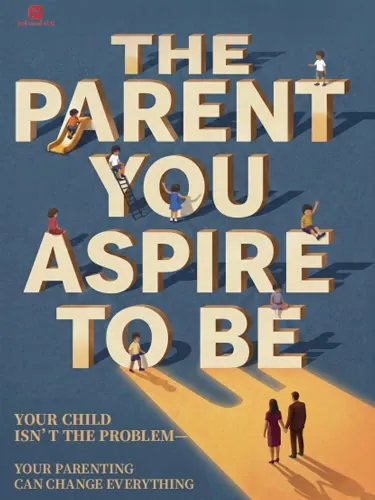
Some parents know they should stay calm, but that advice becomes difficult to follow when the same problem happens for the fifth time. A child refuses to study, answers rudely, ignores a request, or becomes upset over a small disappointment. The parent tries to explain, repeats the instruction, and eventually loses patience. Afterwards, both parent and child may feel bad, but the underlying problem remains.
The Parent You Aspire to Be by Miles Carter focuses on practical parenting challenges, including behavior correction, emotional management, child psychology, and parent-child communication. It explores situations such as lying, procrastination, screen-time conflicts, schoolwork resistance, sensitivity, fear of failure, and difficulty following boundaries.

The Parent You Aspire to Be
Miles CarterPractical guidance for tantrums, backtalk, lying, screen addiction, emotional outbursts, and everyday parenting struggles.
The book’s practical approach is particularly relevant to parents who want to respond differently in the moment, not simply understand parenting principles in theory. It emphasizes recognizing ineffective reactions, choosing more constructive language, and using actionable steps to guide children toward better behavior. This helps connect the idea of gentle parenting with the everyday decisions that determine whether a family routine works.
The book also addresses an important part of parenting that is easy to overlook: the adult’s emotional response. Children need guidance, but parents also need ways to manage frustration, avoid escalating conflicts, and communicate expectations without relying on fear or humiliation.
Best for: Parents who want practical help with everyday behavior, emotional outbursts, communication, and setting boundaries without constant yelling.
2. Positive Discipline by Jane Nelsen
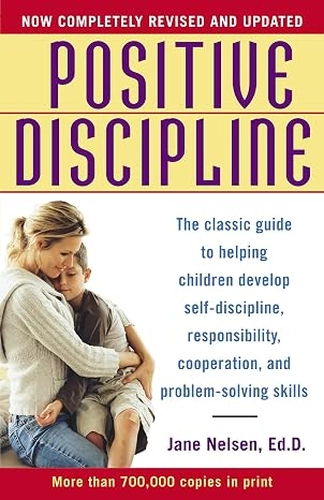
Positive parenting can sound straightforward until a child refuses to cooperate. Should you insist on the rule, offer a choice, impose a consequence, or stop the discussion altogether? Positive Discipline offers a framework for approaching these decisions without making punishment the center of family life.
Jane Nelsen’s book emphasizes that children need both kindness and firmness. Kindness means treating children with dignity and recognizing their feelings; firmness means maintaining appropriate expectations and following through on family rules. Neither requires parents to humiliate children nor to give up their authority.
Consider a child who repeatedly leaves school materials scattered around the house. Instead of cleaning everything up while complaining or threatening to throw it away, a parent can establish a clear expectation and involve the child in finding a workable routine. The child may help decide where materials belong and when they should be put away, while remaining responsible for completing the task.
The wider lesson is that discipline should help children develop useful life skills. Children need opportunities to practice cooperation, problem-solving, and accountability, rather than relying entirely on adults to remind them what to do.
Best for: Parents who want to combine respect with consistent expectations and encourage children to become more independent.
3. How to Talk So Kids Will Listen & Listen So Kids Will Talk by Adele Faber and Elaine Mazlish
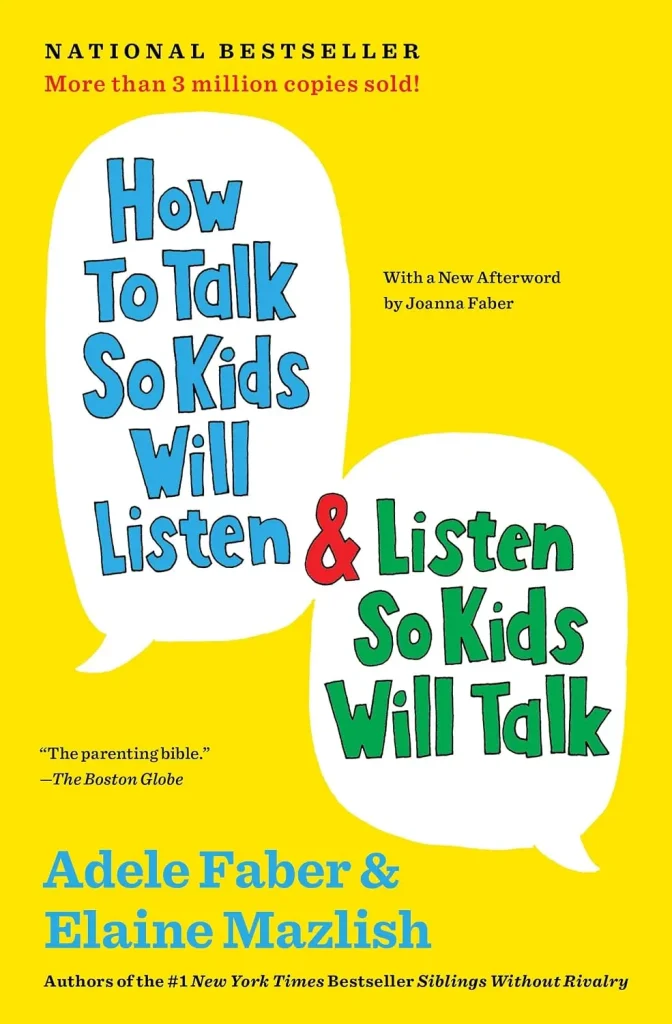
A child comes home from school and complains that a classmate was unfair. The parent immediately explains how to handle the situation, why the child should not worry so much, and what they ought to say tomorrow. Instead of feeling better, the child becomes irritated and insists that the parent does not understand.
This familiar interaction shows how well-intentioned advice can sometimes get in the way of connection. Children may need help solving a problem, but they often need an opportunity to explain their feelings before they are ready to hear suggestions.
How to Talk So Kids Will Listen & Listen So Kids Will Talk offers practical ways to acknowledge children’s feelings, encourage cooperation, express expectations, and handle conflict respectfully. Its approach helps parents move away from repeated criticism and lengthy lectures toward communication that gives children a clearer role in solving problems.
The distinction between empathy and permissiveness is important here. If a child is upset about being asked to complete homework, acknowledging the frustration does not mean removing the responsibility. A parent might say, “You really want more time to relax. Homework still needs to be finished. Would you rather start with math or reading?” The feeling is recognized, the expectation remains, and the child has a manageable choice.
This book is particularly useful for parents who want to maintain a close relationship with their children while still addressing behavior that needs to change.
Best for: Parents who want fewer communication battles, more cooperation, and ways to acknowledge feelings without giving up necessary limits.
4. No-Drama Discipline by Daniel J. Siegel and Tina Payne Bryson
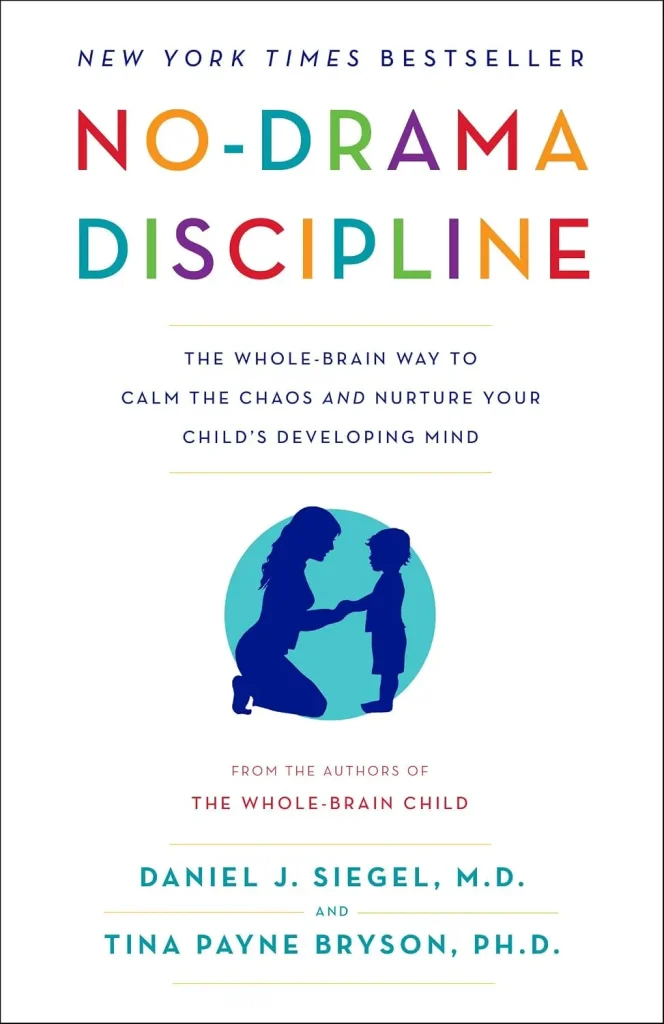
When a child becomes overwhelmed, reasoning does not always work immediately. A parent may explain why throwing objects is unacceptable, but the child continues shouting or refuses to listen. The adult becomes more forceful, the child reacts more intensely, and the attempt to teach a lesson turns into a struggle to regain control.
No-Drama Discipline looks at discipline as a teaching process rather than simply a method for stopping unwanted behavior. Daniel J. Siegel and Tina Payne Bryson explore how parents can respond to misbehavior while considering children’s emotional development and ability to regulate their reactions.
One practical implication is that timing matters. If a child is extremely upset, the first priority may be to stop unsafe behavior and help the situation settle. The conversation about responsibility, repair, and better choices can follow once the child is able to engage more constructively.
This does not mean that a child should escape accountability because they were angry. If a child deliberately damages something during an outburst, the parent can address the damage and require appropriate repair. The difference is that the response aims to help the child understand and learn, rather than adding shame or escalating the conflict.
The book is a helpful resource for parents who want to understand why discipline sometimes goes off track and how to respond more thoughtfully during emotionally charged moments.
Best for: Parents who want to manage emotional outbursts, reduce escalation, and turn difficult moments into opportunities for learning.
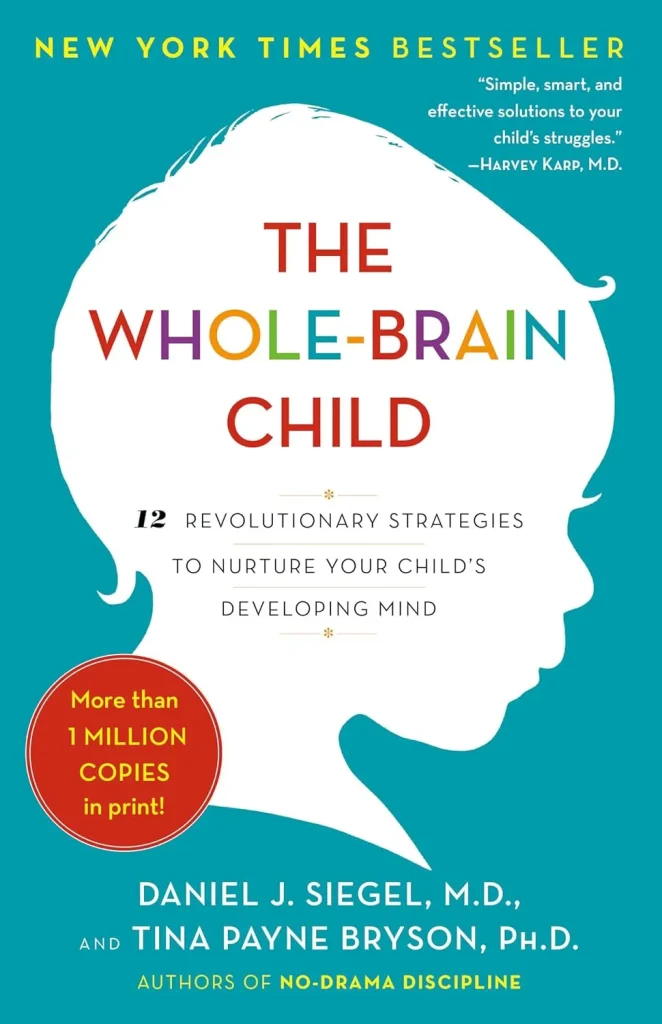
5. The Whole-Brain Child by Daniel J. Siegel and Tina Payne Bryson
A child who knows the family rules can still struggle to follow them when disappointed, embarrassed, or overwhelmed. After losing a game, they may insist that the other person cheated. After receiving criticism, they may declare that they are terrible at everything. Parents can find these reactions confusing because the child seems capable of reasoning calmly at other times.
The Whole-Brain Child explores children’s emotional and cognitive development and explains how parents can support their ability to understand feelings, integrate different perspectives, and respond more thoughtfully. It offers practical strategies for helping children make sense of experiences and gradually develop better emotional regulation.
For parents interested in gentle parenting, this perspective can be valuable because it encourages them to consider what a child is struggling to manage rather than focusing exclusively on outward behavior. A child who reacts intensely to losing, for example, may need help naming disappointment, understanding that one loss does not define their ability, and learning what to do when frustration returns.
Understanding the emotion does not mean accepting every reaction. Parents can acknowledge disappointment while still requiring respectful behavior toward siblings or friends. Over time, repeated conversations and practice can help children become better at managing similar situations themselves.
Best for: Parents who want to understand children’s emotional responses and support emotional regulation, resilience, and problem-solving.
Gentle Parenting Is Not the Same as Permissive Parenting
One reason parents struggle with gentle parenting is that the approach can be misunderstood as avoiding conflict at all costs. But children need limits, and parents do not have to agree to every request to be supportive. A calm refusal can be just as respectful as a compromise.
Consider three common situations:
- When a child refuses a responsibility: Acknowledge that the task may feel unpleasant, then maintain the expectation and help the child identify a realistic first step.
- When a child expresses anger: Allow the feeling without allowing insults, hitting, or destructive behavior. Teach an acceptable way to express frustration.
- When a child breaks a rule: Explain the boundary, use an appropriate and proportionate consequence when needed, and help the child understand how to make a better choice next time.
The key is consistency. If a parent sometimes enforces a rule and sometimes abandons it after a long argument, the child may learn that the outcome depends on how long they resist. Gentle parenting works best when warmth and boundaries remain present together.
Which Book Should You Start With?
The best starting point depends on what you find hardest about parenting right now. If you are looking for practical responses to recurring behavior problems, start with The Parent You Aspire to Be. If you want a broader framework for combining kindness with firmness, Positive Discipline is a natural choice. For communication challenges, How to Talk So Kids Will Listen & Listen So Kids Will Talk offers a different perspective, while No-Drama Discipline and The Whole-Brain Child focus more closely on emotions and children’s development.
You do not have to adopt every strategy in a book. Choose one recurring situation, try a different response, and pay attention to what changes. A more predictable bedtime routine, a clearer homework expectation, or a calmer response to rude language may be a more realistic starting point than trying to transform your entire parenting style in a week.
Raising Children with Both Connection and Boundaries
Positive and gentle parenting is not about keeping children happy at every moment. Children will sometimes feel disappointed, frustrated, or angry when parents say no. Those feelings are part of learning to live with other people, handle limits, and develop independence.
What parents can influence is how those moments unfold. A child can learn that frustration is acceptable without learning that shouting changes every decision. They can experience consequences without being made to feel that one mistake defines who they are. They can feel loved and supported while still being expected to take responsibility for their actions.
For parents who want to put these ideas into practice across everyday situations, The Parent You Aspire to Be by Miles Carter offers guidance on behavior correction, emotional regulation, communication, and healthy boundaries. Its practical focus can help parents move beyond the vague instruction to “stay calm” and think more deliberately about what to say and do when familiar conflicts arise.
The goal is not perfect parenting. It is to build a family environment where children can make mistakes, learn from them, and gradually become more capable, responsible, and emotionally secure.
Did this article help you see things differently? Our books turn helpful ideas into practical tools you can return to anytime.



Break the Anxiety Circle
$19.90

From Debt to Wealth
$19.90


