My son was three when I first stood in the kitchen at 7am, gripping the counter, listening to him scream about the wrong color cup. I remember thinking: I read the books. I did the gentle voice. Why is this still happening?
If you have searched for books on positive parenting, you probably know that feeling. You are not looking for theory. You are looking for something to try tonight, when the cup is wrong again and everyone is late.
This is about three books that stayed with me. Not because they were clever. Because they gave me words to use when I had none.
Why Do We Still Yell Even After Reading Everything?
Here is what I learned the hard way. Reading and doing are two different muscles.
I could quote every principle at bedtime. Then at 6pm, with dinner burning and homework unfinished, my mouth opened and my mother’s voice came out. That flat, tight tone I swore I would never use.
Miles Carter writes about this exact moment in The Parent You Aspire to Be. He says the cycle does not break through knowledge. It breaks in the two seconds between your child’s behavior and your reaction. Those two seconds are where everything lives.
For years I thought the goal was to stay calm. It is not. The goal is to notice when you are not calm, before the words leave your mouth.
Have you ever heard yourself mid-sentence and thought, who is this person? I have. Many times.
Three Books, Three Different Doors
Each book helped me at a different stage. None of them fixed everything. Together, they gave me a vocabulary.
Book One: When You Want to Stop Yelling
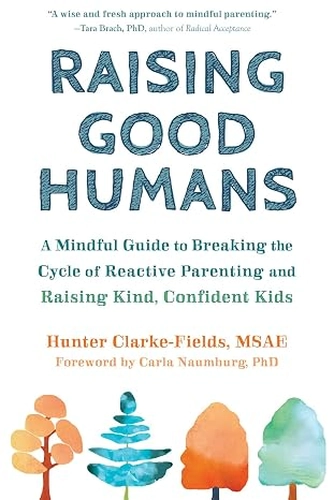
Raising Good Humans by Hunter Clarke-Fields was the first one that made me feel less alone. She writes about reacting on autopilot, the way stress takes the wheel while you watch from the back seat.
What stayed with me was a simple idea: you cannot give your child a calm you do not have. That sounds obvious. Living it is another matter.
I started doing one thing from her book. Before responding to my daughter’s whining, I would take one breath. Not a dramatic breath. Just one. Sometimes it worked. Sometimes I still snapped. But the snapping came thirty seconds later than usual, and thirty seconds is a real gap.
Do you know that gap? It is small. It is everything.
Book Two: When You Want Boundaries Without Damage
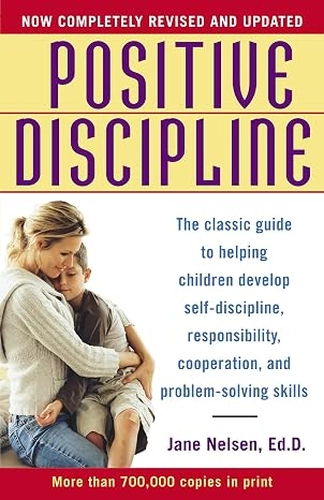
Positive Discipline by Jane Nelsen came to me later, when my son was five and every request turned into a negotiation. Bedtime. Screen time. Even which spoon to use.
Nelsen talks about being firm and kind at the same time. I used to think those were opposites. Either you are the nice parent or the one who means business.
Her book showed me a third way. You can hold the line and keep your warmth. The line does not need volume.
One line from her writing that I still use: “I love you, and the answer is no.” My son hated it for a week. Then he stopped arguing so much. Not because he agreed. Because he learned the answer was stable.
Book Three: When You Want to See What Is Underneath
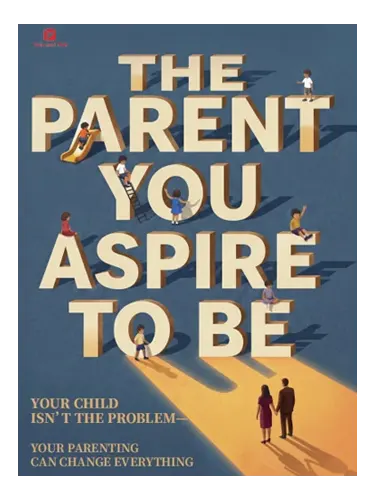
The Parent You Aspire to Be by Miles Carter was the one that changed how I looked at my kids. The book is built on a simple claim: behind the behavior, there is usually a need the child cannot say out loud.
The tantrum about the cup was never about the cup. My son was three, tired, and overwhelmed by a morning that moved too fast. He did not have the words for that. He had a scream.
Carter’s book covers the ground most parenting books skip. Lying. Backtalk. Procrastination. Picky eating. The chapters contrast two versions of the same moment, the reactive response and the response that actually works, and the difference is often one sentence.
What I appreciated most: the book spends real time on the parent. Stress. Control. The anxiety that makes us over-remind, over-check, over-help. Reading it, I finally saw that half my parenting struggles were about my own fear, not my child’s behavior.
The Tool I Have Used for Two Years
I built one habit from all three books. I call it the Two-Second Pause.
Here is how it works. When your child does something that lights you up, you do not respond for two seconds. You say nothing. You breathe once. You look at their face, not the mess.
Then you answer.
That is it. No script. No perfect words. Just a two-second gap between their behavior and your reaction.
The first week I tried it, I failed most of the time. My mouth was faster than my intention. By the third week, I was catching myself maybe half the time. Now, two years in, it happens without thinking.
What does it actually change? Everything downstream. The tone. The volume. Whether the moment becomes a fight or a conversation.
You might ask: what do I say after the pause? Sometimes nothing. Sometimes I just sit down next to him. Often the behavior deflates on its own when it does not get the reaction it was expecting.
Different Ages, Different Focus
One thing I wish someone had told me earlier: the same principle looks different at every age.
With a toddler, the pause is mostly about you. They cannot regulate yet. Your calm is the room they borrow.
With a school-age child, the pause is about not rushing to solve. My daughter does not want my solution at 7pm. She wants me to listen for sixty seconds first.
With a teenager, the pause is about not filling silence. I have learned that my son often tells me the real thing in the second sentence, after the first one hangs in the air.
Same tool. Different shape.
On Reading Everything and Still Struggling
Let me be honest about something. I still yell sometimes. Less than before. But it happens.
What changed is what comes after. I apologize. I name what happened. I say, “I was frustrated and I used a loud voice. That was mine to handle, not yours.”
Carter calls this repair. The moment after the rupture matters more than the rupture itself. Children do not need a perfect parent. They need one who comes back.
So if you are standing in your kitchen at 7am, cup in hand, feeling like nothing you read is working, here is my honest answer. The books are not magic. They are lanterns. They show you a path you still have to walk, one two-second pause at a time.
References
Clarke-Fields, Hunter. Raising Good Humans: A Mindful Guide to Breaking the Cycle of Reactive Parenting and Raising Kind, Confident Kids. New Harbinger Publications.
Nelsen, Jane. Positive Discipline: The Classic Guide to Helping Children Develop Self-Discipline, Responsibility, Cooperation, and Problem-Solving Skills. Ballantine Books.
Carter, Miles. The Parent You Aspire to Be.
Did this article help you see things differently? Our books turn helpful ideas into practical tools you can return to anytime.



Break the Anxiety Circle
$19.90

From Debt to Wealth
$19.90


