Three Reads I Keep Coming Back To
I have bought more books on socializing than I have finished. My shelf has a graveyard of half-read paperbacks with bookmarks stuck around page forty. So when I say three books actually stayed with me, I mean it as a fairly high bar.
I am not a shy person by nature. But I have watched people I love struggle in social situations. A partner who goes quiet at parties. A friend who rehearses phone calls before making them. That is when I started reading seriously. Not to fix anyone. More to understand why some people seem to float through a room and others sink.
Quick answer: How do I get better at socializing without pretending to be someone else?
You learn the skills behind conversation, practice small habits that keep connection alive, and stop treating social ability as a personality trait you either have or don’t.
Here are three books on socializing that actually stayed with me. One explains the science of human connection. One gives you a practical toolbox of communication skills. One helps you master small talk without feeling fake.
Social Intelligence
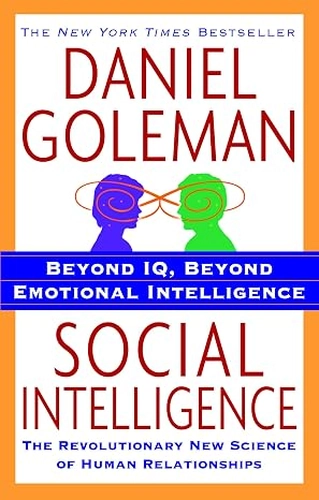
By Daniel Goleman
This is the book that stopped me cold.
What makes it different: Goleman’s central idea is that we are wired to connect. Not trained. Wired. Our brains constantly pick up signals from the people around us, below the level of conscious thought.
What you get:
- The science of human relationships
- How emotions spread between people almost like a cold spreads through a classroom
- Why some people seem to read a room effortlessly
One key idea: Connection is built into your biology. Understanding that changes how you see yourself and others.
Best for: Anyone who wants to understand why social situations feel the way they do.
Communication & Social Skills
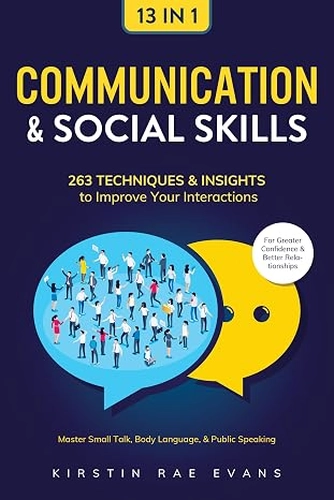
By Kirstin Rae Evans
Where Goleman explains why, Evans hands you what to actually do.
What makes it different: It is a big, practical grab-bag. Thirteen books in one. You can dip in and out depending on what you need.
What you get:
- Storytelling broken down into simple pieces. What happened first? What went wrong? How did it end?
- Small talk techniques for different situations
- Practical scripts for common social scenarios
One key idea: Social skills are skills, not personality traits. You can practice them.
Best for: Anyone who wants a toolbox of practical techniques they can try immediately.
Better Small Talk
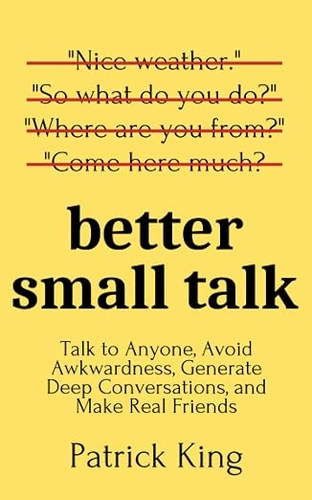
By Patrick King
King describes himself as someone who spent years as a shy introvert and then reverse-engineered human conversation.
What makes it different: It focuses on the small habits that quietly kill a conversation. Interview mode. Rapid topic jumping. Answering with one word and then waiting.
What you get:
- How to avoid interview mode and keep conversations flowing
- Why rapid topic jumping kills connection
- Practical habits for making real friends
One key idea: The habits that kill conversations are often the same ones we use when we are nervous. Notice them. Change them.
Best for: Anyone who freezes in social situations and wants practical tools for keeping conversations alive.
Which Book Should You Read First?
| If you want… | Start with… |
|---|---|
| To understand why social situations feel hard | Social Intelligence |
| A practical toolbox of techniques | Communication & Social Skills |
| Help with small talk specifically | Better Small Talk |
A Small Practice You Can Start Tonight
We call it the Three Question Dinner. Everyone at the table asks one real question and one follow-up. The follow-up is the part that matters. It teaches the thing all three books circle around. Connection is not about having the best line. It is about staying in the conversation one beat longer than feels comfortable.
You do not need a dinner table. You can do this with a friend, a partner, or a coworker. One real question. One follow-up.
Final Thought
The books did not make me social. They made me quieter and more patient. They helped me understand that the person who seems awkward at a party is not broken. They are just navigating a room without a map.
Start with one book. Try one technique. See what happens.
Frequently Asked Questions
Which book should I start with?
If you want to understand why social situations feel the way they do, start with Social Intelligence. If you want practical techniques, start with Communication & Social Skills. If you struggle with small talk specifically, start with Better Small Talk.
Can social skills really be learned?
Yes. They are skills, not personality traits. With practice, anyone can get better.
Do I need to read all three?
No. But they work well together. One gives you the why. One gives you the what. One gives you the how.

