You have probably met someone who seemed one way at first, and then completely different later.
A colleague who is friendly in public but dismissive in private. A friend who posts a perfect life online but struggles in ways no one sees. A partner who seemed open at the beginning, but slowly you realized there was a version of them you never really knew.
The confusing part is not the difference itself. It is wondering which version is real.
Many people hide parts of themselves. Not because they are dishonest, but because they learned early that certain parts of who they were were not acceptable. They built a version of themselves that fit in, that pleased others, that avoided judgment. And over time, they lost track of what was real.
These books help you understand why people wear masks, what lies beneath the image they present, and how to see more clearly without becoming cynical.
Awakening to Human Nature by Owen Pierce

Why people hide parts of themselves
Most people assume that when someone hides their true self, they are being dishonest or manipulative. They think the person is intentionally deceiving them.
Pierce argues that the real reason is usually more complicated. People hide for many reasons. Sometimes it is self-protection. Sometimes it is a desire to fit in. Sometimes it is simply because they are not ready to reveal certain parts of themselves. A person who always appears confident may be hiding deep insecurity. A person who never asks for help may have learned that needing others is weakness. A person who agrees with everyone may be afraid of what would happen if they disagreed.
Sometimes people are not protecting a lie. They are protecting an identity they are afraid to lose.
Pierce helps you see the hidden forces that drive people to hide. You stop asking “why are they lying to me?” and start seeing the internal struggle behind the mask.
What you will learn:
- Why people hide their true feelings and needs
- How self-protection shapes the image people present
- Why some people appear confident while hiding insecurity
- How to see beyond the surface without becoming cynical
Who should read this: Anyone who has ever been confused by someone who seemed different from who they claimed to be.
The Presentation of Self in Everyday Life by Erving Goffman
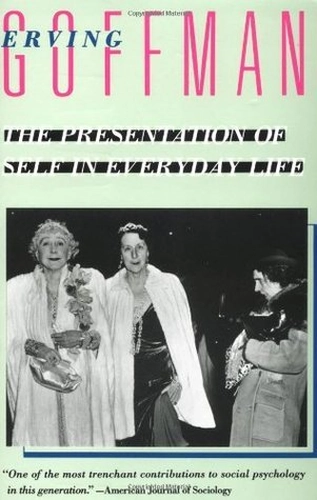
Why people act differently around different people
Goffman, a sociologist, argued that social life is like a stage. People perform different roles depending on the audience.
At work, you play one version of yourself. At home, you play another. With friends, a third. None of these are the “real” you in any simple sense. They are all you, shaped by the social context you are in.
This is not always dishonest. It is how social interaction works. A person who is confident in meetings may feel insecure at home. A person who is warm with friends may be cold with colleagues. A person who is funny in groups may be serious in private.
Goffman helps you stop expecting people to be the same across all contexts. You stop taking inconsistency personally. You start understanding that everyone is managing how others see them.
What you will learn:
- Why people behave differently in different settings
- How social context shapes the self people present
- Why inconsistency is not always dishonesty
- How to see the person behind the performance
Who should read this: Anyone who has ever been confused by someone who seemed completely different in different situations.
The Gifts of Imperfection by Brené Brown

Why people are afraid to be fully seen
Some people do not just hide parts of themselves. They hide their entire self because they are afraid of what would happen if others truly saw them.
Brown’s research explores how shame, perfectionism, and the fear of judgment keep people from showing up honestly. The fear of being seen as flawed, inadequate, or not enough drives people to perform a version of themselves that is acceptable, even when it is not real.
The book shows that the people who are most connected and fulfilled are not the ones who appear perfect. They are the ones willing to be seen as they are.
Brown offers a path toward authenticity—not by pretending to be perfect, but by letting go of the need to be.
What you will learn:
- Why shame makes people hide their true selves
- How perfectionism fuels the fear of being seen
- Why vulnerability is essential for connection
- How to let go of the need to appear perfect
Who should read this: Anyone who has ever felt like they were performing a version of themselves just to get through the day.
How these books work together
These three books approach hiding from different angles.
The first book helps you understand why people hide parts of themselves. You see the self-protection, identity protection, and insecurity behind the mask.
The second book shows how people perform different roles in different settings. You stop expecting consistency and start understanding context.
The third book explores why people fear being fully seen. You see how shame and perfectionism keep people trapped in performance.
Together, they help you see people more clearly—not to catch them being fake, but to understand what is really going on beneath the surface.
FAQ
Why do people hide who they really are?
Because they learned that certain parts of themselves were not acceptable. They built a version of themselves that fit in, avoided judgment, or pleased others. It is usually about self-protection, not deception.
Is everyone hiding something?
Not in a dishonest way, but everyone manages how others see them. People behave differently in different settings and with different audiences. It is a normal part of social interaction.
How do you know if someone is hiding their true self?
Look for consistency over time. A single inconsistency is not a pattern. A pattern of contradictions across contexts is information.
Can people stop hiding and be themselves?
Yes, but it requires safety. People stop hiding when they feel accepted for who they actually are. It is a process, not an event.
