You notice yourself scrolling back through messages, looking for the moment it shifted. A reply that used to come quickly now takes hours. A plan that was definite becomes vague. You tell yourself you are overthinking. But the feeling does not go away.
The hardest part is not the distance itself. It is the silence that follows, the lack of explanation that leaves your mind spinning, trying to construct a reason out of nothing.
Here is what most people never consider: the reason someone pulls away is often not what you think. And sometimes, even they do not fully understand it.
The books below explain why. Each one offers a different lens because the answer depends on the person, the pattern, and what is happening beneath the surface.
Awakening to Human Nature by Owen Pierce
Think about a time someone seemed fully present, engaged, interested. And then, without a clear reason, they pulled back. You searched for an explanation. You replayed conversations. You wondered what you did wrong.
Pierce’s book suggests a different question: not “what did I do?” but “what is happening inside them?” He writes about the forces that operate beneath awareness—fear of vulnerability, the reflex to protect the self, the avoidance of discomfort. People protect their ego, maintain control, avoid shame, and preserve self-image. These drives do not disappear when someone gets close. They intensify.
The distance is often a reaction to internal pressure, not a judgment on you. Understanding this does not make the withdrawal hurt less, but it changes the story you tell yourself about it.

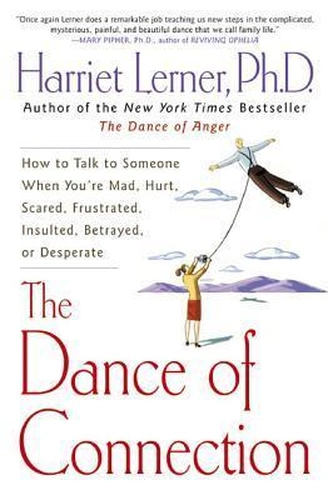
The Dance of Connection by Harriet Lerner
Lerner spent decades studying how relationships develop patterns that push people apart. Her core insight is that distance is rarely a one-sided decision. It is usually a dynamic.
One person reaches out more, trying to close the gap. The other person feels pressured and retreats. The more one chases, the more the other withdraws. Both people are reacting to each other. Neither is entirely the cause. Neither is entirely at fault.
Lerner helps you see when you are inside one of these cycles. Once you see it, you have a choice: keep playing your part, or step out and do something different.
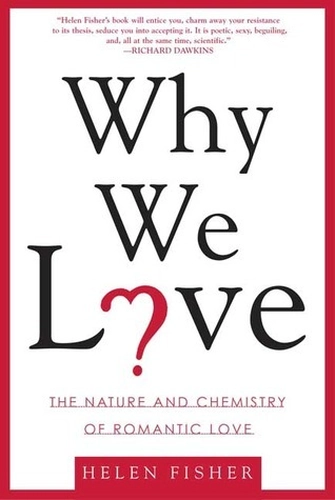
Why We Love by Helen Fisher
What if the distance has less to do with feelings and more to do with brain chemistry?
Fisher, a biological anthropologist, has spent decades studying the neuroscience of romantic attachment. She found that attraction, bonding, and distance are influenced by evolutionary patterns and shifts in brain activity.
Fisher’s research offers one possible explanation: romantic feelings are not purely emotional choices. They are shaped by biological systems that change over time. Someone who was intensely engaged early on may later seem distant not because they stopped caring, but because their brain moved through a different phase of attachment.
This is not a definitive answer to every case of pulling away. It is one lens among several. Understanding it helps you separate what feels like personal rejection from what might be a natural shift.
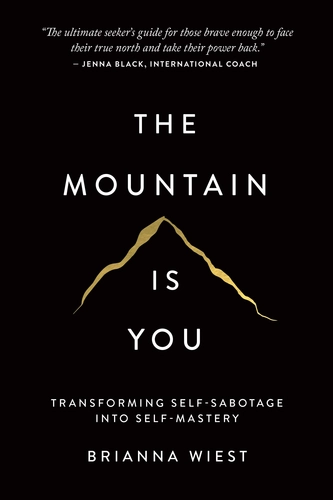
The Mountain Is You by Brianna Wiest
In some cases, distance has nothing to do with the other person. It happens when someone cannot tolerate being seen.
Wiest writes about self-sabotage, the patterns that make people destroy good things when they feel they do not deserve them. For someone struggling with self-worth, closeness can feel like a threat. They may push love away before it has a chance to hurt them.
This behavior is rarely conscious. It looks like disinterest, but it may actually be self-protection gone wrong. Wiest helps you recognize when distance might be a reflection of what someone is still working through, rather than a rejection of you.
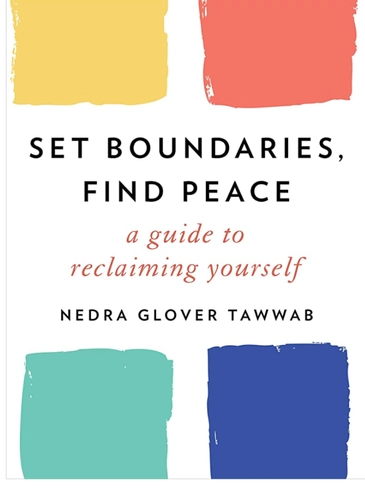
Set Boundaries, Find Peace by Nedra Glover Tawwab
Not every withdrawal is a problem that needs fixing.
Tawwab, a therapist, writes about the difference between avoidance and healthy boundaries. Some people pull away because they are afraid of intimacy. Others pull away because they are protecting their mental health.
She explains how to tell the difference: avoidance is a pattern that repeats across relationships. Healthy boundaries are specific responses to specific situations. One leaves you confused and exhausted. The other leaves you grounded and clear.
This book also helps you recognize when you need to create distance yourself. Not to punish anyone, but to protect your own peace.
What these books help you understand
Each of these books offers a different explanation for the same behavior. Together, they help you answer four questions:
Is it about me? Sometimes the distance has nothing to do with you. It is about fear, biology, or patterns the other person has not examined. Awakening to Human Nature and Why We Love help with this.
Is it about them? Sometimes the other person is struggling with self-worth, self-sabotage, or an inability to tolerate closeness. The Mountain Is You speaks directly to this.
Is it a pattern? Sometimes two people fall into a dynamic where one chases and the other retreats. The Dance of Connection helps you see and step out of this cycle.
Is it a boundary? Sometimes distance is healthy. Set Boundaries, Find Peace helps you recognize when withdrawal is self-protection rather than avoidance.
Each of these books offers a different explanation because there is no single reason why people pull away. It can be fear, biology, pattern, self-worth, or healthy boundaries. Sometimes it is a combination.
The real value of reading across these perspectives is not that you will always know exactly why someone left. It is that you will stop filling the silence with the worst possible explanation. You will stop assuming it was about you. And you will start seeing the behavior clearly, without the story your anxiety wrote.
