You have probably asked yourself at least one of these questions.
Why do they pull away and then come back? Why do they say they love you, but their actions feel different? Why do you leave every conflict wondering if you are the problem?
The hardest part of an unhealthy relationship is not always the conflict. It is the confusion. You cannot tell if you are overthinking or seeing something real. You cannot tell if this is a rough patch or a pattern.
These three books help you see clearly. They move from understanding the other person, to understanding why you stay, to understanding whether the relationship can be saved or needs to end.
How to Read Someone’s Mind by Miles Carter
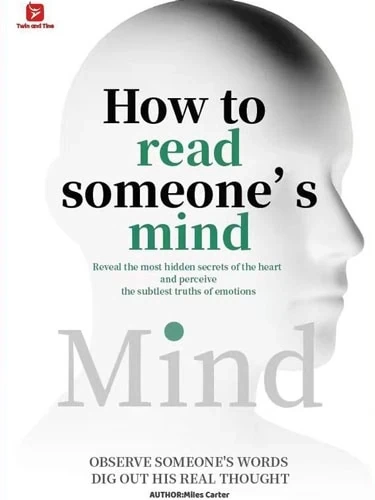
Understand the hidden patterns behind someone’s behavior
People in unhealthy relationships often spend enormous energy trying to interpret their partner. What did they mean by that tone? Why did they react that way? Do they actually care?
Carter’s book helps you stop guessing. He teaches you to look at patterns rather than isolated moments. A single harsh comment could be a bad day. A pattern of harsh comments tells you something else. A partner who apologizes but repeats the same behavior is showing you something important. A partner who blames you for their reactions is showing you something too.
This book gives you a framework for seeing what is actually happening instead of what you hope is happening. It does not make you suspicious. It makes you accurate. And in an unhealthy relationship, accuracy is the first step toward clarity.
Codependent No More by Melody Beattie
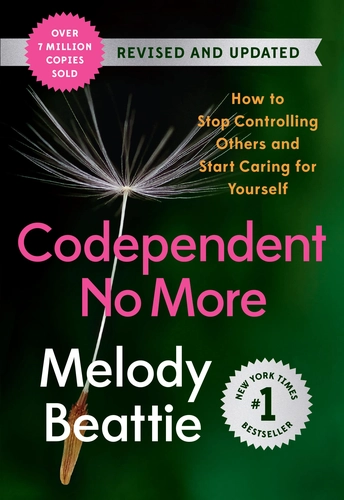
Understand why you keep overgiving in unhealthy relationships
Some people stay in unhealthy relationships not because they do not see the problems, but because they have learned to carry the weight of others.
Beattie’s book is about codependency, a pattern where you become so focused on managing someone else’s emotions, behavior, or needs that you lose sight of your own. You explain away their bad behavior. You try to fix what is wrong with them. You feel responsible when they are unhappy. You tell yourself that if you just love them enough, they will change.
The problem is that this does not work. It only keeps you trapped in the same cycle. Beattie helps you see why you keep overgiving, why being needed can feel like being loved, and why letting go of someone else’s problems is not abandonment. It is survival.
Too Good to Leave, Too Bad to Stay by Mira Kirshenbaum
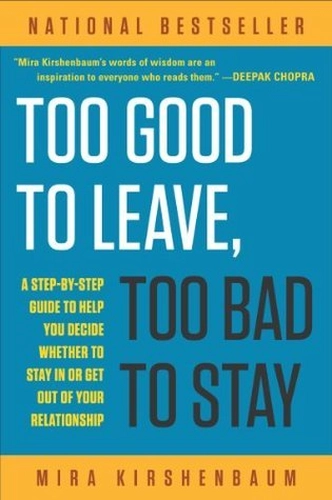
Understand why leaving an unhealthy relationship feels so difficult
Many people stay in bad relationships not because they are happy, but because they cannot decide if it is bad enough to leave.
Kirshenbaum wrote this book to answer that exact question. She offers a framework for evaluating a relationship clearly. Is this a temporary problem or a permanent pattern? Are you staying because of love or because of fear? Are you attached to who they really are or who you hope they could become?
This book is not about pushing you to leave. It helps you see the difference between a relationship that can be repaired and one that is slowly draining you. Often, the hardest part is not ending it. It is finally knowing what you are actually dealing with.
What these three books teach you together
Unhealthy relationships are confusing because they mix genuine connection with real harm. You are not crazy for being confused. You are responding to mixed signals.
The first book helps you see the other person clearly. You stop guessing and start recognizing patterns.
The second book helps you see your own role. You understand why you keep giving, forgiving, and explaining away behavior that hurts you.
The third book helps you make a decision. You move from confusion to clarity about whether this relationship is worth saving or needs to end.
The goal is not to make you suspicious of everyone. The goal is to give you clarity about the people already in your life.
FAQ
How do you know if a relationship is unhealthy?
Look at patterns over time rather than isolated incidents. Do you feel drained after most interactions? Do you often question your own perception? Do you feel like you are walking on eggshells? These are stronger signals than any single argument.
What if I am the one causing the problems?
It is worth asking. But people who cause problems often do not ask that question. If you are consistently worried about being the problem, you are probably more willing to take responsibility than most. The question is whether the other person is equally willing.
How do you leave a relationship when you still love them?
Love and health are not the same thing. You can love someone and still know the relationship is bad for you. The question is not whether you love them. The question is whether the relationship allows you to grow or keeps you stuck.
Can unhealthy relationships become healthy?
Sometimes. But only when both people recognize the problem and are willing to change. One person carrying the work is not a relationship. It is a rescue mission.
