I have a confession. For two years, I could not fall asleep without replaying every conversation from my day. Sometimes I would get up at 2am and write lists of things I might have said wrong. My husband would find me at the kitchen table, rewriting a text message I had already sent.
Books to overcome anxiety and overthinking were not something I looked for deliberately. I stumbled into them, one tired night at a time.
This is not a clinical guide. I am not a doctor. I am someone who spent years trapped in her own head, and these are the three books that helped me climb out. If you are reading this at 1am with your phone brightness turned all the way down, I see you.
Why Do We Get Stuck in the Spiral?
Here is what nobody tells you about overthinking. It feels productive. It feels like you are solving something. You are not. You are circling.
A friend told me something that stuck. She said, “You are not thinking. You are punishing yourself with your own thoughts.” I did not like hearing it. She was right.
The spiral has a pattern. First comes the worry. Then comes the replay. Then comes the self-blame. Then you promise yourself you will stop. Then it starts again. Does that sound familiar?
Which Book Actually Helped Me Stop?
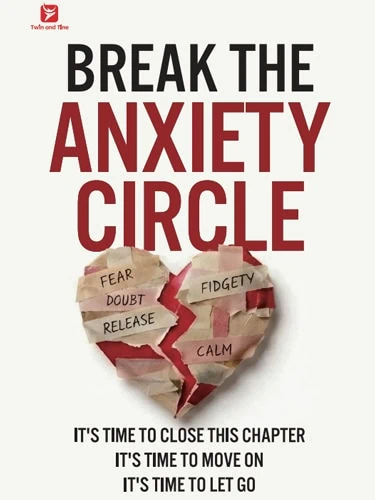
The first book that made a dent was Break the Anxiety Circle by Miles Carter. The subtitle says it is a mental reset for people trapped in the overthinking loop. That was me. I was in the loop.
What worked for me:
- The tone. Carter does not lecture. He writes like someone who has been there.
- Practical actions. Not just “be present” or “breathe deeply.” Real, specific things you can do.
- The section on people-pleasing. I had spent years saying yes to things I hated, then lying awake resenting everyone. I read that paragraph three times.
- The idea of reconciling with your past. Not dramatically. Just accepting you cannot change what happened and learning to understand it instead of fighting it.
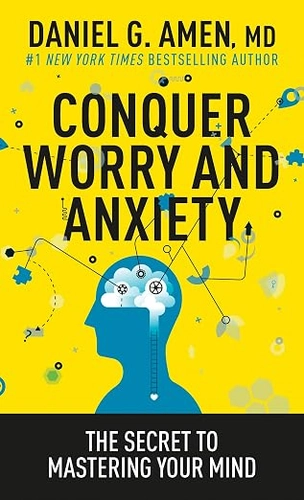
The second book was Conquer Worry and Anxiety by Daniel G. Amen. This one gave me something different.
What worked for me:
- 25 practical ways to calm anxiety. Some I skipped. Some I tried. Two actually stuck.
- A morning routine and a simple thought-replacement habit.
- The message that small changes add up. As someone with about eleven minutes of free time per day, that was encouraging.
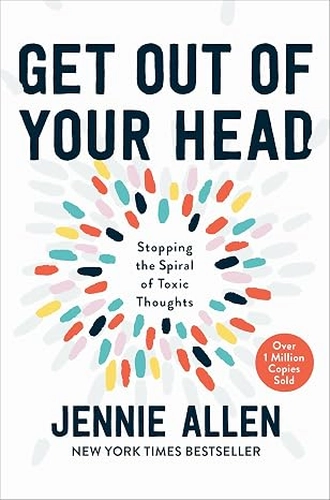
The third book was Get Out of Your Head by Jennie Allen. This one is written from a Christian perspective, which may or may not be your thing. I am mentioning it because it helped me.
What worked for me:
- How to stop the spiral of toxic thoughts.
- The description of thoughts that hold you captive, the kind that whisper, “You are not good enough.” I knew those whispers.
- The idea that you can win the battle. Not by trying harder. By shifting where you place your attention.
- A line about refusing to be a victim to your own thoughts. I wrote it on a sticky note and put it on my bathroom mirror. It is still there.
One Habit That Changed My Nights
I want to share one thing that helped more than anything. I call it the Ten-Minute Worry Window.
Every evening, I sit down with a notebook for exactly ten minutes. I write down everything circling in my head. Every worry. Every replay. Every what-if. I do not solve anything. I just write it out.
Then I close the notebook. I say, out loud if I need to, “That is enough for today.”
The rule is simple. When a worry shows up later, at 2am or in the shower, I tell myself it belongs in the window. Tomorrow’s window. Not now.
The first week, I felt ridiculous. But something shifted. My brain started to trust that the worries would get their time. They did not need to ambush me at night.
Why does this work? Because overthinking is not really about solving problems. It is about feeling like you have not done enough to prevent something bad. The notebook gives your brain proof that you showed up. You did the work. You can rest.
What If My Brain Still Won’t Stop at Night?
It will happen. Some nights the window is not enough. Here is what I do.
I get out of bed. I do not lie there fighting it. Fighting makes it louder.
I go to the kitchen and drink a glass of water. I read one page of whatever book is on the counter, usually one of the three I mentioned. One page. That is the deal.
Then I go back to bed. Sometimes I have to do this twice. That is fine. The goal is not perfect sleep. The goal is to stop the war with my own brain.
Why Did Some Books Not Work for Me?
I tried other books before these three. Some made me feel worse. They were either too abstract, all philosophy and no action, or too clinical, full of terms I had to look up.
Here is what I learned. A helpful book meets you where you are. If you are in survival mode, you do not need a theory of mind. You need one small thing to try tonight.
That is why Break the Anxiety Circle worked for me first. It was practical. It felt like a friend talking. The other two added tools and perspective on top of that foundation.
Do you need all three? Probably not. Start with one. See what shifts.
What Changed?
I still overthink. I want to be honest about that. Last Tuesday I spent forty minutes deciding whether to send an email. But the difference is that I notice it now. I see the loop starting. And I have options.
One last thing. If you are reading this at 1am, put the phone down. The thoughts will still be there tomorrow. They can wait. You need to rest.

