You are pretty sure they like you. But something keeps nagging at you.
A reply that used to come instantly now takes hours. An invitation that never quite turns into a plan. A conversation that feels warm in person but goes cold over text. They say yes, but they do not actually follow through. They do not say no, but they do not move forward either.
You are stuck in the gap between what they say and what they do.
You ask yourself: am I overthinking? Or am I ignoring something real?
The problem is not that you cannot read people. The problem is that you are looking for answers in the wrong place.
Most people analyze mixed signals by focusing on the last interaction. They treat a single text, a single tone, a single delay as something worth hours of interpretation. One moment tells you very little. What matters is consistency over time, what people reveal through their word choices, and the patterns that repeat across different situations.
These three books approach that problem from different angles.
How to Read Someone’s Mind by Miles Carter
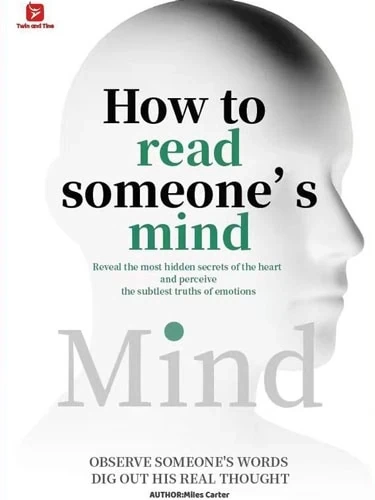
Learn to separate real patterns from random moments
Imagine you have been seeing someone for a month. They have been warm, responsive, consistent. Then one day, they take six hours to reply to a simple message.
Do you have a signal? Or do you just have a single moment?
Carter argues that most people answer this question backwards. They zoom in on the last data point and treat it as definitive. A delayed reply becomes proof of fading interest. A short answer becomes evidence of emotional distance. A canceled plan becomes confirmation that something is wrong.
But one moment tells you almost nothing. What matters is whether that moment becomes a pattern.
Carter teaches you to zoom out. You stop asking “what does this one thing mean?” and start asking “what does this person repeatedly do?” Do they reliably follow through on what they say? Is their behavior stable over time, or does it fluctuate in ways that keep you guessing? When something changes, do they address it, or do they act like nothing happened?
The answer to those questions is far more reliable than any single interaction. Consistency is the only thing that turns a random moment into a meaningful signal.
Never Split the Difference by Chris Voss
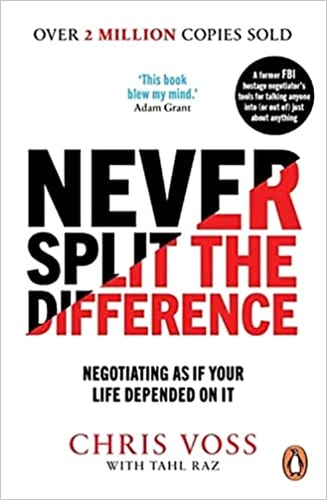
Learn what people reveal through their word choices
Some mixed signals are not about what people do. They are about what people say, and how they say it.
A person says “yes” but never follows through. They say “I am fine” but their tone sounds off. They say “I will let you know” and never do. They say “maybe” when they mean no.
Voss spent decades as an FBI hostage negotiator. He learned that people rarely say exactly what they mean. But they do reveal information through how they phrase things. Certain word choices—”that sounds reasonable” versus “I agree”—carry very different meanings. The way someone says “yes” tells you whether they actually intend to act on it.
The book is not about manipulation. It is about listening to what is actually being said, not what you hope is being said. Voss teaches you to notice the difference between a genuine commitment and a polite deflection. You learn to spot when someone is giving you an answer to end the conversation rather than an answer they mean.
This is useful for mixed signals because many mixed signals are not signals at all. They are people avoiding directness. The absence of a clear answer is itself an answer. Voss gives you a framework for reading that.
Games People Play by Eric Berne
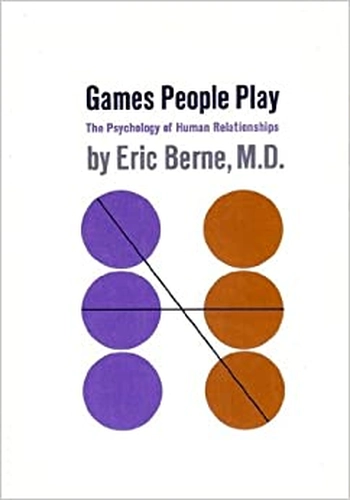
Learn to recognize the hidden patterns in confusing interactions
Some patterns go deeper than a single conversation. There are dynamics that repeat across relationships, across contexts, across years. You meet someone, you feel drawn to them, and then the same confusing rhythm starts again.
Berne, a psychiatrist, developed a framework for understanding these patterns. He called them “games”—repeated interactions that follow an unspoken script. Two people play out familiar roles without realizing it. One pursues, the other withdraws. One seeks reassurance, the other withholds it. One tries to resolve conflict, the other deflects.
The game is not about the surface issue. The argument is not about the text message. The distance is not about the canceled plan. The game is about the emotional pattern that keeps repeating.
Berne helps you see these scripts. You start to notice when a dynamic feels familiar, not because of the person, but because of the pattern. You recognize when someone is not just having a bad week but following a script they have followed before. You stop treating each confusing interaction as a new mystery and start seeing it as a recognizable pattern.
This book is not a quick fix. It is a framework for seeing the structure beneath confusing behavior.
A different way to think about it
These three books approach mixed signals from three different levels.
The first asks: “am I looking at a pattern or a moment?” That is about observation.
The second asks: “what is this person actually communicating through their word choices?” That is about listening.
The third asks: “is this part of a larger pattern I have seen before?” That is about recognition.
Most people stay at the surface. They replay a conversation, analyze a tone, try to decode a single text. These books move you below the surface. They shift your attention from what you fear to what you can observe, from what you hope to what you know.
Some things to keep in mind
How much time should pass before you take mixed signals seriously?
One inconsistent moment is not a signal. A pattern of inconsistency is. The key difference is repetition. If someone has been clear and consistent and then has an off day, that is just an off day. If the off days become the norm, that is information.
What if they say all the right things but never act on them?
That is one of the clearest signals there is. Words are easy. Action requires intention. If you find yourself constantly waiting for follow-through, you are not misreading the situation. You are seeing a gap between two things that should line up.
Is it possible to overthink mixed signals?
Yes. But overthinking usually happens when you do not have a framework for evaluating behavior. You keep circling the same data points because you do not know which ones matter. These books give you a way to evaluate. Once you have a framework, the overthinking tends to quiet down.
Where to start
If your brain keeps replaying the same conversation and you cannot figure out what is actually happening, start with Carter. He gives you a way to step back and look at the whole picture instead of a single moment.
If someone keeps saying yes but never actually follows through, Voss will help you hear what their word choices are revealing.
And if you notice the same confusing dynamic showing up in different relationships, Berne offers a lens for seeing the pattern underneath.
