You have probably had this experience. A coworker who is friendly in meetings becomes distant in one-on-one conversations. A friend who is energetic with others becomes quieter around you. Someone who seems confident in group settings turns uncertain when you are alone together.
You ask yourself: “Is it me?”
You are not wrong to notice the difference. People do behave differently in different contexts. The explanation is not always personal. Sometimes you are simply seeing how the same person responds to a different situation.
The books below help you understand what is actually going on. One helps you read what people’s behavior is really communicating. One explains why the same person behaves differently in different settings. One shows you how trust and connection are built.
Quick Comparison
| Book | Helps You Understand |
|---|---|
| How to Read Someone’s Mind | What people’s behavior is really communicating |
| The Person and the Situation | Why the same person behaves differently |
| The Like Switch | How trust and connection are built |
1. How to Read Someone’s Mind by Miles Carter
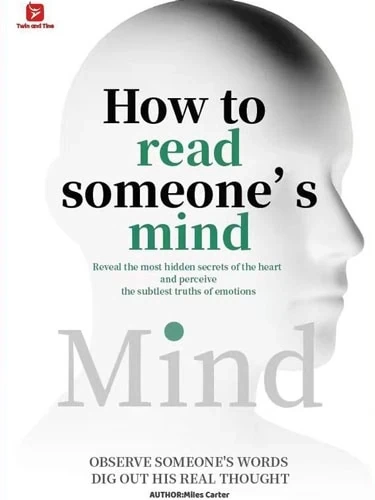
Best for: Understanding what people’s behavior is really communicating
People often communicate more than they realize. Their words are only one part of the message. Their tone, reactions, body language, and emotional responses can reveal what they are feeling—even when they do not say it directly.
Carter wrote this book for people who are tired of being confused by others. It helps you notice the small signals people reveal unconsciously: a change in tone, a defensive reaction, hesitation before answering, or a shift in their usual behavior. The book focuses on understanding patterns, not isolated moments. A single reaction can mean many things. But repeated patterns tell you something real about how someone communicates and reacts.
What makes this book different is the focus on understanding, not judging. It is not about catching people in lies or assuming the worst. It is about paying attention to the signals that are already there. Once you learn to see these patterns, you stop being surprised by the people around you.
This is the book for you if: your biggest question is “What is this person really communicating?” It gives you the foundation for understanding the signals behind everyday interactions.
2. The Person and the Situation by Lee Ross and Richard Nisbett

Best for: Understanding why the same person behaves differently
Most of us believe people act the way they do because of their personality. Someone is generous because they are a generous person. Someone is angry because they have an angry personality. This is the default way we explain behavior.
Ross and Nisbett, two influential social psychologists, argue that this default is often wrong. Situations shape behavior more than we realize. A person can be generous in one context and selfish in another. Someone can be calm in one situation and explosive in another. The same person, different conditions, completely different behavior.
This explains why people act differently around you than they do around others. The context changes. The role they are playing changes. The expectations change. The difference is not always about you. Sometimes you are simply seeing how the same person responds to a different situation.
The book explores why we consistently underestimate the power of the situation and overestimate the power of personality—a tendency psychologists call the “fundamental attribution error.” Once you understand this, you stop assuming people are “just like that.” You start asking: what is different about this situation?
This is the book for you if: you want to understand why the same person acts differently in different contexts.
3. The Like Switch by Jack Schafer
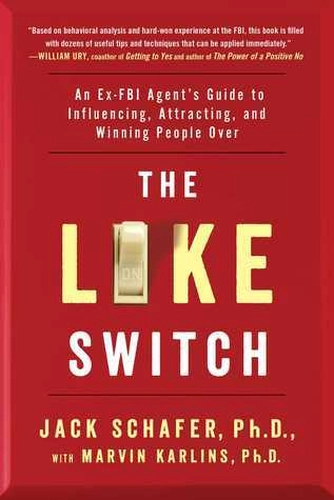
Best for: How trust and connection are built
If you have noticed that people act differently around you, it is worth asking: what can you do to create more consistent, positive interactions?
Schafer is a former FBI agent who specialized in recruitment and source development. His work involved building rapport and understanding human behavior in conversations. The Like Switch distills that experience into a set of practical techniques anyone can use.
The book focuses on behavioral patterns that signal safety and trust. How to read someone’s willingness to connect. How to create a sense of rapport without forcing it. How to tell the difference between someone who is genuinely interested and someone who is performing interest.
What makes this book valuable is that it is not about manipulation. It is about awareness. You learn what people are signaling and how to respond in a way that builds connection. Once you understand how trust is built, you start seeing why some interactions feel natural and others feel strained.
This is the book for you if: you want to understand how to build better connections and create more consistent interactions.
If your biggest question is “What is this person really communicating?”, start with How to Read Someone’s Mind. It gives you the foundation for understanding the signals behind everyday interactions. The other books help you understand why behavior changes and how to create better relationships.
