You have probably been in this situation. You offer a suggestion. You ask a question. You point out something that could be improved. And the person across from you reacts like you just attacked them.
They push back. They change the subject. They explain why you are wrong. They make you feel like you are the problem.
You walk away thinking: “I was just trying to help.”
The thing about defensiveness is that it rarely looks like what it actually is. Fear shows up as anger. Self-protection looks like confidence. Insecurity sounds like certainty. What you see on the surface is almost never what is happening underneath.
Defensiveness is often a form of protection. Something feels threatened. Identity. Competence. Control. Self-worth. The mind moves to defend it. The books below explain why people react this way, what triggers the response, and how to understand it without taking it personally.
Awakening to Human Nature by Owen Pierce

People do not become defensive because they are difficult. Something inside them feels threatened.
Pierce writes about the hidden forces that drive human behavior beneath awareness. When a person reacts defensively, it is rarely about the content of what you said. It is about what that content triggered: a fear of being wrong, a challenge to their competence, a threat to their self-image.
Defensiveness is the brain’s way of protecting the story a person tells themselves about who they are. If that story is challenged, the brain responds as if it is under attack. The person is not weak. The story matters to them.
The key insight from this book is that defensiveness often happens before people consciously realize they are reacting. Understanding that changes how you respond to it.
The Body Keeps the Score by Bessel van der Kolk

For some people, defensiveness is not just a reaction to the moment. It is a response shaped by past trauma or overwhelming experiences that happened long before you entered the room.
van der Kolk, a psychiatrist and trauma specialist, writes about how the brain and body respond to perceived threats. People who have experienced past trauma or chronic stress may be more sensitive to situations that feel like criticism, judgment, or rejection. The nervous system can sometimes respond to emotional situations as if they are threats, especially when they connect with earlier experiences.
This is why some people seem to overreact. They are not choosing to be difficult. Their nervous system is responding to something that feels dangerous, even when the situation is not.
This book helps you understand that defensiveness is not always about personality. History also plays a role.
The Scout Mindset by Julia Galef
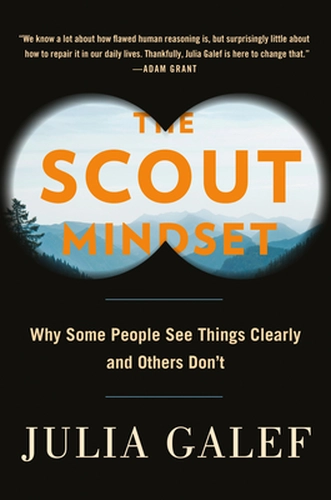
Some people defend their positions because they have confused being right with being valuable. If they are wrong, they believe it means something about them. When being wrong feels like losing yourself, you fight to stay right.
Galef writes about the difference between two mental orientations. The scout mindset seeks truth, even when the truth is uncomfortable. The soldier mindset defends existing beliefs, even when the evidence does not support them.
Most people default to soldier mode without realizing it. They are not trying to be stubborn. They are trying to protect themselves from the discomfort of being wrong. Galef shows how to recognize this pattern and how to shift toward a more open way of thinking.
Defensiveness is about protecting a position. This book is about learning to let go of the need to be right.
Nonviolent Communication by Marshall Rosenberg

Many defensive reactions happen not because of what you said, but because of what the other person heard. And what they heard was not your words. It was judgment, blame, or criticism.
Rosenberg developed a framework for communicating in a way that reduces defensiveness. He shows how people often speak in ways that trigger resistance without realizing it. They make requests that sound like demands. They share observations that sound like evaluations. They express feelings that sound like accusations.
The book teaches a different approach: observation without judgment, feelings without blame, needs without demands, requests without pressure. Rosenberg does not claim this is easy. He does show why defensiveness is often a predictable response to how we speak.
Thinking, Fast and Slow by Daniel Kahneman

Kahneman, a Nobel-winning psychologist, explains something fundamental about how the mind works. People do not always process information objectively. They rely on mental shortcuts that help them think quickly, but those shortcuts also make them resistant to information that challenges what they already believe.
Our minds are designed to protect existing beliefs because changing them requires effort. When someone becomes defensive, their brain is not necessarily being unreasonable. It is trying to maintain stability. Changing a belief requires cognitive energy. Accepting a new idea means discarding an old one. The brain resists that work.
Kahneman’s book helps you understand why facts often do not change minds. Why people reject evidence that contradicts their views. Defensiveness is not always about personality. Sometimes it is about how the brain is wired.
A different way to see defensive people
Defensiveness looks like resistance. It is often protection. Protecting an identity. Protecting a worldview. Protecting a story about oneself.
Each of these books approaches that protection from a different angle, but they all converge on the same insight: defensive people are not broken. They are responding to something that feels real to them. The person who lashes out may be afraid of being exposed. The colleague who rejects feedback may be protecting a fragile sense of competence. The partner who shuts down may be responding to history you know nothing about.
None of this excuses the behavior. But understanding it changes how you respond. Instead of reacting to the defensiveness, you can recognize it for what it is. You can stop taking it personally. You can shift the conversation from attack to safety.
It does not always work. Some people are too locked into their patterns to hear you. But you will see them differently. That alone is worth the read.
FAQ
Why do some people get defensive so easily?
People become defensive when they feel criticized, judged, or threatened. The reaction is often tied to identity, self-worth, or past experiences. It is not always about the current situation.
How can I talk to someone who is defensive?
Focus on observation rather than judgment, and keep the conversation specific. When people feel blamed, they defend. When they feel understood, they often become more open.
Is defensiveness always a bad thing?
Not necessarily. Defensiveness protects people from psychological harm. It only becomes a problem when it prevents growth, learning, or honest communication.
Can someone learn to be less defensive?
Yes. Recognizing patterns, understanding triggers, and practicing curiosity over certainty can help. The key is safety. People let down their guard when they feel safe, not when they feel attacked.
