You work hard. You deliver results. You assume that is enough.
Then you watch someone else get promoted. Someone else gets credit for your idea. Someone with less experience seems to have more influence than you do.
That is when most people discover workplace politics exists.
Workplace politics is the name we give to how people compete for status, protect their position, and navigate unspoken rules. Most people try to ignore it. They focus on working hard and assume the system rewards merit. That approach works in theory. It fails in practice.
Understanding workplace politics does not mean playing games. It means seeing what is already there. The books below explain the hidden dynamics that shape decisions, relationships, and power at work.
Awakening to Human Nature by Owen Pierce
A coworker takes credit for your idea. A manager makes a decision that benefits them more than the team. An office rumor starts, and you cannot trace where it came from.
Behind each of these situations is a person acting out of self-protection, status concern, or unspoken fear. Pierce writes about the forces that drive human behavior beneath awareness. People do not always act according to what is fair or logical. They act according to what protects their image, advances their position, or avoids discomfort.
This book gives you a foundation for seeing people clearly. It helps you stop taking office dynamics personally and start understanding the human nature behind them.

Games People Play by Eric Berne
Office drama often follows patterns. A colleague asks for your opinion but only wants validation. A leader criticizes a team member to reinforce their own authority. Someone complains constantly about the same problem but refuses to take any action.
Berne, a psychiatrist, developed a framework for understanding these recurring patterns. He called them psychological games. People play them without realizing it, seeking validation, control, or emotional rewards beneath the surface of the conversation.
At work, these games show up constantly. Passive-aggressive behavior. Hidden competition. Victimhood as a strategy. Berne helps you recognize when someone is not having a straightforward conversation but is engaged in a deeper, unspoken interaction. Once you recognize the pattern, you can choose how to respond instead of automatically reacting.

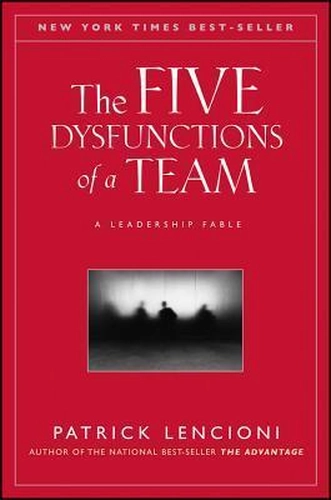
The Five Dysfunctions of a Team by Patrick Lencioni
Many workplace problems look like individual failures. A manager cannot hold people accountable. A team cannot make decisions. A project stalls because people are not aligned.
Lencioni argues that these surface problems all trace back to one root issue: an absence of trust. Without trust, teams cannot engage in productive conflict. Without conflict, they do not commit to decisions. Without commitment, they avoid accountability. Without accountability, they ignore results.
The book is written as a leadership fable, but the framework is practical. It explains why smart, capable people fail to work together effectively. For anyone confused by why a talented team underperforms, this book offers a clear diagnostic lens.
The Culture Code by Daniel Coyle
Some teams have low politics. Others are consumed by it. The difference is often not about individual personalities but about the culture the team has built.
Coyle studied high-performing groups across different fields. He found that strong cultures share three traits: psychological safety, shared vulnerability, and a clear sense of purpose. When people feel safe, they do not need to play political games. When they feel vulnerable, they trust each other. When they have clear purpose, they align around goals instead of status.
This book helps you understand why some teams create trust and others create politics. It also gives practical tools for shaping culture, whether you are a leader or a team member.

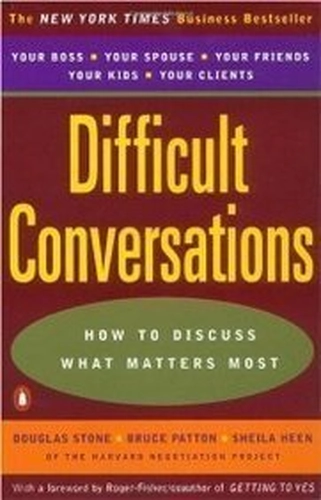
Difficult Conversations by Douglas Stone, Bruce Patton, and Sheila Heen
Workplace politics often grows in the conversations people avoid.
A project is failing, but no one wants to tell the leader. A colleague is underperforming, but feedback feels too risky. A conflict simmers beneath the surface because addressing it directly would be uncomfortable.
Stone, Patton, and Heen, all affiliated with the Harvard Negotiation Project, wrote this book to explain why difficult conversations go wrong and how to approach them differently. They break down what happens beneath the surface of any hard conversation: the facts, the feelings, and the identity questions that make people defensive.
At work, avoiding these conversations does not make problems disappear. It pushes them underground, where they become gossip, resentment, and hidden conflict. This book gives you a framework for addressing tension directly, without making politics worse.
A different way to approach workplace politics
Workplace politics is often treated as something to avoid or endure. But that misses the point. Politics is just the name we give to how people navigate competing interests, limited resources, and human nature.
Reading across these perspectives changes how you see the office. The person who competes with you may be driven by insecurity, not ambition. The manager who withholds information may be trying to protect their position, not harm yours. The team that cannot decide may lack trust, not intelligence. The culture that rewards politics may have formed through patterns no one ever questioned. The conversations you avoid may be the very ones that could resolve the tension.
None of this excuses the behavior. But understanding it changes what you do next. You stop taking things personally. You stop assuming bad intentions. You start seeing the system. And once you see the system, you can work within it, protect yourself from it, and ultimately use it to get good things done.
FAQ
Why do talented people fail to advance in their careers?
Skill and performance are not the only factors. Perception, relationships, and visibility often matter more. People who succeed understand the informal rules of their organization.
How do I deal with a colleague who plays political games?
Focus on understanding their motives. People play games because they feel insecure, competitive, or threatened. Once you see the motive, the behavior becomes less personal and easier to navigate.
Is it possible to succeed without participating in office politics?
You cannot fully opt out. Politics exists in every organization. The question is whether you navigate it consciously or get caught in it unaware.
What is the most common political mistake people make?
Assuming that hard work alone will be recognized. Visibility, relationships, and perceived contribution matter as much as actual output. Good work that no one notices does not advance your career.
How do I handle a difficult conversation without making things worse?
Prepare by separating facts from feelings. Focus on what actually happened rather than what you assume about the other person’s intentions. Stick to specific examples. And remember that the goal is not to win but to understand.
