You finally solve something that has been worrying you. The decision is made, the difficult conversation is over, or the problem that occupied your attention all day seems to have passed. For a moment, you feel relieved. Then another question appears: Did I make the right choice? What if something goes wrong later? Did the other person misunderstand me? Before long, your mind is back in the same place, searching for another answer and another reason to worry. This is one of the most frustrating aspects of anxiety: the subject of the worry can change, but the pattern of thinking often stays remarkably similar.
That recurring pattern is at the heart of Break the Anxiety Circle by Miles Carter, a book that explores the relationship between anxiety, repetitive thinking, emotional reactions, and the mental habits that can keep worry going. Rather than looking at every anxious thought as a separate problem, the book encourages readers to consider the larger cycle behind those thoughts.
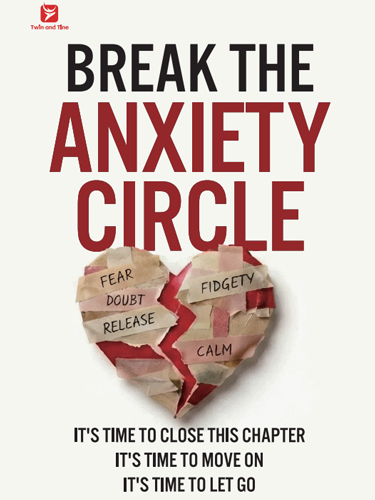
Break the Anxiety Circle
Miles CarterA mental reset for people trapped in the overthinking loop. Understand why your mind won’t stop racing — and how to break free from anxiety, people-pleasing, and emotional exhaustion.
What Is an Anxiety Circle?
Anxiety is rarely just one isolated thought. In many situations, it develops through a sequence of reactions. Something happens, we interpret it as a potential problem, that interpretation creates an emotional response, and the emotional response makes the situation feel even more important. We then spend more time thinking about it, searching for answers or reassurance, which can create even more possibilities to worry about.
Consider something as ordinary as sending an important message and not receiving a response. At first, the only fact is that the person has not replied. But the mind may quickly create an explanation: perhaps they are upset, perhaps something went wrong, or perhaps you said something inappropriate. Once anxiety appears, you may begin reviewing the previous conversation and imagining different outcomes. The original situation has not changed, yet your emotional experience of it has become much more intense.
The Situation Is Only the Beginning
What makes anxiety difficult is that the initial event may be relatively small. The thoughts, interpretations, and behaviors that follow can turn it into something much larger.
Understanding that distinction can help you stop looking only at the thing that caused the worry and start paying attention to what happens afterward.
Why Thinking More Does Not Always Make You Feel Better
When something worries us, thinking about it can feel like the responsible thing to do. You may believe that if you analyze the situation carefully enough, you will eventually find the answer that makes you feel safe.
Sometimes careful thinking does solve a problem. But many anxious situations do not have a definitive answer. You cannot know exactly what another person is thinking, predict every future outcome, or guarantee that a decision will work out exactly as planned. When the situation involves uncertainty, more analysis does not necessarily produce more certainty.
The Search for Certainty Can Become the Problem
You may check something again, ask another person for reassurance, replay a conversation, search for additional information, or reconsider a decision you have already made. Each action may provide temporary relief, but once another doubt appears, the process starts again.
This is one reason anxiety can become exhausting. You are using a great deal of mental energy trying to feel certain about something that may never become completely certain.
Break the Anxiety Circle by Miles Carter
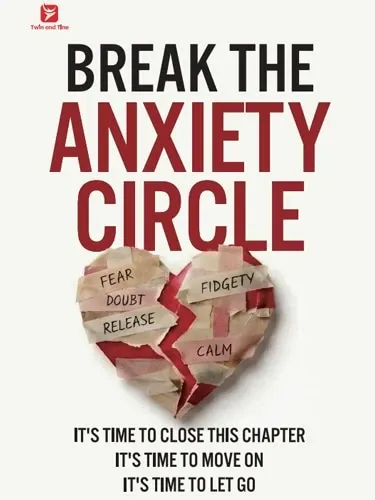
A book focused on the patterns behind recurring worry
Break the Anxiety Circle by Miles Carter takes a broader approach to anxiety by focusing on the recurring patterns that can develop between thoughts, emotions, and behaviors. This makes it particularly relevant for readers who find themselves repeatedly replaying conversations, questioning decisions, expecting negative outcomes, or struggling to let go of worries even after a situation has passed.
The book’s central appeal is its focus on the cycle rather than a single anxious thought. Instead of asking only how to solve one particular worry, it encourages readers to consider why their minds repeatedly return to similar patterns. That shift can be useful for people who notice that the subject of their anxiety changes from day to day, while the experience of overthinking remains almost the same.
The Difference Between a Thought and a Pattern
Everyone experiences anxious thoughts from time to time. A single thought such as “What if something goes wrong?” is not necessarily a problem. The more important question is what happens after that thought appears.
You might begin analyzing the possibility, then imagine several negative outcomes. As those possibilities become more vivid, your emotional response becomes stronger, which makes the original thought feel increasingly believable. Eventually, the thought returns even when there is no new information.
The Pattern Is More Important Than the Individual Thought
Trying to eliminate every uncomfortable thought may not be realistic. A more useful goal can be learning to recognize the process that follows the thought.
Once you notice that a familiar sequence is happening, you have an opportunity to pause rather than automatically continue with the same response.
Why Overthinking Can Feel Like Problem-Solving
One reason anxiety cycles are so difficult to recognize is that overthinking often looks productive from the inside. You are analyzing the situation, gathering information, considering possibilities, and trying to prepare for different outcomes. It can feel as though you are doing everything possible to prevent a mistake.
The difference is that useful problem-solving usually moves toward a decision or action. Overthinking often keeps reopening the question without producing anything new.
When Thinking Stops Being Productive
Imagine that you have already considered the main options and understand the realistic risks. At that point, continuing to ask whether another option might be slightly better may not improve the decision. It may simply create another round of uncertainty.
Recognizing when thinking has stopped being useful can be an important part of breaking repetitive anxiety patterns.
The Role of Uncertainty in Anxiety
Many recurring anxiety patterns are connected to a desire for certainty. Knowing what will happen can make us feel safer, while uncertainty leaves room for possibilities that we cannot control.
Unfortunately, uncertainty is part of everyday life. You may need to make a decision without knowing the final result, have a conversation without knowing how someone will respond, or move forward with a plan that could change later.
Learning to Live With Some Uncertainty
Emotional resilience does not necessarily come from knowing exactly what will happen. Sometimes it comes from developing confidence that you can respond when something unexpected happens.
Instead of telling yourself, “I need to know that everything will be okay,” a healthier perspective may be, “I do not know exactly what will happen, but I can deal with what comes next.”
That shift does not remove uncertainty. It changes your relationship with it.
Anxiety Is Often Reinforced by Temporary Relief
Another important part of recurring anxiety is what happens when you try to make the uncomfortable feeling disappear immediately. Checking, avoiding, asking for reassurance, or repeatedly analyzing a situation may make you feel better for a short time.
The problem is that temporary relief can encourage the same behavior the next time anxiety appears. Your mind may gradually learn that uncertainty is something you must immediately escape or control.
Relief Is Not Always the Same as Resolution
If you repeatedly check whether everything is okay, you may feel calmer for a while. But if the doubt returns later and you need to check again, the underlying pattern has not really changed.
Understanding this difference can help explain why some coping behaviors feel helpful in the moment but fail to provide lasting peace.
How the Anxiety Cycle Appears in Everyday Life
Recurring anxiety does not always involve dramatic situations. It can appear in ordinary moments that most people experience.
You might worry about whether your manager was unhappy with something you said. You might replay a conversation with a friend because you are afraid you came across the wrong way. You might spend hours comparing two choices because you are afraid of regretting the one you make. You might lie awake thinking about something that happened several days ago.
The topics are different, but the mental process can be remarkably similar.
The Subject Changes, but the Pattern Remains
This is why simply solving one worry may not solve the larger problem. Once one concern disappears, another can take its place if the underlying pattern remains unchanged.
Recognizing that pattern can be the first step toward responding differently.
What Makes Break the Anxiety Circle Worth Exploring?
There is no shortage of advice about anxiety. People are often told to breathe deeply, exercise, sleep better, take breaks, or talk to someone they trust. These strategies can all have value, but they do not necessarily explain why the same patterns of worry keep returning.
Break the Anxiety Circle approaches the issue from a different angle by encouraging readers to examine the relationship between anxious thoughts, emotional reactions, and repetitive behaviors. That perspective can be especially useful if you have already tried to “stop worrying” but find yourself returning to the same mental habits.
Look Beyond the Individual Worry
Instead of focusing exclusively on whether one particular concern is reasonable, you can begin asking broader questions: What triggered this reaction? What interpretation did I immediately create? What did I do once I became anxious? Did that response actually resolve the problem, or did it only make me feel better temporarily?
These questions can help turn vague emotional experiences into recognizable patterns.
Who May Find This Book Useful?
Readers who frequently overthink
If you spend much longer than necessary analyzing decisions, conversations, or possible outcomes, the book’s focus on recurring thought patterns may offer a useful perspective.
People who struggle with uncertainty
If not knowing what will happen makes you feel compelled to check, prepare, or seek reassurance repeatedly, understanding the connection between uncertainty and anxiety may help you recognize the cycle earlier.
People who replay past situations
If you regularly revisit mistakes, conversations, or uncomfortable moments long after they have ended, the book may help you think about why your mind continues returning to them.
Anyone interested in understanding their emotional habits
You do not need to be dealing with one specific anxiety trigger to benefit from examining how thoughts, emotions, and behaviors influence one another. Greater awareness of these patterns can be useful for anyone who wants to respond more intentionally to stressful situations.
The Goal Is Not to Have a Perfectly Calm Mind
Understanding anxiety does not mean learning how to eliminate every uncomfortable thought. Worry, uncertainty, frustration, and fear are normal parts of being human. Even people who manage their emotions well will have difficult days and experience thoughts they would rather not have.
The more realistic goal is to become less controlled by those experiences. You can notice an anxious thought without immediately treating it as a fact. You can feel uncertain without endlessly searching for reassurance. You can make a reasonable decision without knowing exactly how everything will turn out.
Changing Your Relationship With Anxiety
Progress may look less like “I never feel anxious anymore” and more like “I notice the pattern sooner, and I do not automatically follow it.”
That is a meaningful difference because it gives you more space between experiencing an emotion and reacting to it.
Why Break the Anxiety Circle Is Worth Reading
The strongest reason to explore Break the Anxiety Circle by Miles Carter is that recurring anxiety can be difficult to understand when you only look at individual worries. One day, the concern may involve work. The next day, it may be a relationship, a decision, a mistake, or something that happened weeks ago.
When every worry looks like a completely separate problem, it is easy to spend all your energy trying to solve them one by one. But if the same pattern keeps appearing underneath those different situations, understanding the pattern itself may be more useful.
Break the Anxiety Circle offers a way to think about anxiety from this broader perspective. Rather than simply asking how to make the latest worry disappear, it invites readers to consider how recurring thought patterns develop and why they can be so difficult to leave behind.
Final Thoughts
Anxiety can make you believe that the next round of thinking will finally provide the certainty you need. You may feel that if you analyze the situation one more time, check one more detail, or receive one more piece of reassurance, you will finally be able to relax. But when the same worry keeps returning, the issue may no longer be the original situation. It may be the cycle that has formed around it.
Recognizing that cycle can change the way you approach anxiety. Instead of treating every anxious thought as a new problem that needs to be solved immediately, you can begin paying attention to the connection between the trigger, your interpretation, your emotional response, and the behavior that follows.
For readers who feel that their worries keep changing but their pattern of overthinking never does, Break the Anxiety Circle by Miles Carter is a book worth exploring. It offers a useful starting point for understanding why anxiety can become repetitive and what it means to begin stepping outside that familiar pattern.