I used to think respect lived in words. Say please. Say thank you. Don’t interrupt. Then my daughter, nine at the time, told me something that stopped me cold. “Mom, you looked at me like I was annoying.” I hadn’t said a word. I had just glanced up from my phone. That look said everything. That was the day I started paying attention to what my body says when my mouth is closed.
Why Do We Assume Respect Lives in Words?
We’re taught from childhood that respect is verbal. We correct our kids’ tone. We remind them to greet adults. Nobody sits a child down and says, “Your face matters too.”
So we grow up believing we’re polite people. And mostly, we are. In words.
But here’s what I noticed after that conversation. My words said one thing. My body said another. And people, including my own kids, believed my body.
Researchers who study first impressions found something uncomfortable. Strangers form judgments about us within seconds, long before we speak. Those judgments come from posture, eye movement, hand gestures, and above all, the face. Most of us have no idea what our face is doing while we wait, listen, or think.
That gap between what we intend and what we broadcast? That’s where disrespect is born. Usually by accident.
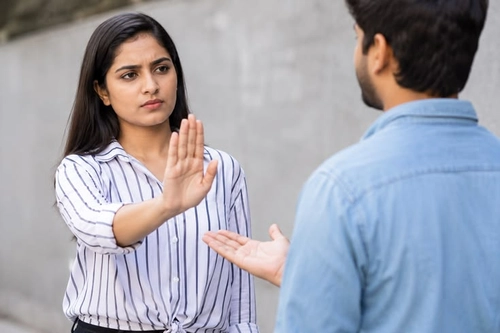
What Do Our Kids Actually See?
I asked my daughter later what she meant. She shrugged. “You just looked tired of me.”
I wasn’t tired of her. I was tired, period. But she couldn’t see my exhaustion. She saw my face.
This is the part that unsettles me. Kids read our bodies constantly. They’re small scientists collecting data. Does Mom’s shoulders drop when I walk in? Does Dad’s jaw tighten when I ask a question? They notice. They interpret. Sometimes they get it wrong.
And adults do the same thing to each other. A colleague with a resting serious face gets labeled cold. A friend who rubs her hands when nervous gets called shifty. Nobody says it out loud. It just settles into the air.
What Does Respectful Body Language Look Like?
Once I understood the problem, I flipped it. What does respectful body language actually look like?
For me, it came down to three things I could control.
The face. I have what some people call a resting stern face. In photos I look like I’m judging someone. I’m not. That’s just my face at rest. So now, when I greet people, I add a small smile on purpose. Not a big fake grin. Just a slight lift. It changes how I’m received, and honestly, it changes how I feel.
The hands. I used to rub my hands together when thinking. A friend once told me I looked like I was plotting something. Now I keep my hands still and open. Palms visible. Sounds small. It isn’t.
The sync. When someone talks to me, I try to match their energy. If they lean in, I lean in. If they speak softly, I soften. This isn’t mimicking. It’s listening with the whole body.
Why Is Our Own Body Language So Hard to See?
Here’s the honest truth. We can’t see ourselves.
I only discovered my resting face because of a driver’s license photo. I stared at it and thought, who is that unfriendly woman? That’s me. That’s the face I bring to the school pickup line every afternoon.
You can do the same experiment. Take a photo of your neutral face. No posing. Just your everyday resting expression. Study it. Ask yourself what a stranger would assume about you.
Most of us will be surprised. Some of us will be a little embarrassed.
The Doorway Pause
I invented something small. I call it the Doorway Pause.
Before I walk into a room where my family is, I stop for two seconds. I drop my shoulders. I unclench my jaw. I let my face soften. Then I walk in.
It takes almost no time. But those two seconds changed the temperature of my house. My kids noticed before I said anything about it. “You seem happier lately,” my son said. I wasn’t happier. I was just arriving with a different face.
How Does This Change With Different Ages?
With toddlers, the Doorway Pause matters most. They read faces before they understand words. A tense face reads as danger to a small child.
With school-age kids, add a greeting. A nod. A quick smile. They need to see you’re glad to see them, not just physically present.
With teenagers, keep it subtle. They’ll roll their eyes at a big grin. A relaxed face and open posture do the work quietly.
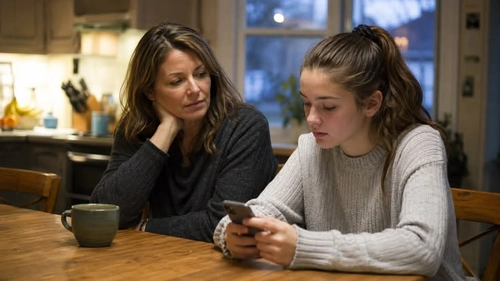
What If the Other Person Sends Disrespect First?
Sometimes you walk into a room and someone else’s body language hits you first. Folded arms. A tight mouth. A sigh.
My instinct used to be to match it. Tension meets tension. Now I try something else. I soften first. Often, the other person follows. Not always. But often.
One Thing I Want to Be Clear About
Is a resting face disrespectful? Not in intent. But in effect, sometimes yes.
The person on the receiving end doesn’t know your heart. They only know what they see. That asymmetry is unfair, and it’s real.
I don’t think we owe the world a permanent smile. That would be exhausting and false. But I do think we owe the people we love a little awareness. A small adjustment. A willingness to ask, “What does my face say when I’m not speaking?”
Because respect, it turns out, is mostly silent.

