I still remember standing in the kitchen doorway, my eight-year-old daughter sitting at the table staring at a math worksheet. She wasn’t crying. She wasn’t even fidgeting. She just sat there, perfectly still, for almost ten minutes. When I asked what was wrong, she whispered, “If I get this wrong, everyone will know I’m not smart.”
That was the beginning. Not a tantrum, not a panic attack, just a small sentence full of fear. I had always thought child anxiety signs at home would be loud. I was wrong.
Most of the time, anxious kids don’t scream for help. They hide it. They get quiet, try to be perfect, or suddenly complain about a stomachache every Monday morning. If you’re reading this, you’ve probably noticed something that feels off, something that doesn’t make sense, and you’ve already searched a dozen phrases trying to understand it. You’re not overreacting.
Quick Guide for Today
If you’re wondering whether your child might be anxious, start here:
- Watch for “invisible” rituals that take longer than they should.
- Notice when your child asks for reassurance over and over.
- Pay attention to stomachaches that disappear on weekends.
- Track what happens right after they say “I’m fine.”
- Keep a one-week worry log on your phone—no judgments, just patterns.
Why Does My Child Seem Fine All Day Then Fall Apart at Home?
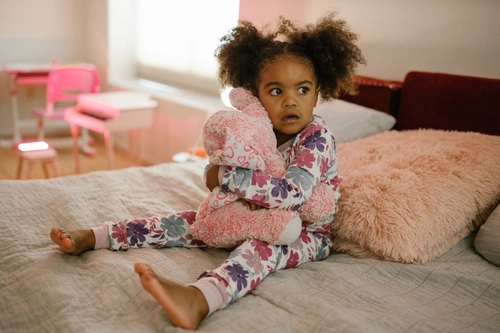
After school, it was like a pressure valve released. She’d walk through the door, drop her backpack, and suddenly everything was too much. The wrong cup, a sibling looking at her the wrong way, a homework deadline still three days away, all of it would come pouring out. I used to think she was just tired. But it was more than that.
Kids often hold it together in public. School demands a performance. Friends expect you to be fun. So they stuff every anxious thought into a mental box and lock it tight. Then, when they reach the safest place they know—home—the lid blows off. Some parents witness this and think they’re doing something wrong. But it’s actually a sign your child feels safe enough to unravel around you.
One mom told me her son would “lose it over the tiniest thing” every evening. It turned out he was terrified of a gym class where a teacher yelled a lot. He never mentioned it. Instead, his fear showed up at 7 p.m. as rage over a Lego piece. Watching for child anxiety signs at home means paying attention to when and where the big emotions show up, not just to the emotion itself.
So what can you do? First, stop trying to fix the outburst. Sit nearby and say, “That felt really big. I’m right here.” No lectures. No “calm down.” Just witness it. Over time, you start seeing the pattern: Monday, Wednesday, Thursday meltdowns, not Fridays. That data tells you something.
What Did Childhood Anxiety Actually Feel Like?
I scrolled through a parenting forum last winter and stumbled on a post: “What were your symptoms of anxiety as a child?” Thousands of answers. One woman wrote about crying at every playdate until her mom came to pick her up. Another remembered regular nightmares about the house catching fire. Someone else described being sent home from school constantly with stomachaches, certain something was physically wrong, but doctors found nothing. So many people talked about guilt. Guilt over small mistakes, guilt over dreams, guilt over a B+ on a test that felt like the end of the world.
Reading those stories, I realized how easy it is to miss signs that look like something else. A “shy” kid who avoids parties. A “dramatic” kid who cries over a missing hair clip. A “perfectionist” who rewrites homework three times. These aren’t personality traits. They can be quiet alarms going off in a child’s head all day.
Children rarely say, “I feel anxious.” They say, “My tummy hurts,” or “I don’t want to go,” or they just stop talking. The Reddit thread had hundreds of comments from adults who had never been diagnosed as kids because their behavior looked like bad behavior or just being sensitive. One person mentioned panicking over a B+ and never telling anyone because she thought she was supposed to be perfect. That single line kept me awake. How many times had my kid been that person?
So I changed one small thing. Instead of asking, “How was school?” I started asking, “What was the trickiest part of your day?” and “Did anything feel unfair?” The answers changed everything.
A Simple Evening Practice That Helped
I started a practice between dinner and bath time where we sit in her room and she can say any worry out loud, no fixing allowed. The rule is simple: I listen, I don’t judge, and I don’t offer solutions unless she asks for them. The worry often sounds tiny. “What if I forget my library book tomorrow?” But I treat it as seriously as a fear about a fire.
At first, she’d say one thing and clam up. Then, about three weeks in, she said, “I have a worry but it’s weird.” I braced myself. “Sometimes I think if I step on a crack, something bad will happen to you.” She’d been hiding that for months. I just said, “That sounds exhausting. Thank you for telling me.” We didn’t try to stop the thought. We just let it exist in the room with us, and somehow, that made it smaller.
This practice works because it removes the pressure to solve. So many parenting strategies jump straight to “let’s challenge that thought,” but for a young kid, that can feel like criticism. This approach says: your fear is allowed here. I’ve seen anxious thoughts lose their grip when they’re spoken into a calm, safe space. No reward chart, no sticker. Just time.
How to Catch the Signs You’re Probably Overlooking
I kept a note on my phone for two weeks, jotting down every time I saw one of these child anxiety signs at home:
- Asking the same question multiple times, even after getting an answer. “Are we leaving at 5?” ten times a day.
- Avoiding a favorite activity suddenly but giving a vague reason. “I don’t like soccer anymore,” when the real fear was the big tournament.
- Needing routines to be exactly right or they can’t settle. Sock seams, bedtime steps, specific plate colors.
- Physical complaints that clear up when plans cancel. Headaches before a visit to a relative’s house that vanish if the visit is postponed.
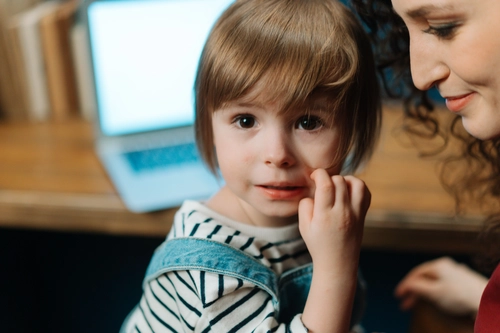
A friend told me about her seven-year-old who would chew the inside of her cheek raw. The dentist noticed it. The child had no idea she was doing it. Her anxiety didn’t have words yet. It just showed up in her body.
One of the most overlooked signs is excessive apologizing. A kid who says sorry when someone bumps into them, sorry when they need a tissue, sorry for existing. That one is easy to brush off as politeness. But it’s often a fear of doing something wrong. I started gently saying, “You don’t need to apologize for having feelings,” and the look of relief on her face was like watching a weight lift.
Small Words That Make a Big Difference
You don’t need a script. I’ve found three phrases that work better than any long conversation:
- “I believe you.” (When they say they’re scared, even if the fear seems irrational.)
- “What do you need right now?” (Not “what do you want,” which feels like a test.)
- “I’m not going anywhere.” (Said calmly, not as a promise to fix things, just to stay.)
One evening, my daughter admitted, “I’m scared of forgetting things at school, so I check my bag a hundred times.” Instead of saying “That’s silly,” I said, “That sounds like your brain is working really hard to protect you. What if we made a checklist for tomorrow morning?” She nodded. The ritual shifted from a hidden compulsion to a shared plan. It didn’t cure the anxiety. But it made it more manageable.
FAQ: Child Anxiety Signs at Home
Q: How can I tell if it’s normal worry or something more?
A: Look for patterns that interfere with daily life. If stomachaches or avoidance happen repeatedly and don’t respond to simple reassurance, it’s worth paying closer attention. Duration matters too. Lasting over a month and popping up across different settings indicates it’s more than a phase.
Q: Are child anxiety signs at home different for younger kids versus tweens?
A: Younger children often show physical complaints and clinginess. Tweens might get irritable, withdraw, or become overly self-critical. In both cases, the signs at home can include disrupted sleep, rigid routines, or explosive reactions to minor changes.
Q: What if my child won’t talk about their worries at all?
A: Try side-by-side instead of face-to-face. Talk while walking, driving, or coloring. Use a stuffed animal to voice a worry, or read a story where a character faces a similar fear. Sometimes not talking directly lowers the pressure enough for them to open up.
Q: How do I respond when my child displays these signs without making it worse?
A: Stay calm and name what you see. “I noticed your hands are shaking. That can happen when you’re feeling scared.” Validate without amplifying. Avoid “Don’t worry.” Instead, say, “Whatever this is, we’ll handle it together.” Then guide them to a simple grounding activity, like counting breaths or doing a silly dance.
Q: What if my child’s anxiety seems to come out of nowhere?
A: Anxiety often looks like it comes from nowhere, but there’s usually a trigger—a change at school, a social dynamic, an upcoming event. Keep a log of when it happens. Patterns emerge. And sometimes, the trigger is just exhaustion. A tired nervous system is a sensitive one.
One Last Thing
That night at the kitchen table, when my daughter whispered her fear about not being smart, I didn’t have the right words. I just pulled up a chair and sat with her. She eventually finished the worksheet, got a few answers wrong, and nothing terrible happened. The fear didn’t disappear. But she learned she could survive it. Sometimes the real sign of anxiety is how hard a child works to hide it. And the real help is simply noticing.
References
- American Academy of Pediatrics. (n.d.). Understanding anxiety in children and teens. HealthyChildren.org. Retrieved from https://www.healthychildren.org
- Kendall, P. C., & Hedtke, K. A. (2006). Cognitive-Behavioral Therapy for Anxious Children: Therapist Manual. Workbook Publishing.
- Chansky, T. E. (2004). Freeing Your Child from Anxiety: Practical Strategies to Overcome Fears, Worries, and Phobias. Harmony Books.
