I froze mid-bite, peanut butter sandwich halfway to my mouth, when my five-year-old daughter announced, “Jacob says ‘shut up’ is a bad word. Is ‘fuck’ worse?” She was coloring a rainbow. She didn’t even look up. I, on the other hand, had to remember how to breathe. A flurry raced through my head: Who is Jacob? Why is my sweet girl asking this? Did she just say that word? I managed something like, “That’s not a word we use,” and then I steered the conversation to unicorns and tried very hard not to sound panicked. But I spent the rest of the evening replaying it.
Sound familiar? You’re not alone. When your child brings home bad language from school, it can feel like a punch to the gut. You might wonder if you’ve failed somewhere, if the school has a discipline problem, or what you’re supposed to do next. The good news is curiosity—not rebellion—is usually driving the bus. And how we respond in those first few moments shapes what happens next far more than the word itself.
Quick Ways to Tackle Bad Language Today
If your child just dropped a word that made your stomach flip, try these:
- Say “we don’t use that word” calmly and move on without a big lecture.
- Ask, “Where did you hear that?” instead of “Who taught you that?”
- Give a better word to use when they’re frustrated, like “oh pickles” or “that stinks.”
- Make a family list of “strong feeling words” that are okay to say.
- Model the language you want to hear—kids mirror us more than we realize.
These little moves helped me stop panicking and start connecting. But to really understand what was happening, I had to dig deeper—and I want to share what I learned.
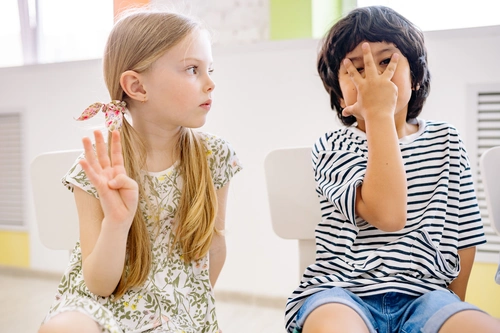
Why Does My Child Suddenly Use Swear Words From School?
It nearly always comes down to one thing: context switching. At five or six, children are linguistic sponges. They hear a word that made another kid laugh or get a big reaction, and they try it on. Like a new jacket. They don’t fully grasp the social weight of profanity. My daughter didn’t come home swearing to be defiant. She was genuinely curious. When her friend Kyle used a bad word and everyone gasped, her little brain filed it under “powerful sounds.” So she tested it at home. In front of me. With her rainbow drawing.
School amplifies this exploration because it’s a concentrated language environment. One child with older siblings drops a curse word, and suddenly half the kindergarten class is parroting it during free play. Teachers see this cycle every year. The word is less important than the reaction it gets. So when I heard my daughter say that word, I realized I had a choice: I could fuel the mystery with a huge reaction, or I could drain the power out of it. I went with option B, though I definitely bungled it the first time. I said “don’t ever say that” with such force that her eyes went wide. Not my finest moment. Later, I looped back when we were both calm.
Many parents find that treating the word as neutral—even boring—helps their child lose interest. Some schools handle it this way too. One teacher told me, “If I hear a swear word, I just say, ‘That’s a grown-up word. I’d rather you say “darn” or “rats”.’ And then I move on. No drama.” That approach resonated with me. The classroom dynamic can invite these words in, but it can also show kids a better way.
How to Handle Bad Language From School Without Overreacting
The trick I learned is to separate the word from the child’s character. When my nephew came home from school one day and casually said, “Someone said the word fuck,” his uncle—that’s me, a few years earlier—replied, “Don’t ever say that!” The poor kid looked spooked. Then he whispered, “Is that the worst swear word there is?” I thought I had to guard him from the idea itself, but really, I just proved that these words were dangerous and exciting. What would I do now? I’d pause. I’d take a breath. I’d kneel down and say, “Yeah, that’s a word some people say when they’re really angry. It’s not a kind word. In our family, we choose different words. What could you say instead when you’re mad?” That invites connection instead of shame.
I tried a similar script with my daughter the next day. We sat on the couch with her favorite glittery socks on. I said, “Yesterday you asked about that word. You weren’t in trouble. I was just surprised. Can I share why some words aren’t helpful?” She nodded. I told her some words are like a big loud drum—they make everyone stop and stare, but they can also hurt people’s feelings. She seemed to get it. Then I asked, “When you’re really upset, what could we shout instead?” She thought and grinned. “Poopsicle!” Perfect. That became our safe swear word. Silly, releasing, and hers.
One idea some parents swear by is the “home language zone.” Talk about how different words work in different places. There are school words, grandma words, playground words, and home words. That doesn’t make any word evil—just contextually appropriate. A child who understands this will often self-regulate without fear.
The Curiosity Conversation Framework
I started using a little approach after realizing that every outburst about bad language was actually a bid for connection. The framework has three steps: Notice, Name, and Replace.
First, you notice aloud what’s happening without judgment. “I heard you say a new word just now. You sounded curious about it.” That’s it. Then you name the word’s power. “That word has a lot of energy in it. It can surprise people or make them feel uncomfortable.” Then you offer a replacement. “Want to know a silly word I use when I stub my toe? I holler ‘banana pudding!’ Try it.” This framework worked so well that my daughter started applying it to her friends. She’d come home and say, “Mommy, Ella said a bad word. I told her ‘that’s an uncomfort word, try saying ‘fiddlesticks’.'”
It’s important to note that this isn’t a one-and-done lesson. Some children will repeat the bad word just to test the boundaries again. That’s normal. Stay gentle. Repeat the framework without adding weight. Over time, the thrill dissipates.
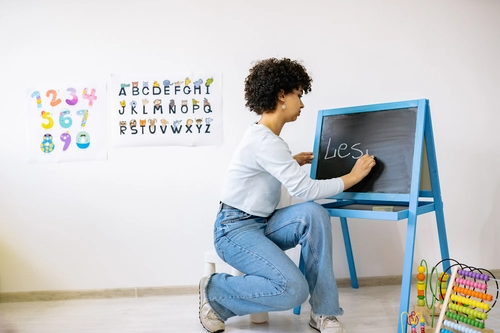
When the Wider Language Environment Worries You
There’s another layer some parents think about: the overall language environment at school. I remember a friend telling me why he and his wife considered moving to a different municipality. It wasn’t just about academic quality. They wanted a school where most children spoke the same home language—German, in their case—so that teachers could spend less time bridging language gaps. He wasn’t talking about nationality. He was talking about the daily linguistic texture of the classroom. When you hear people react negatively to that concern, it’s often because they assume it’s coded prejudice. But for many parents, it’s purely about wanting their child immersed in rich, age-appropriate language—and that includes filtering out both profanity and the fragmentation that comes when many kids are still learning the language of instruction.
The same principle applies to bad language. If a child spends hours each day in an environment where swear words fly around unchallenged, they may internalize those words as normal. It’s not about panic. It’s about being deliberate. Just as you’d choose a school with a kind culture, you can gently advocate for a school that mindfully addresses language. One approach: ask the teacher how they handle swear words. You might be surprised how well-versed they are in this stuff.
What About a 5-Year-Old’s Fascination with Swearing?
At this age, the brain is wired for categorization. Kids label everything: big, small, food, not-food, good word, bad word. When a child discovers a whole category of “forbidden” words, their fascination spikes. My nephew was exactly like that. Sweet kid, zero malice. He just loved knowing secrets. So when he whispered, “Is that the worst swear word there is?” he wasn’t trying to be rebellious. He was sorting his world. If his parents had overreacted and punished him, they might have accidentally fed the fascination. Instead, a simple “we don’t use that word because it can make people sad” and then a redirect would have kept him safe and learning.
I’d add that curiosity about these words often fades on its own if we don’t fight it. My daughter hasn’t brought up that word in months. She’s moved on to potty humor, which is its own adventure.
FAQ: Child Using Bad Language at School
Q: Is it normal for a 5-year-old to use bad words they heard at school?
A: Yes, it’s very common. At this age, children are curious about language and testing boundaries. They often don’t understand the full meaning of swear words—they’re just fascinated by the reaction the word gets. It’s not a sign of bad parenting or a problem child.
Q: Should I punish my child for swearing?
A: Punishing usually backfires because it makes the word more powerful and exciting. Instead, stay calm, name the word as something your family doesn’t use, and offer a replacement. Treat it as a teaching moment, not a discipline issue. Save consequences for actual disrespect, not curiosity.
Q: What if my child keeps saying the bad word after I’ve asked them not to?
A: Stay consistent and boring. Each time, calmly say “we don’t use that word” and redirect. Some kids will test the boundary a few times—that’s normal. The less reaction they get, the less interesting the word becomes. If it persists, consider whether they’re using it to get a big reaction or if there’s something else going on.
Q: What should I say to the teacher if bad language is happening at school?
A: You can ask, “I noticed my child picked up some new words at school. How do you handle language in the classroom?” Most teachers have strategies and will appreciate that you’re not blaming them. You’re just being a partner in teaching your child about language.
Q: My child says bad words in frustration—does that mean they have anger issues?
A: Not necessarily. Young children often lack the vocabulary for big feelings, so they reach for the most intense word they know. If they’re using the word to express anger, teach them a replacement: “Try saying ‘I’m so frustrated’ instead.” If you’re concerned about their overall emotional regulation, look at the pattern—not just the word itself.
One Last Thing
The next time your child comes home with a word that makes your stomach flip, try to see it as an invitation. They are handing you a tiny window into their social world. You don’t have to slam it shut. You can crack it open, lean in, and ask, “What was that like for you?” That question alone can turn a swear-word panic into a moment of trust.
References
- Faber, A., & Mazlish, E. (2012). How to Talk So Kids Will Listen & Listen So Kids Will Talk. Scribner.
- Morgenstern, J. (2001). Time to Parent: Organizing Your Life to Bring Out the Best in Your Child and You. Holt Paperbacks.
- American Academy of Pediatrics. (2018). Language development: 4 to 5 years. HealthyChildren.org. Retrieved from https://www.healthychildren.org
