Last month, I found myself staring at a Slack message from a coworker. Three sentences. No emojis. I read it six times. My pulse was doing that annoying flutter thing. She was annoyed about a missed deadline. I was annoyed she was annoyed. But I didn’t reply. I closed the laptop and walked into the kitchen. Why do some conflicts hit us like a physical blow? Why do others slide right off? Conflict psychology explained something that kept happening in my life. I was reacting, not responding. And most of the time, I was protecting myself from a threat that wasn’t even there.
Quick Conflict Psychology Today
If you’re in the middle of a disagreement, try these:
- Name your reaction before you act on it. Are you scared? Hurt? Embarrassed?
- For strangers or online fights, the block button is a gift. Use it.
- If the person matters, the relationship wins over being right.
- The five-second pause: swallow the first reply, wait, then choose words.
- You never have to regulate someone else’s anger. That’s their work.
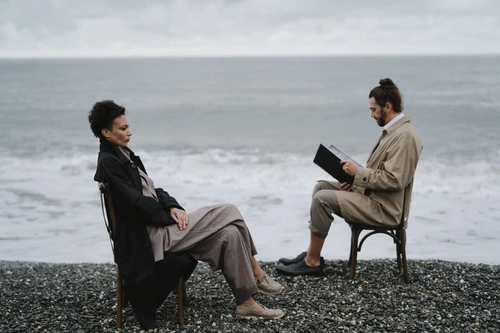
Why Does My Heart Race During an Argument? Conflict Psychology Explained
Our brains are old machines running ancient software. When you sense a threat—like a critical email or a partner’s sharp tone—your amygdala fires. Same as it did ten thousand years ago when a shadow might mean a lion. Your body gets flooded with cortisol. Your heartbeat kicks up. Logic takes a back seat. This is the famous fight-or-flight response. Conflict psychology explained in a sentence: your body can’t tell the difference between a social threat and a physical one.
I noticed this last Thanksgiving. My uncle made a comment about my career choice. Nothing mean. Just dismissive. But my face got hot. I felt like I was fifteen again. Why? Because my brain remembered every past family dinner where I wasn’t taken seriously. It wasn’t about that moment. It was about a pattern. Our reactions to conflict are often echoes of old hurts. The person who freezes in a meeting might have learned that speaking up was dangerous. The person who explodes might have never felt heard. Understanding that doesn’t excuse harmful behavior. But it helps you see why you personally want to run, fight, or disappear.
How to Actually Deal With Conflict When You Can’t Avoid It
I once read something that changed my approach: “I just be defenseless.” The idea was to say things like, “Oh, you’re right,” or “Maybe, we’ll see.” At first, I thought it was passive. Weak, even. Then I tried it. My neighbor complained about my dog barking. Instead of explaining or justifying, I said, “You’re right, he’s been loud. I’m sorry that bothered you.” The tension deflated. He didn’t need a list of my dog’s anxiety issues. He needed to be heard. Was I admitting total fault? No. I was disarming a pointless conflict. For strangers and low-stakes arguments, this is gold.
For bigger stuff—conflicts with people you love—a different tool is needed. I think of it as the “Two-Step Reconnection.” Step one: reflect the feeling. “I hear you’re angry. That makes sense.” Step two: ask one honest question. “What would help right now?” A friend once snapped at me over a canceled plan. My old instinct was to list all my valid reasons. Instead, I said, “I hear how disappointed you are. I should have called sooner.” She exhaled. The argument ended. We could talk about the real issue: she missed me. That’s not therapy. It’s just seeing the person behind the complaint.
What about online arguments? I used to get sucked into Twitter fights. Someone would misinterpret a post, and I’d spend an hour crafting the perfect rebuttal. For what? A stranger’s opinion? Someone once put it well: with strangers, it’s better to disengage. Walk away. I now ask myself: “Will I care about this tomorrow?” If no, I scroll on. The energy I save goes to real people.
The Circle of Care: A Simple Decision Tool
I made up a little framework I call the Circle of Care. Draw three rings. Inner ring: people I deeply love and need (partner, children, close friends). Middle ring: coworkers, extended family, neighbors. Outer ring: strangers, online acquaintances, the guy who honked at me in traffic.
Here’s how the Circle works. For the inner ring, I invest. I initiate hard conversations. I say, “When you said X, I felt Y. Can we talk about that?” I aim for repair. For the middle ring, I choose my battles. A coworker takes credit for my idea? I might say calmly, “I’m glad that idea is moving forward. I’d love to be included next time.” A neighbor plays loud music? I knock and ask politely. But I don’t tie my self-worth to their response. For the outer ring? I let go. Not out of weakness. Out of wisdom. My emotional energy is finite. If a stranger’s comment still stings, I notice that. I ask myself: “What old story is this poking?” The answer is almost never about now.

When Walking Away Feels Like Losing
My dad taught me that avoiding conflict is cowardice. For years, I believed him. Then I realized: he didn’t have to manage my nervous system. Avoiding pointless arguments isn’t cowardice. It’s conservation. Someone once said it plainly: if you find yourself always in conflicts, something is off. Maybe you keep picking them. Maybe you believe every battle must be fought. I used to think that. Now I know: the strongest people I know choose silence often. Not the angry, martyred silence. The peaceful silence that says, “This noise isn’t mine.”
How to Handle Conflict with Family Without Losing Yourself
Family is the hardest because the inner child gets activated. I have a trick I call the “Adult Voice” check. Before speaking, I picture my seventeen-year-old self standing next to me. Is that kid driving my response? Defensive, scared, desperate to be right? If yes, I take three slow breaths. Then I speak like the adult I am now. I use sentences like, “I see it differently, and that’s okay.” Or, “I’m not comfortable discussing that right now.” My uncle’s comments at Thanksgiving? This year, I smiled and said, “I’m happy where I am.” No defense. No explanation. Just my truth. It felt like freedom.
Why Online Arguments Feel Personal (And How to Unhook)
Online, we get into the habit of performing. Likes, retweets—it all feels like a courtroom. But it’s theater. The person on the other side isn’t seeing you. They’re seeing a version of you they made up. A key difference to remember: do you need someone to do something, or believe something? Online, it’s almost always belief. You can’t force a stranger to understand you. Let them be wrong. Close the app. Go outside. The world offline is quieter, and real.
FAQ: Conflict Psychology Explained
Q: What is conflict psychology explained in simple terms?
A: It’s the study of why we react the way we do during disagreements. Our brains perceive social threats like physical ones, triggering fight, flight, or freeze. Understanding this helps us pause and choose a better response.
Q: Why do I avoid conflict even when it hurts me?
A: Avoidance often comes from early experiences where speaking up felt unsafe. Your brain learned that silence equals safety. The problem? Unspoken resentment piles up. Small steps—like stating a preference to a safe person—can retrain your system.
Q: How do I stop getting defensive during arguments?
A: Defensiveness is a shield. Try the “Reflection First” rule: before you speak, repeat what the other person said. “So you feel I was unfair?” This buys your brain a few seconds to move out of threat mode and into curiosity.
Q: Is walking away from conflict a sign of weakness?
A: No. Choosing not to engage with someone who isn’t open to listening is self-respect. The circle of care idea can help you decide. Save your energy for relationships where mutual understanding is possible.
Q: How can I handle conflict with someone who won’t listen?
A: If the person is in your inner circle, try the Two-Step Reconnection: reflect their feeling, then ask an honest question. If they still won’t engage, you can say, “I’m open to talking when you’re ready.” Then step back. You can’t force someone to meet you halfway.
One Last Thing
I keep thinking about that idea—”I just be defenseless.” It’s not about rolling over. It’s about releasing the need to win every round. The world is loud enough. Protecting your peace is a quiet, radical act. Any argument that doesn’t build you up is just noise. And noise doesn’t deserve your pulse.
References
- Goleman, D. (1995). Emotional Intelligence: Why It Can Matter More Than IQ. Bantam Books.
- Patterson, K., Grenny, J., McMillan, R., & Switzler, A. (2011). Crucial Conversations: Tools for Talking When Stakes Are High (2nd ed.). McGraw-Hill.
- American Psychological Association. (2023). Controlling anger before it controls you. Retrieved from https://www.apa.org/topics/anger/control
