Some conversations are easy because nothing important is at stake. The difficult ones are different. When emotions are high and the outcome matters, even people who normally communicate well can become defensive, silent, angry, or unable to find the right words.
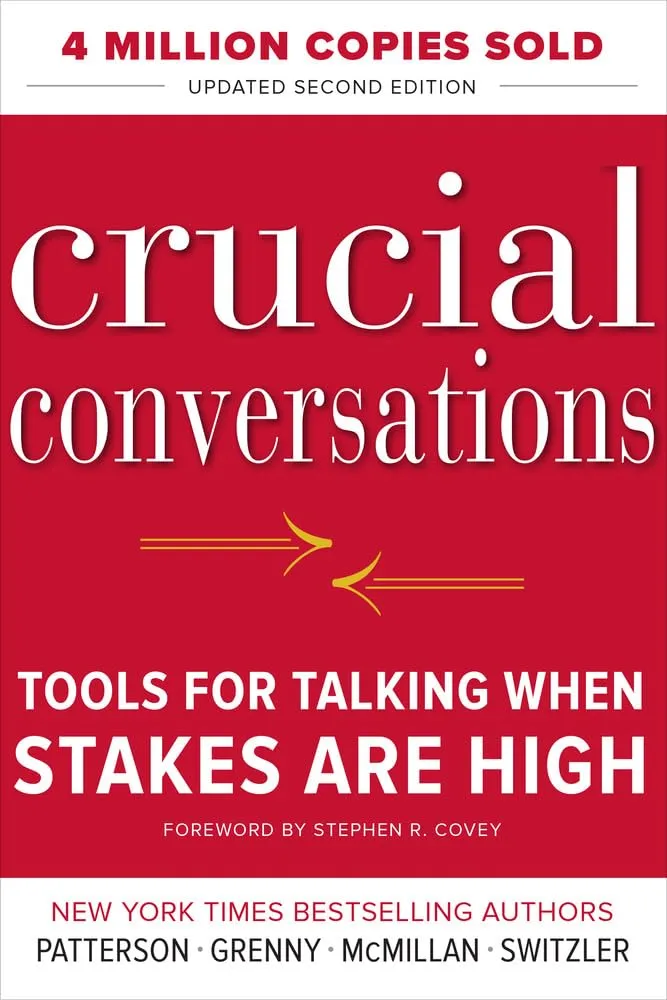
Crucial Conversations by Kerry Patterson, Joseph Grenny, Ron McMillan, Al Switzler, and Emily Gregory focuses on exactly these situations. Instead of teaching people how to win arguments, the book explores how to stay calm, speak honestly, and keep a conversation productive when disagreement becomes unavoidable.
For anyone who has ever avoided an uncomfortable conversation because they were worried about making things worse, this book offers a practical perspective: difficult conversations do not necessarily have to damage a relationship. With the right approach, they can sometimes improve it.
About Crucial Conversations
Crucial Conversations is centered on conversations where opinions differ, emotions are strong, and the consequences of the discussion matter. These situations can happen almost anywhere—a disagreement with a partner, tension with a coworker, a difficult conversation with a family member, or a discussion about expectations and boundaries.
The authors examine what happens to communication when people feel threatened. Under pressure, someone may become aggressive and try to control the conversation, while another person may withdraw completely to avoid conflict.
The book’s goal is to help readers recognize these reactions and develop a more constructive response. Rather than pretending difficult emotions do not exist, it shows readers how to communicate while those emotions are present.
What Makes Difficult Conversations So Difficult?
One of the most interesting aspects of the book is its focus on what happens internally before words are even spoken.
A person may hear a comment, interpret its meaning, experience an emotional reaction, and then respond based on that interpretation. The problem is that the interpretation may not always match what the other person actually intended.
This can quickly turn a small disagreement into a much larger conflict.
Crucial Conversations encourages readers to become more aware of this process. Before reacting, it can be useful to pause and consider what assumptions are influencing the response.
That moment of reflection can change the direction of an entire conversation.
Key Ideas From The Book
Start With What You Actually Want
During an argument, it is surprisingly easy to lose sight of the original goal. A conversation that begins with a genuine concern can quickly turn into an attempt to prove who is right.
The book encourages readers to ask themselves what they really want from the conversation. Do they want to solve a problem? Improve a relationship? Set a boundary? Reach an agreement?
Keeping that purpose in mind can make it easier to avoid unnecessary attacks and focus on the issue that actually matters.
Create Enough Safety for Honest Communication
People rarely communicate openly when they feel attacked or humiliated. Even a reasonable point can be rejected if the other person feels that they are being judged.
The authors emphasize the importance of creating a conversational environment where both sides can speak honestly. This does not mean avoiding disagreement or making every conversation comfortable. It means allowing disagreement to exist without turning the other person into an enemy.
That distinction is especially valuable in relationships where difficult topics cannot simply be avoided.
Separate Facts From Interpretations
Another useful lesson is learning to distinguish what actually happened from the story we tell ourselves about it.
For example, someone arriving late is a fact. Assuming that they do not respect you is an interpretation.
Recognizing this difference does not mean ignoring repeated behavior. Instead, it gives you an opportunity to discuss the observable problem without immediately assigning motives to the other person.
This can make difficult conversations more specific, fair, and productive.
Communication Is Not the Same as Avoiding Conflict
One reason Crucial Conversations stands out is that it does not treat harmony as the ultimate goal.
Healthy communication does not mean agreeing with everyone. It also does not mean staying quiet whenever a conversation becomes uncomfortable.
Sometimes a productive conversation requires saying something that the other person does not want to hear. A boundary may need to be established. A recurring problem may need to be addressed. A relationship may need an honest discussion about expectations.
The important question is how that message is delivered.
The book encourages readers to be both honest and considerate. That combination can be difficult, but it is often more useful than either extreme—aggression on one side or complete avoidance on the other.
What Makes Crucial Conversations Worth Reading?
The strongest feature of Crucial Conversations is its focus on situations that most adults eventually encounter. It does not limit communication to formal presentations or professional networking. Instead, it deals with the conversations that can genuinely affect relationships and everyday life.
The advice is also highly actionable. Readers can take the ideas and apply them to a disagreement almost immediately, whether they are dealing with a colleague, partner, friend, or family member.
Another advantage is that the book recognizes that communication problems are rarely caused by words alone. Tone, assumptions, emotional reactions, and the desire to protect ourselves can all influence the direction of a conversation.
That broader perspective makes the book useful for people who want to understand not only what they say, but also why conversations sometimes go wrong.
Who Should Read Crucial Conversations?
This book is a strong choice for readers who want to become more confident when dealing with disagreement and emotionally charged situations.
It may be especially useful for people who:
- Avoid difficult conversations because of fear of conflict
- Become defensive or emotional during disagreements
- Want to communicate boundaries more clearly
- Struggle to express concerns without sounding confrontational
- Want healthier communication in close relationships
- Need to handle challenging conversations at work
It can also benefit people who tend to stay silent until frustration builds up. Learning to address problems earlier can prevent small issues from becoming much more difficult later.
Final Thoughts
Crucial Conversations is ultimately about what happens when communication becomes difficult but silence is no longer a good option. Its approach encourages readers to remain honest without becoming hostile and considerate without abandoning their own needs.
The book’s most useful lesson may be that a difficult conversation does not have to be a battle. When people learn to manage their emotions, question their assumptions, and communicate what genuinely matters, even uncomfortable discussions can become opportunities for greater understanding.
For anyone who wants to speak more clearly, handle conflict more effectively, and build healthier relationships, Crucial Conversations is a practical book worth having on the reading list.