I was standing at the kitchen counter, sorting mail, when my fiancée said it. I had just asked, for the third time, whether she had remembered to call the plumber. My voice was flat. Practical. She turned from the sink. “Don’t talk to me like that.” The words hung between us. I hadn’t yelled. I hadn’t insulted her. I was just… exhausted. And it still cut.
Here is the truth: you are not alone. This phrase comes out of nowhere in relationships, at work, with family, with friends. It can make you feel guilty, confused, defensive. I’ve been there. A lot of us have. And what I learned is that those six words are rarely about the words you just said. They’re about something deeper. Something you can learn to hear and handle.
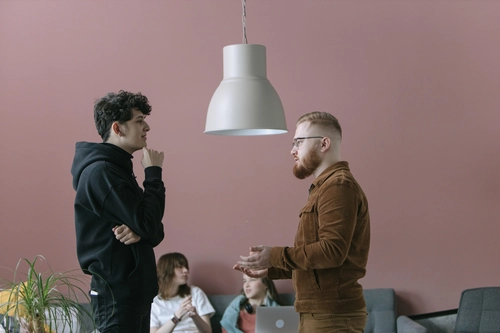
Why Does Someone Say Don’t Talk to Me Like That Out of Nowhere?
When my fiancée said it, I replayed the last thirty seconds. I had not raised my voice. I had not been sarcastic. What was so wrong? Then it hit me. My tone was clipped. Efficient. Like a manager checking a task list. I had simplified her down to a checkbox. She felt talked down to, even though I hadn’t intended it.
That is the core. People say don’t talk to me like that when they feel a loss of respect in your voice. Not necessarily disrespect in your words, but in the shape your voice takes. Short sentences. A flat pitch. A tiny sigh before you speak. I didn’t mean to sound condescending. But my tone said, “I already know the answer, and you’re just the person I need to remind.” She heard “you’re incompetent.” I had meant “can we get this done please.” Two completely different conversations.
Another reason is emotional overload. Sometimes the person has been carrying a weight all day, and your tone becomes the final straw. They aren’t reacting to you. They are reacting to a day of feeling small, your question just happened to land in the sore spot. I’ve been on that side too, snapping “don’t talk to me like that” at a co-worker who was just being precise. My real complaint wasn’t his tone. It was the three earlier emails from a dismissive boss.
So when you hear it, pause. Ask yourself: did I just speak like a checklist? Did I just talk at them instead of to them? The answer usually sits between your intention and their perception.
How to Respond When They Say Don’t Talk to Me Like That Without Escalating
My first instinct was to defend. “I didn’t say anything wrong!” I wanted to protest. That would have turned a small wound into a fight. I learned a better way. Here is what has worked for me, step by step.
Step one: breathe. Give yourself three seconds. This is not about losing or winning. This is about hearing.
Step two: use a calibration question. I now say something like, “Can you tell me what you heard just now? I want to fix it.” Or simpler: “Help me understand what felt off.” This does two things. It acknowledges their feeling without admitting fault you don’t yet understand. And it makes them articulate the real issue. My fiancée paused, then said, “You sounded like I was a problem to solve, not your partner.”
Step three: bridge back to your real intent. I said, “I’m sorry. I sounded impatient. I’m just anxious about the leak. I wasn’t thinking about how I sounded.” Notice: I didn’t say “I’m sorry you felt that way.” I owned the tone. I attached it to my own stress. Then I repeated my question, gently: “So did the plumber get back to you?” The same words, different music. She said yes, and the tension unwound.
Sometimes the person is using don’t talk to me like that as a shield. If you notice they do it every time a hard topic comes up, your response can be firmer but still calm: “I hear you. I want to fix my tone if I’m off. And we do need to talk about this. Can we try again?” This separates tone complaints from topic avoidance.
The Reconnection Script: A Two-Minute Conversation Reset
I built a tiny mental tool I use now. I call it the Reconnection Script. It has three sentences.
Sentence one: “Thank you for telling me.” That first moment is them taking a risk, even if it sounds angry. Sentence two: “That wasn’t my intention, but I can hear it now.” You are not denying their experience. You are just clarifying your heart. Sentence three: “Let me try that again.” Then you literally repeat your last sentence with a warmer, slower tone.
I used this with my teenage nephew last month. He said, “Uncle Nate, don’t talk to me like that.” Because I had asked about his grades with a little too much edge. I stopped. “Thank you for telling me. That wasn’t my intention, but I can hear it now. Let me try again.” I leaned back in my chair. “Hey, your mom mentioned you had some tough tests. I’m just curious how things went.” He nodded and started talking. Four seconds of humility prevented a slammed door.
The Reconnection Script works because it treats the complaint as information, not attack. It signals safety. And it gives you a do-over.
Spotting Real Condescension in Your Own Voice
How do you know when you actually are talking down to someone? The easiest test: did you just explain something they already know? I catch myself doing this with older parents. I will start explaining how to share a photo on their phone, slowly, like a tutorial for a child. They feel it. Their faces tighten. They say, “I know how to do that.” I’ve just over-simplified. I skip steps. That is condescension in action. The fix: ask first. “Do you want me to walk through it, or did you just have a quick question?” Give them control.
Another sign: you answer too fast, before they finish. I did this with my sister last week. She started a story and I jumped in with the solution after three words. She deflated. “Don’t talk to me like that, I wasn’t done.” I had solved a problem she didn’t ask me to solve. The fix: when someone starts speaking, I now put my mental “fixer” on hold and just listen. I nod. I wait two full beats after they stop. Then I ask, “Do you just need me to listen, or do you want ideas?” That simple question has changed so many conversations.
When “Don’t Talk to Me Like That” Becomes a Control Tactic
There is a flip side. Some people use the phrase as conversational jiu-jitsu. Whenever they feel cornered by a fair question, they deflect with outrage about tone. My old roommate did this. If I asked, “Hey, did you get a chance to take out the trash?” he would snap, “Don’t talk to me like that, like I’m a child.” The question was neutral. He just didn’t want accountability. His anger was fake. It was, as one Reddit commenter put it, “false outrage meant to turn the argument away from them and onto you.”
What do you do then? You hold your ground, but without matching anger. I learned to say, “I’m sorry if my tone seemed off. I genuinely just need to know about the trash because guests are coming. Can we focus on that?” I acknowledged the complaint without buying into the tactic. After two or three times, he realized the tactic didn’t work. The trash still got discussed. He eventually stopped using it.
If you suspect manipulation, watch the pattern. Does the person hear tone problems only when they are losing an argument? Do they never offer specifics about what felt wrong? That’s a red flag. You can still use the Reconnection Script. And if they keep deflecting, you might need to say, “I’m happy to fix my delivery. I also need to finish this conversation.” That sets a boundary.
How to Apologize for Your Tone Without Shrinking
A real apology is a bridge, not a surrender. I used to over-apologize: “Oh my God, I’m so sorry, I’m the worst, I ruined everything.” That made the other person manage my guilt. Now I keep it simple. “That was a sharper tone than I meant. I’m sorry. I’ll try again.” I name the thing I did wrong (sharp tone) without making myself small. I offer repair (try again). That’s it.
Then I follow through. I lower my shoulders. I soften my voice. Not dramatically. Just enough to match the moment. My fiancée and I now have a shorthand. When I sound like a taskmaster, she gives a small smile and says, “checklist voice.” I laugh and reset. It has become an inside joke. A signal of trust.
Frequently Asked Questions
What does it mean when someone says don’t talk to me like that?
It usually means they felt disrespected, belittled, or dismissed by your tone, pace, or word choice. Even if you didn’t intend it, your delivery might have sounded like you were talking down to them. They are asking for you to see them as an equal again.
How do I stop myself from reacting badly when someone says don’t talk to me like that?
Take three slow breaths before responding. Your body will want to defend. Remind yourself this is likely about their perception, not a full accusation. Ask a calm question like, “Can you help me see what I did?” to shift from defense to understanding. Practice the Reconnection Script in low-stakes situations so it becomes muscle memory.
Can saying don’t talk to me like that be a form of gaslighting?
Yes, sometimes. If it is used repeatedly to deflect accountability or make you feel crazy for asking normal questions, it can be a manipulation tactic. Look for patterns. Honest complaints usually come with specifics. Manipulative ones stay vague and are often paired with blame-shifting.
How do I bring this up later after someone says don’t talk to me like that and we moved on?
You can circle back gently. Try, “Hey, earlier when I said that thing and you said don’t talk to me like that… I’ve been thinking about it. I want to make sure I don’t slip into that again. Do you have a minute to talk about what landed wrong?” This shows care and invites repair. It deepens trust.
What if I’m the one who keeps saying don’t talk to me like that to others?
First, be gentle with yourself. This often means you’ve been carrying unexpressed hurt or frustration. Try replacing it with clearer wording: “I’m feeling sensitive right now. Could you say that a little softer?” or “That wording stung. Can we rewind?” This gives the other person a map to connect with you, instead of a wall.
One last thing. That day in the kitchen, after we talked, my fiancée leaned against the counter. “I know you’re tired,” she said. “I just need your tired voice to still see me.” I think about that a lot. It’s not about perfect tone. It’s about being seen while we speak.
