I was standing in my kitchen at 11 p.m., heart racing, convinced my partner was angry with me. He’d said maybe three words since dinner. That was it. Three words. My brain spun a whole story from those three words. He’s upset. I did something wrong. This relationship is falling apart.
None of it was true. He was just tired.
That night I stumbled onto something called emotional reasoning psychology. It hit me like a cold splash of water. My feelings had completely hijacked my thinking. And I’d been letting them do it for years.
Quick Emotional Reasoning Facts Today
If you’re wondering whether your feelings are telling you the truth, try these:
- Learn to spot when feelings masquerade as truth.
- Discover why your brain trusts emotions over evidence.
- Find the pause button between feeling and believing.
- Break the cycle before it wrecks your decisions.
- Understand the hidden force that makes advice backfire.

What Is Emotional Reasoning Psychology and Why Does It Happen?
Emotional reasoning psychology describes a mental shortcut where you treat feelings as proof of reality. I feel stupid, so I must be stupid. I feel guilty, so I must have done something wrong. I feel scared, so danger must be near.
The problem is obvious once you see it. Feelings are not facts. They’re signals. Sometimes accurate. Often not.
Why does this happen? Our brains evolved for survival, not accuracy. Speed mattered more than precision. If your ancestor heard a rustle in the grass and felt fear, running was smarter than checking whether it was a lion or just wind. Better to feel scared and be wrong than feel calm and be dead.
That ancient wiring still runs the show. Your emotional brain reacts in milliseconds. Your rational brain takes seconds to catch up. By the time logic arrives, the feeling has already written the story.
I think about this every time I snap at my kids. The irritation feels so justified in the moment. They’re being too loud. They’re not listening. But later I realize: I wasn’t angry because they were bad. I was tired and overwhelmed. The feeling came first. The explanation came second.
Understanding emotional reasoning psychology helps you see this pattern in real time. You start noticing how often feelings dress up as facts without any evidence at all.
How Can I Stop Emotional Reasoning From Controlling My Decisions?
Here’s what actually works, and I say this as someone who still gets hijacked by feelings regularly.
First, you need to understand something called reactance. It’s a well-documented psychological phenomenon. When you feel someone trying to limit your freedom, an automatic resistance kicks in. Not reasoned disagreement. It’s a stubborn, gut-level “don’t tell me what to do” reflex. Even when the advice is good. Even when the request is reasonable.
You’ve felt this. A doctor tells you to avoid a certain food. Suddenly you want it more than ever. A website pops up demanding you subscribe. Your first instinct is closing the tab. Someone insists you must watch this show. Your interest evaporates instantly.
Our brains are wired to protect autonomy. When autonomy feels threatened, the primitive emotional brain triggers defenses before rational thought can evaluate anything. Freedom gets prioritized over logic.
Why does this matter for emotional reasoning? Because pushing back against your own feelings often triggers the same reactance. Telling yourself “stop being anxious, there’s no reason for it” feels like someone bossing you around. Your brain resists.
Here’s what I do instead. When I feel a strong emotion spinning up a story, I stop and say: “Huh. That’s reactance. Or that’s emotional reasoning. Interesting.”
Just naming it creates a tiny gap. In that gap, I can ask: “Am I resisting because this is actually wrong, or just because I feel pushed?”
That awareness hands the controls back to you. You start making choices based on actual assessment, not raw automatic impulses. That’s the difference between being controlled by reactions and owning your decisions.
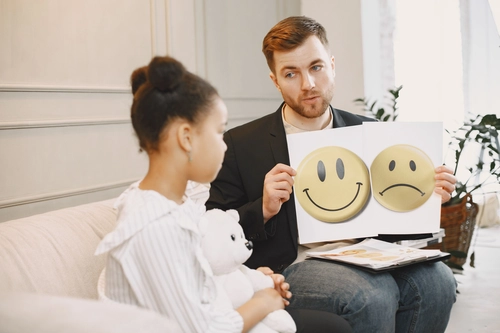
The 3-Question Reality Check
I started using this when my kids were little and I kept thinking “I’m a terrible parent” every time something went wrong. The feeling was so strong it seemed obviously true.
Then I stumbled onto a simple framework that changed everything. Three questions. That’s it.
Question 1: What’s the actual evidence?
Not the feeling. The hard facts. When I thought my partner was angry, the evidence was: he said three words. That’s all. Everything else was my interpretation. Emotional reasoning psychology fills gaps with assumptions. This question forces you to separate what happened from what you made it mean.
Question 2: Would this evidence convince a skeptical friend?
This is my favorite. Imagine explaining your conclusion to someone who doesn’t share your feelings. Would they nod along or squint suspiciously? “He said three words so our relationship is doomed” would get a squint from anyone. If the evidence wouldn’t persuade someone else, it shouldn’t persuade you.
Question 3: What else could explain this situation?
Your emotional brain fixates on one interpretation. This question forces alternatives. He could be tired. Preoccupied with work. Coming down with something. Lost in thought about nothing at all. The point isn’t finding the right explanation. It’s breaking the certainty that your first interpretation is correct.
I run these three questions whenever I catch emotional reasoning psychology at work. Half the time, my original story crumbles immediately. The other half, I still feel the feeling. But I stop treating it as truth.
Why Do Some Feelings Feel More True Than Others?
Some emotions carry more persuasive power. Anxiety, guilt, and shame are the heavy hitters. They feel urgent and physical. Your stomach tightens. Your chest constricts. That bodily sensation screams “this is real” in a way your thoughts can’t override.
I once spent an entire morning convinced I’d offended a friend. Replayed our conversation endlessly. Felt sick with guilt. Finally called to apologize. She had no idea what I was talking about. Zero. The entire drama existed only in my head.
Emotional reasoning psychology thrives on these intense feelings. The stronger the emotion, the more real it seems. But intensity doesn’t equal accuracy. Lightning feels powerful and dangerous. That doesn’t mean it’s aimed at you.
How Do I Explain Emotional Reasoning to Someone Else?
My daughter came home from school last week convinced everyone hated her. Two friends had lunch without her. She was devastated. The feeling was absolutely real. The conclusion wasn’t.
I didn’t tell her she was wrong. That would trigger reactance. Nobody likes being told their feelings are invalid. Instead, I said: “That feeling is so hard. Tell me what happened, just the facts.”
She described two friends sitting at a different table. That’s it. No mean looks. No exclusion. They just sat somewhere else.
I shared my kitchen story with her. The 11 p.m. panic about three words. She laughed, which broke the spell a little. Then we went through the three questions together. Evidence: they sat elsewhere. Would a skeptical friend be convinced? No. Other explanations: maybe the other table had an empty seat. Maybe they got caught up talking and didn’t notice.
Her feelings didn’t vanish. But they loosened their grip. She could hold the emotion without believing its story.
What’s the Difference Between Validating Feelings and Believing Them?
This distinction matters enormously. Validating feelings means acknowledging they exist and they’re real experiences. Believing them means accepting their interpretation of reality.
I can say to myself: “I feel anxious right now, and that’s genuinely uncomfortable.” That’s validation. I don’t have to add: “Therefore something terrible will happen.” That’s emotional reasoning.
Parents struggle with this constantly. We want to validate our children’s emotions. We also don’t want to reinforce false beliefs. The trick is separating the feeling from the story. “I see you’re really scared” validates the fear. “That shadow does look like a monster” validates the false belief. One helps. The other hurts.
Emotional reasoning psychology teaches us that feelings deserve acknowledgment without getting the final word on reality.
FAQ: Emotional Reasoning Psychology
Q: What is emotional reasoning psychology in simple terms?
A: Emotional reasoning is when you treat your feelings as proof of reality. “I feel anxious, so something must be wrong.” “I feel guilty, so I must have done something bad.” The feeling feels so real that you assume it’s telling the truth—even when there’s no evidence to back it up.
Q: How do I know if I’m using emotional reasoning?
A: Ask yourself: “What’s the actual evidence?” If the evidence is just “I feel like it’s true,” that’s emotional reasoning. Also check if you’ve stopped looking for other explanations. Emotional reasoning makes you certain you know what’s happening, even when you don’t.
Q: Why does my brain trust feelings more than facts?
A: Our brains evolved for survival, not accuracy. Your emotional brain reacts in milliseconds. Your rational brain takes seconds to catch up. By the time logic arrives, the feeling has already written the story. This worked well for running from predators. It doesn’t work as well for modern life.
Q: Can emotional reasoning affect my parenting?
A: Yes. Many parents think “I’m a bad parent” when their child has a meltdown or they lose their temper. The feeling is strong, but the evidence often shows something else—exhaustion, stress, or just a hard day. Using the 3-Question Reality Check can help you separate the feeling from the facts.
Q: What’s the difference between emotional reasoning and intuition?
A: Intuition is a pattern recognition system built from experience. It often has some evidence behind it, even if you can’t articulate it. Emotional reasoning is a shortcut that treats the feeling as the only evidence. If your gut feeling is based on past patterns you’ve seen before, it might be intuition. If it’s just “I feel scared so this must be bad,” that’s emotional reasoning.
One Last Thing
The night I first learned about emotional reasoning psychology, I sat in my kitchen and thought about all the stories I’d believed without question. All the anxiety I’d treated as prophecy. All the guilt I’d accepted as evidence of wrongdoing.
The feelings were real. The conclusions weren’t.
I can’t promise I’ll never get hijacked by emotions again. But now I know they’re just feelings. Not facts. And that knowledge has made all the difference.
References
- Leahy, R. L. (2015). The Worry Cure: Seven Steps to Stop Worry from Stopping You. Harmony Books.
- Linehan, M. M. (2014). DBT Skills Training Manual (2nd ed.). Guilford Press.
- Van Dijk, S. (2012). Calming the Emotional Storm: Using Dialectical Behavior Therapy Skills to Manage Your Emotions and Balance Your Life. New Harbinger Publications.
