You have a friend who is incredibly warm when you’re doing well.
They celebrate your wins, invite you out, and seem genuinely happy to have you around. They’re generous with their time, their attention, their energy. You feel valued.
But when things aren’t going so well? When you’re struggling, quiet, or going through something difficult?
They disappear.
Or maybe you’ve noticed something even subtler: they’re there when you can offer something—advice, connections, support, status—but strangely absent when you have nothing to give.
That’s when you start wondering:
Is this actually friendship, or is this relationship conditional?
Here’s the uncomfortable truth that most articles skip:
Not every friendship that changes is fake. The real question is what happens when the conditions change.

What Is a Conditional Friendship?
A conditional friendship isn’t necessarily a fake friendship. It’s a relationship where the closeness depends heavily on certain circumstances, benefits, roles, or expectations.
It often looks like this:
- You work together, and the friendship thrives—until one of you leaves.
- You provide emotional support, practical help, or career connections—and the friendship flourishes while you’re useful.
- You’re the one who always initiates, always plans, always checks in—and the friendship exists because you maintain it.
When the condition changes—the job ends, the help stops, you stop initiating—the relationship changes too.
But here’s the important distinction:
All friendships have conditions.
Distance, time, shared interests, life stage—these all affect how close we remain to people. That doesn’t make every friendship fake.
What’s worth paying attention to is when the relationship only seems to work when you fulfill a particular role.
Fake Friend vs. Conditional Friendship: What’s the Difference?
| Fake Friend | Conditional Friendship | Genuine Friendship |
|---|---|---|
| May deliberately manipulate you | Closeness depends on circumstances | Connection survives changing circumstances |
| Often interested in what they can get | Often connected through a specific need or role | Mutual interest in each other |
| May lie, exploit trust, or act with hidden motives | May simply drift away when your role changes | Makes room for changing circumstances |
| Boundaries may trigger hostility or resentment | Distance may appear when your function in their life shifts | Boundaries are generally respected |
| Relationship feels one-sided and often dishonest | Relationship feels situational—warm when conditions are right, cool when they’re not | Relationship has reciprocity over time |
Not every conditional friendship is malicious. Sometimes people simply discover that what connected them was more situational than personal.
And that is worth knowing—not so you can be angry, but so you can adjust your expectations.
7 Signs Your Friendship May Be Conditional
Here are the patterns that matter—not isolated moments, but repeated behavior.
1. They Are Much Warmer When They Need Something
When they need advice, connections, emotional support, money, work help, or social access, they’re suddenly very present. Interested. Engaged.
When they don’t need anything? The warmth fades.
2. They Celebrate Your Success but Disappear During Your Struggles
They’re happy to be around the successful, entertaining, useful version of you. But when you’re going through something difficult—when you’re not performing, achieving, or providing—they seem less available.
Do they only enjoy the version of you that is useful, successful, or easy to be around?
3. You Are Always the One Maintaining the Friendship
You initiate. You text first. You make plans. You check in. You resolve conflicts.
If you stop reaching out, the friendship quietly fades. They don’t notice. They don’t ask.
4. Their Interest in You Changes When Your Circumstances Change
You get promoted, and suddenly everyone wants to know you. You leave a company or a city, and suddenly no one checks in.
Does the relationship shift when your circumstances shift?
5. They Respect You When You Agree, but Treat You Differently When You Don’t
You disagree with them, express a different opinion, or make a choice they don’t approve of. Do they still treat you with respect? Or does the friendship suddenly become colder, more distant, less warm?
6. They Know Your Role, but Don’t Really Know You
They know you as:
- the person who listens
- the person who organizes
- the successful friend
- the helpful friend
- the funny friend
But they don’t know who you are when you’re not performing that role. They don’t ask about your struggles. They don’t remember what matters to you.
7. The Friendship Changes When You Stop Providing What It Was Built Around
This is the clearest sign of all.
It’s not that someone asks something from you. It’s what happens when you can no longer provide it.
If the relationship changes noticeably when you stop giving—stop being useful, stop initiating, stop being the person they need—then the foundation may have been more about what you provided than about you.
How to Tell If Someone Is a Fake Friend Without Becoming Suspicious of Everyone
One sign isn’t enough.
A friend who’s busy right now isn’t necessarily a fake friend. A friend who asks for help isn’t necessarily using you.
What matters is the pattern.
Look for patterns, not isolated incidents.
Look at reciprocity over time, not perfect equality in every moment.
Pay attention to what happens when circumstances change.
The Friendship Test
Here’s a practical tool. You don’t need to announce it or confront anyone. Just observe what happens in these four situations:
When you stop initiating: Do they reach out? Or does the relationship simply go quiet?
When you say no: Do they respect your boundary? Or do they push back, guilt you, or pull away?
When you have nothing to offer: Do they still contact you? Or does their interest fade?
When your life changes: Can they accept the new version of you? Or do they drift away?
You don’t need to test someone deliberately. Just stop over-functioning and observe what happens naturally.
If you’re starting to see these patterns clearly, you’re not being cynical—you’re becoming more accurate about what certain relationships actually are.
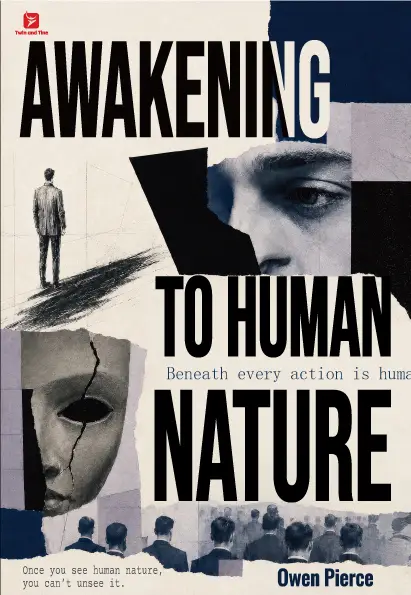
Awakening to Human Nature explores the deeper forces behind why people behave differently when circumstances shift: need, incentives, expectations, status, and loyalty.
Awakening to Human Nature
Owen PierceA practical guide to recognizing hidden motives and protecting yourself from manipulation.
Why We Mistake Conditional Friendship for Genuine Friendship
If you’ve stayed in a conditional friendship longer than you should have, it’s not because you’re naive. It’s because you’re human.
History. “We’ve known each other for years.”
Shared experiences. “We’ve been through so much together.”
Hope. “Maybe this is just a rough patch.”
Identity. “This is my best friend.”
Investment. “I’ve already given so much to this friendship.”
Sometimes we protect the label of the friendship because accepting the reality of the relationship would hurt more.
What to Do If You Realize a Friendship Is Conditional
1. Don’t confront someone based on one incident.
Observe first. See if the pattern repeats before you assume the worst.
2. Stop over-investing.
Don’t keep over-texting, over-helping, over-explaining, or over-giving to a relationship that isn’t reciprocal.
3. Let reciprocity reveal itself.
Step back. Give the friendship space to show what it’s made of. You don’t need to force it to prove itself—just give it room.
4. Adjust your expectations.
You don’t have to end the friendship. You can shift it from “close friend” to “work friend,” “social friend,” “occasional friend.” That’s not giving up. That’s being accurate.
5. Don’t take every change personally.
Some relationships are seasonal. That doesn’t mean they were never real. It just means they weren’t meant to last forever.
A Friendship Doesn’t Have to Last Forever to Have Been Real
Some friendships are real because they were meaningful for a particular season of your life.
People move. Priorities shift. Life changes. That’s not betrayal. That’s life.
But:
You don’t have to keep calling someone a close friend simply because they once were.
The Real Question Isn’t “Are They a Fake Friend?”
The more useful question is:
What is keeping this friendship alive?
Is it:
- shared history?
- genuine care?
- mutual interest?
- convenience?
- emotional dependence?
- what you provide?
Once you understand that, you stop asking whether someone is “good” or “bad”—and start seeing the relationship for what it actually is.
This is the broader question explored in Awakening to Human Nature: not simply whether someone is a “fake friend,” but what actually drives human behavior when circumstances change.
Start with the free sample and explore the ideas behind conditional loyalty, self-interest, and the motives that shape relationships.
Awakening to Human Nature
Owen PierceA practical guide for understanding hidden motives, social patterns, emotional pressure, and manipulation—so you can read situations more clearly and protect your boundaries with confidence.
Some friendships last. Some don’t. The goal isn’t to become suspicious of everyone. It’s to see the difference between the friendships that stay and the ones that only exist when conditions are right.