Finding a parenting book can feel surprisingly difficult. There are plenty of titles that promise to make parenting easier, but parents do not always need another list of rules to follow. Sometimes what they really need is a better way to understand what is happening at home.
A child refuses to cooperate, arguments keep happening over the same things, emotions suddenly take over a situation, or a parent realizes that their own reaction is becoming part of the problem. These moments are rarely as simple as they look from the outside, which is why the most useful parenting books tend to give parents a way to think rather than just a list of things to do.
The Parent You Aspire to Be by Miles Carter takes that broader approach. Instead of narrowing parenting down to one technique, one stage, or one type of behavior, it looks at the different pieces that shape everyday family interactions.
Parenting Problems Rarely Stay in One Category
A child may refuse to follow a rule, but that does not necessarily make the situation only a discipline problem. The same moment can involve frustration, emotional regulation, communication, independence, expectations, and the way the parent responds.
This is one of the reasons parenting can feel so difficult. You may think you are dealing with one issue, only to discover that it is connected to three others.
Take a familiar example: a child is asked to stop using a device and get ready for another activity. The child complains, the parent repeats the instruction, the child pushes back, and the parent becomes increasingly frustrated. The final argument may look like a simple problem with screen time, but the real interaction may involve much more than that.
The Parent You Aspire to Be encourages parents to look at these connections instead of immediately reducing the situation to “my child won’t listen.”
The Book Starts With Understanding, Not Blame
One of the most useful things about a parenting guide is the way it frames difficult behavior.
It is easy to become frustrated and start using labels. A child can seem stubborn, disrespectful, lazy, dramatic, or impossible to manage, especially when the same problem happens repeatedly.
But a label does not explain what is happening.
The Parent You Aspire to Be encourages a closer look at the behavior itself. What happened before the reaction? What was the child experiencing? What expectation was being communicated? How did the parent respond? What happened afterward?
Looking at those details does not mean excusing inappropriate behavior. It means giving yourself enough information to respond to the actual situation instead of reacting only to the emotion of the moment.
It Also Looks at the Parent
Parenting advice often focuses almost entirely on the child.
But parents are part of every interaction.
A parent who is tired may respond differently from a parent who feels calm. A parent who is worried about losing control may become stricter. A parent who feels guilty about saying no may give in more quickly. A parent who has repeated the same instruction ten times may eventually raise their voice even though they originally intended to stay patient.
These reactions are understandable, but they can become part of a recurring family pattern.
The Parent You Aspire to Be gives attention to parental emotional regulation and the habits parents bring into difficult moments. That makes the book useful for readers who are not only asking, “What should my child do differently?” but are also willing to ask, “What can I do differently?”
When the Same Problem Keeps Coming Back
One of the clearest signs that you may need a broader parenting perspective is when the specific problem keeps changing but the conflict feels strangely familiar.
The argument might be about homework on Monday, a morning routine on Tuesday, a family rule on Wednesday, and screen time on Thursday. The subject changes, but the sequence remains almost identical: request, resistance, repeated explanation, frustration, escalation.
At that point, finding another isolated tip may not be enough.
The Parent You Aspire to Be is built around the idea that these recurring situations are worth examining as patterns. When parents understand how behavior, communication, emotions, expectations, and reactions influence one another, they may begin to see why the same kind of interaction keeps returning.
That can be much more useful than memorizing another response for another specific problem.
A Parenting Book Should Work Beyond One Situation
A narrow parenting tip can be useful when you need help with one immediate issue. But family life does not stay in one category for very long.
The same child can have trouble with frustration, boundaries, communication, school responsibilities, and independence at different times. Parents also have to adjust as children grow and as family circumstances change.
That is why a broader book can have lasting value. Instead of giving you one answer that works only in one situation, it can give you a framework for thinking through new situations as they appear.
This is one of the strongest reasons to consider The Parent You Aspire to Be as a general parenting read. Its ideas are not limited to a single behavior or one particular stage of childhood.
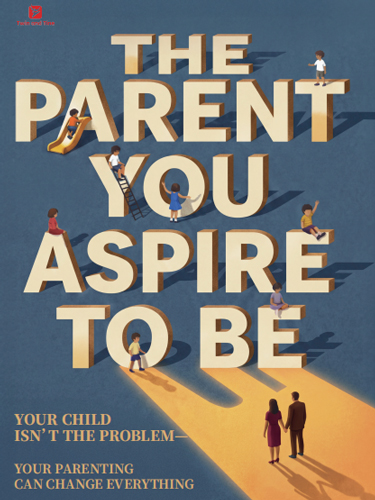
The Parent You Aspire to Be
Miles CarterPractical guidance for tantrums, backtalk, lying, screen addiction, emotional outbursts, and everyday parenting struggles.
The Book Encourages a Different Question
When a parenting situation becomes frustrating, the first question is often:
“How do I get my child to stop doing this?”
Sometimes a more useful question is:
“What is happening here, and what is keeping this pattern going?”
That small change in perspective can open up more options.
Maybe the expectation is unclear. Maybe the child is reacting to a loss of control. Maybe the parent is giving too many reminders. Maybe the behavior is connected to an emotional difficulty that has not been addressed. Or maybe the child simply needs a firm boundary and a consistent response.
You cannot know which response makes sense until you understand what you are actually dealing with.
When Parenting Advice Makes You Feel More Pressure
There is another reason parents can struggle to find the right book: some advice can make them feel as though they are constantly doing something wrong.
One method says to be stricter. Another says to be gentler. One approach emphasizes rules, another emphasizes connection. After reading enough advice, parents can end up feeling more confused than when they started.
A useful parenting book should not make you feel that every imperfect interaction is evidence that you are failing.
The Parent You Aspire to Be takes a more practical view. It recognizes that parenting involves difficult moments, strong emotions, mistakes, and situations where the right response is not immediately obvious.
The goal is not perfection. The goal is greater awareness and more intentional choices.
What You Can Take Into Everyday Family Life
The ideas in the book can be applied to many ordinary situations because they are centered on patterns rather than isolated scripts.
When a child becomes emotional, you can think about both the feeling and the behavior. When a child repeatedly resists a request, you can look at the interaction that has developed around that request. When you feel yourself becoming angry, you can recognize that your own reaction may influence what happens next.
That kind of awareness can change the way you approach parenting even before you have figured out a perfect solution.
You become less likely to treat every difficult moment as a completely new crisis, because you have a framework for understanding what may be happening underneath it.
Who May Get the Most From This Book?
The Parent You Aspire to Be is particularly relevant to parents who feel that they are constantly dealing with different problems and want a broader way to think about them.
It can also be useful for parents who have already tried plenty of individual tips but still feel stuck in recurring arguments or behavior patterns. Rather than adding another isolated technique to the pile, the book encourages a deeper look at the relationship between children, parents, emotions, communication, and expectations.
Most importantly, it is a book for parents who want to improve their own understanding rather than simply find a faster way to control a difficult moment.
Final Thoughts
A good parenting book should be something you can return to when family life changes, not something that becomes irrelevant after one problem disappears. It should help you understand difficult moments more clearly and make better decisions when there is no simple answer.
The Parent You Aspire to Be by Miles Carter takes that kind of long-term approach. It brings behavior, emotions, communication, parental responses, and everyday family dynamics into the same conversation.
For parents looking for a practical parenting book that goes beyond isolated tips and helps them think more carefully about what happens between parent and child, The Parent You Aspire to Be is a strong place to begin.