I used to believe routines required willpower. Every morning I would stare at my journal, then my phone, then the ceiling, waiting for motivation to arrive. It never did. I tried morning routines, evening routines, 30-day challenges. None of them lasted more than a week. The problem was never the habit itself. The problem was I kept trying to build them on empty air.
Then I stumbled onto a discussion where someone asked, “What’s one habit stack that actually stuck for you?” People shared tiny, almost laughably simple combos. Brushing teeth then drinking water. Coffee then journaling for five minutes. Walking the dog while listening to a podcast. These were not elaborate systems. They were just two things glued together. And somehow that glue was the difference between quitting and staying. I tried it. It worked. Not because I became more disciplined. Because I stopped relying on discipline entirely.
Quick Habit Stacking Today
If you’re ready to build habits that stick, try these:
- Identify one thing you already do every single day without fail.
- Attach a new tiny habit to it, something that takes under 2 minutes.
- Say the stack out loud: “After I , I will .”
- Track it for one week before adding anything else.
- Let the old habit carry the new one like a passenger on a train.
Why Do Habit Stacks Work When Regular Habits Fail?
The answer is simpler than I expected. Existing habits are like well-worn paths in your brain. They have already been paved. New habits are jungle. They require machetes and maps and constant attention. When you stack a new habit onto an old one, you are not clearing new trail. You are extending a path that already exists.
Think about brushing your teeth. You have done it thirty thousand times. Your brain does not negotiate whether today is the day. It just happens. Now imagine attaching a 2-minute tidy of the bathroom counter right after you brush. The brush becomes the trigger. The tidy becomes the automatic response. No decision required. No motivational speech needed. Just a chain that pulls itself forward.
One person described this perfectly. They started doing a quick bathroom tidy right after brushing, something that took maybe two minutes. “It sounds almost too small to matter,” they wrote. “But because I already never skip brushing, it became an easy anchor. Over time it weirdly added up to my space feeling less chaotic without ever doing a big cleaning session.” That is the magic. Small actions, carried by existing routines, compound quietly.
Another person stacked journaling onto their morning coffee. Eleven months later, the journal feels automatic. “Coffee hits the counter and my hand reaches for the notebook.” Eleven months. Not because they tried harder. Because the coffee did the remembering.
How Do You Create a Habit Stack That Actually Lasts?
There is a formula. It is almost embarrassingly simple. But skipping any part of it is why most stacks fail.
First, the anchor habit must be truly automatic. Brushing teeth. Making coffee. Walking in the door after work. Feeding the dog. Things you have done thousands of times. If you have to remember the anchor, the stack collapses.
Second, the new habit must be tiny. Not a 30-minute workout. Not a full gratitude journal. Something that takes 90 seconds or less. Floss one tooth. Write one sentence. Stretch one muscle. Do one pushup. The goal is not the result. The goal is never skipping.
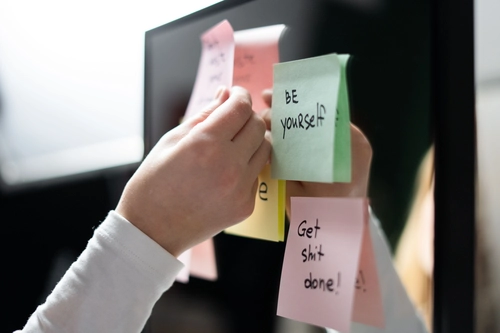
Third, you need a clear statement of the link. “After I pour my coffee, I will open my notebook and write one line.” Say it out loud the first few days. Write it on a sticky note near the trigger. After a week, your brain will not need the reminder. The coffee will feel incomplete without the notebook.
I learned this the hard way. I tried stacking a full 20-minute yoga session onto my morning alarm. It lasted three days. Then my alarm went off and I just lay there, negotiating. “Maybe later. Maybe tomorrow.” The new habit was too heavy. The anchor was too weak. The link was not clear enough.
What changed everything was shrinking the stack down to absurdity. After I brush my teeth at night, I stretch for one minute. Not a flow. Not a sequence. Just one stretch. That was 14 months ago. I have not missed a single night. Some nights I stretch longer. Some nights I just do the one. But the chain never broke. The stack was so light that skipping felt harder than doing.
Five Types of Habit Stacking Examples Worth Stealing
I collected these from real people and conversations. They fall into a few natural categories. Pick whichever anchor you already have locked in.
Morning Anchor Stacks
The morning is rich with automatic behaviors. Waking up. Using the bathroom. Brushing teeth. Making coffee. Toasting bread. Starting the car. Each one is a station where you can attach a lightweight carriage.
One person shared that after brushing teeth, they drink a full glass of water and stretch for a few minutes. Three tiny actions chained together. Teeth, water, stretch. That order never changes. It has been their morning ritual for over a year. Another started doing a 5-minute “reset” right after coffee, just opening Notes and deciding the one thing that would make the whole day feel like progress. They called it intentionally tiny. “The lighter version somehow stayed,” they said. “I did not start negotiating with myself about whether I had time.”
I borrowed that exact stack. After my first sip of coffee, I open my notebook and write one sentence about what matters today. Sometimes it is practical. Sometimes it is just a feeling I want to carry. The coffee is the trigger, not the mood. Moods are unreliable. Coffee is reliable.

Work Start Stacks
Sitting down at a desk is another powerful anchor. The moment your computer wakes up, you can attach a micro-habit.
One person shared: “When I start work, I plan my day, log food plan and track my goals.” That is three things stacked onto one moment: sit down, plan, log, track. The work start becomes a mini ceremony instead of a scattered beginning. The magic is not the list. It is the consistency of the moment. The stack makes starting work feel like a ritual instead of a demand.
I tried a version of this. After I open my laptop, I close every tab from yesterday. Fresh slate. Takes twelve seconds. But those twelve seconds tell my brain the work day has begun. No drifting. No residue from last night. The open laptop is the trigger. The tab closure is the reset.
Evening Wind-Down Stacks
Evenings are tricky because the anchors are less stable. Some nights you eat at six. Some nights at eight. But a few anchors are nearly universal. Brushing teeth. Getting into bed. Turning off the lights.
One person shared a wonderful stack: walking the dog and then brushing their teeth as one combined task. “It was so annoying to leave it unchecked that I just started doing it,” they admitted. Now it is a morning tradition. The dog even waits near the bathroom for his turn. What started as obligation became bonding.
Another person keeps it stunningly simple. Moving the body in the evening, eating one carb-containing food, and walking without a phone. No music. No podcasts. Just walking. “I Sleep Better. Actually.” That is the whole stack. Body, food, walk. They said they got more energy too, and actually happier. Three anchors. One chain. Life feels lighter.
Movement Stacks
Exercise habits are notoriously hard to build. But when you attach them to something already automatic, they become surprisingly easy.
One person combined daily cardio with buying a cheap wristwatch, and the watch killed two problems at once. The cardio reduced anxiety. The watch stopped mindless phone scrolling because they used to pull out the phone to check the time and would get sucked into apps. Now the wrist says the time and the phone stays in the pocket. That stack fixes physical health and digital health simultaneously.
Another person built a multilayered movement stack. Tracking steps. Listening to a podcast while walking. Recording their own podcast with personal lessons to replay during walks. And telling themselves “This is what it takes to have what you want” whenever something feels hard. The step tracking gave visible momentum during the day. The podcast made walks productive. The self-recording made sure they did not repeat old mistakes. The self-talk held everything accountable. Four layers stacked on one daily walk.
I borrowed a lighter version. After I put on my walking shoes, I tell myself “just ten minutes.” That is it. No step goal. No podcast requirement. Just ten minutes. The shoes trigger the permission to start small. Most days I go longer. But the ten-minute promise means I never skip.
Mindset and Reflection Stacks
Some of the best stacks have nothing to do with productivity or fitness. They are about staying grounded.
One person shared something that stopped me scrolling. Every day they take a walk and talk to their dad, who died a couple years ago. “Just me talking out loud like a crazy person but I know he listens.” That walk anchors grief, memory, and connection into one daily ritual. That is not a habit for efficiency. That is a habit for humanity.
Another person described identity-based self-talk stacked onto everyday decisions. When eating they ask, “What would a healthy person eat?” and then does that. When uncertain they ask, “What would a stable person do?” and then does that. The questions trigger identity shifts. The stack reframes decisions as alignment with the person they want to become. I have started asking myself that second question during anxious moments. It does not fix the anxiety. But it gives me a moment of pause where I remember I have choices.
Why Tiny Stacks Beat Ambitious Systems
Every failed routine I ever built had the same flaw. It was too ambitious. I tried to change everything at once. Journal, meditate, exercise, read, all in one morning. The first day felt heroic. The second day felt heavy. By day five, I was avoiding the whole stack because I dreaded the weight of it.
The stacks that stuck were the ones so small I could not talk myself out of them. Someone described this exactly. They attached a 5-minute reset to morning coffee, opening notes to decide one priority. “I tried stacking bigger routines before, like full journaling or planning blocks, but they kept breaking after a few days. The lighter version somehow stayed.” The key word is lighter. Light enough that resistance never forms.
My own stacks now follow that rule. After brushing teeth, floss one tooth. After pouring coffee, write one sentence. After putting on shoes, walk ten minutes. After closing the laptop, take one deep breath. These are not impressive. No one would applaud them. But they have lasted months and years, while my ambitious systems all died young.
FAQ: Habit Stacking Examples
Q: What are some simple habit stacking examples for beginners?
A: Start with something so small it feels almost pointless. After you brush your teeth, drink a glass of water. After you pour coffee, write one line in a notebook. After you start your car, take three deep breaths. The anchor must be automatic and the new habit must take under a minute. That is the beginner formula. Do not add complexity until the first stack has held for two weeks.
Q: Can habit stacking examples work for exercise and fitness?
A: Yes, but attach movement to something already daily. After you wake up, do one stretch. After you get home from work, walk around the block once. After you put on workout clothes, do one pushup. The barrier must be almost zero. Many people find that once they start with one pushup or one stretch, they naturally do more. But never demand more. Let “more” be optional. Consistency is the only goal.
Q: How many habit stacking examples should I try at once?
A: One. Exactly one. For at least two weeks. The fastest way to kill all your stacks is to start three of them simultaneously. Your brain cannot distinguish between a new stack and a new chore if you overwhelm it. Pick one anchor. Attach one tiny habit. Let it settle until it feels automatic. Then add another.
Q: What if my habit stacking examples keep failing after a few days?
A: The stack is too big or the anchor is not truly automatic. Shrink the new habit until it is laughably small. If you were trying to meditate for ten minutes after coffee, try meditating for one breath. Just one breath. If that feels ridiculous, good. Ridiculous is sustainable. Also check if your anchor is genuinely automatic. If you sometimes skip making coffee, it is not an anchor. Choose something you have not missed in years.
Q: How do I know when a habit stack has actually stuck?
A: When you no longer think about the link. The anchor triggers the new habit automatically. You might not even notice it’s happening. That is the goal—the stack should feel like a single action, not two separate things.
One Last Thing
That discussion sat with me for days after I read it. Not because of the productivity hacks. Because of the person talking to their dad on their daily walk. Because of the person asking what a stable person would do and then becoming that person one small choice at a time. Because of the dog waiting near the bathroom, expecting his turn, turning a chore into a quiet morning tradition together.
The best habit stacks are not about optimization. They are about remembering what already matters and giving it a small, steady place in your day. A walk. A sentence. A stretch. A conversation with someone you miss. Light enough to never skip. Heavy enough to shift your whole life over time.
References
- Clear, J. (2018). Atomic Habits: An Easy & Proven Way to Build Good Habits & Break Bad Ones. Avery.
- Duhigg, C. (2012). The Power of Habit: Why We Do What We Do in Life and Business. Random House.
- Fogg, B. J. (2020). Tiny Habits: The Small Changes That Change Everything. Houghton Mifflin Harcourt.
