I sat in a meeting years ago where a colleague kept telling us everything was fine. His words were smooth. His jaw was tight. His right foot tapped the floor like it was keeping time with a song only he could hear. I walked out knowing the project was in trouble. I was right.
That day stuck with me. How can body language influence communication? Simple. It can overrule every word a person says.
We like to think words carry the message. They carry part of it. The rest rides on posture, tone, and the small movements we make without noticing. Most of us never learned to read these signals on purpose. We just feel them. We sense when a room has turned cold.
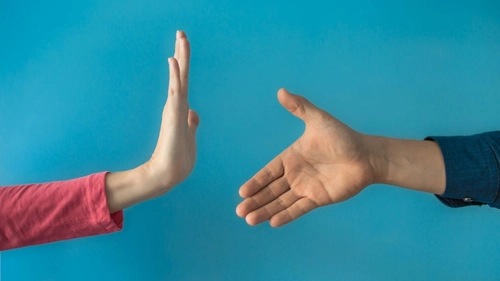
The Body Talks Before the Mouth Does
Think about the last time someone told you they were happy for you. Did you believe them? Maybe their smile arrived a second late. Maybe their eyes stayed flat while their mouth went up. Your gut caught it before your brain did.
Watch two people talk across a table sometime. Notice who leans in. Notice who crosses their arms. Notice whose shoulders drop when the other person speaks. The conversation is running on two channels at once, and only one of them uses words.
I learned this from my father. He rarely said “I’m proud of you.” He would stand in the doorway while I showed him a report card. Arms loose. Chin up a little. That was the whole message. It took me twenty years to get it.
One Sentence, Two Meanings
Take a simple line: “That’s interesting.”
Say it leaning forward with raised eyebrows. Sounds like real curiosity. Say it while glancing at your phone. Sounds like a brush-off. Same words. Different body. The meaning flips.
This is where nonverbal signals get powerful. They can repeat what our words say. They can contradict them. They can replace them entirely. A nod says yes without a sound. A step back says no without a word.
So what happens when the two channels disagree? People trust the body almost every time. If someone says “I’m listening” while checking a screen, we believe the screen. If someone says “I’m fine” with a clenched fist, we believe the fist. Mixed signals are where misunderstandings grow.
A lot of us get stuck here, reading the signals but never knowing what to do with them. That is the gap How to Read Someone’s Mind by Miles Carter fills. It walks through the cues we miss in daily conversation and shows you how to respond instead of just react. If you have ever caught a warning sign five minutes too late, that book is worth your time.

How to Read Someone’s Mind
Miles CarterPractical tools for reading body language, tone, and hidden intentions in real time. Spot what people aren’t saying — before you trust the wrong person.
Eyes, Hands, and the Way Someone Stands
Facial expressions come first. A small set of emotions shows up the same way on faces everywhere. Surprise. Happiness. Anger. Fear. Sadness. Disgust. You do not need a manual. You were born knowing.
Eye contact carries its own weight. Steady eye contact can signal honesty and interest. Hold it too long and it turns into pressure. Looking away is not always rude. Sometimes it means someone is thinking. Sometimes it means they feel exposed.
Gestures add texture. I talk with my hands constantly. My wife teases me about it. When I explain something I care about, my hands do half the work. Other people keep their hands still, and that stillness can read as calm or as distance, depending on everything else in the room.
Posture ties it together. How someone sits, stands, and carries their weight tells you whether they feel safe. Open shoulders tend to invite connection. A closed stance tends to build a wall. None of this is exact science. Bodies lie sometimes too. But the pattern is usually there if you slow down enough to see it.
What Screens Cost Us
The pandemic years changed how I read people. Masks covered the mouth, which is where a lot of expression lives. I found myself staring at eyebrows more. I realized how much I had been leaning on the lower half of a face without knowing it.
Video calls brought a different problem. I once spent an hour on a call feeling oddly disconnected. Then it hit me. I had been staring at my own face in the corner of the screen the whole time. I was not looking at anyone. I was watching myself. No wonder the conversation felt thin.
Screens flatten us. They cut off our hands. They freeze our posture into a small box. Here is what helped me. I sat up straighter. I kept my hands visible. I stopped watching my own thumbnail. Small changes, but the calls felt warmer after that.
The Three-Second Pause
Here is something simple to try. I call it the Three-Second Pause.
Before you respond to someone, wait three seconds. Not for drama. Not to seem wise. Just to watch.
In those three seconds, ask three quiet questions. Where are their shoulders? Where are their eyes? What is their voice doing, the tone, the pace, the small cracks in it?
That’s it. Three seconds, three questions.
I started doing this with my daughter during her teenage years. She would say “school was fine” in a flat voice with her arms folded and her eyes on the floor. Before the pause, I would have taken “fine” and moved on. After the pause, I learned to say something softer. “Okay. Want to sit for a minute?” Sometimes she did. Sometimes she didn’t. But the door stayed open, and that mattered more than any single talk.
The pause works in meetings too. It works at dinner with your partner. You are not analyzing anyone. You are just paying attention a beat longer than usual.

When You Get It Wrong
You will read people wrong. I do it all the time. I once assumed a quiet coworker was angry with me for a week. She was just wrecked from a newborn at home. I built a whole story out of shoulders and silence, and the story was fiction.
So hold your readings loosely. Treat them as questions, not verdicts. If something feels off, just ask. “You seem a little far away today. Everything okay?” That sentence has saved me more times than any skill I have learned.
The goal is not to become a mind reader. The goal is to stay curious about the person in front of you. Bodies are always talking. Most of us are only half listening.
What I Keep Coming Back To
I think about that colleague with the tapping foot. I never asked him what was wrong. I read the signals and quietly adjusted my plans. It worked out. But I have wondered since what would have happened if I had just said, “Hey, you seem tense. Want to talk?”
How can body language influence communication? It shapes what we hear, what we trust, and what we remember. It can build a bridge in seconds. It can burn one down just as fast. And most of it happens below the surface, in the tilt of a head, the weight of a pause, the way someone’s eyes soften when they finally feel understood.
Next time you talk with someone, try the three seconds. Watch a little longer. Ask a little gentler. You might be surprised by how much was being said all along.

