My daughter stood in the pasta aisle, one hand clamped on the shopping cart, the other pointing at a box of penne. “Why is that pasta?” she asked. I opened my mouth, closed it. Then: “Why do we need pasta?” I started explaining dinner plans, but she was already three questions ahead. “Why is it shaped like that? Why does it go soft in water? Why do we eat?” I felt that familiar tightness in my chest, the one that comes when you have no answer and not enough coffee. I mumbled something about cooking later and pushed the cart forward. She just asked again, louder.
Here’s the truth. If your child has hit the “why” phase, you are not failing. Around age four, most kids start firing off “why” questions not just to learn, but to connect. They’re building the mental muscle that links cause and effect. The problem is, we often freeze up because we think we need the perfect answer. But teaching your child to answer “why” questions for themselves, with your help, is what actually calms the chaos. Some speech-language pathologists use a step-by-step framework to do exactly that, and I’ve adapted it into something you can try at home.
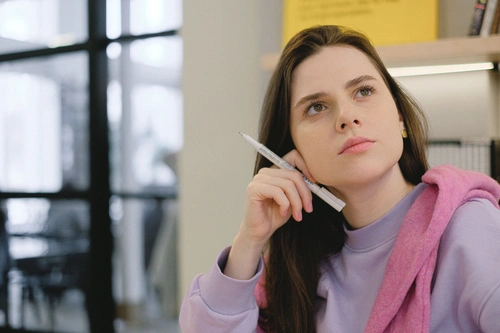
Why Kids Ask “Why” Nonstop and How to Answer Kids Why Questions Without Losing It
There’s a reason your child fixates on one word. “Why” questions are hard. They’re abstract. When you ask “what’s that?” the answer is a concrete object. “Why” requires understanding function, motivation, or a hidden rule. Kids often hit a wall because they haven’t yet separated these categories. A child might ask “why do we sleep?” and genuinely not know if you mean the biological reason or because you said so. So your first job isn’t to explain. It’s to help them figure out what kind of “why” they’re even asking.
This gets easier once you see the pattern. I remember a morning when my son asked, “Why does the toaster pop?” I started talking about springs and heat elements, but he was actually asking, “Why do we need it to pop?” His question was about function, not mechanics. The moment I reframed it as “because we want the toast to come out so we don’t burn our hands,” he nodded and moved on. That’s the root: kids need us to break down “why” into something they can hold. And when we do, the daily barrage turns into a conversation.
How to Answer Kids Why Questions with a 4-Step Roadmap That Actually Works
I borrowed this from a structured speech therapy curriculum. It’s not clinical. It’s just a way to scaffold answers so your child builds confidence instead of getting stuck. You don’t need materials or a quiet room. You can start on the couch.
Step one: function questions. These are the easiest. Ask your child “why” about everyday objects: “Why do we use a fork?” or “Why do we go to the grocery store?” The trick is to model the word “because” every time, even if you have to answer for them at first. “Because we need to buy food.” You’re giving them a template they can borrow.
Step two: people’s motivations. Once they grasp function, move to why someone did something. This takes more brainpower because they have to step into another person’s shoes. Use a story from their own life. Last week, I described what happened when my daughter hid her carrots under the napkin. I acted out the scene with her stuffed bunny and asked, “Why did she put the carrots there?” She giggled and said, “Because she didn’t want to eat them.” You can do this with picture books or just recount a silly moment from the day. The key is to give them the scenario and then wait. If they’re stuck, whisper, “Hmm, maybe because…” and let them finish.
Step three: hypothetical questions. Here you stretch their reasoning. Ask things like, “Why do we wear shoes?” or “Why do plants need light?” These are questions they might never have thought about. Lead them with hints. If they can’t answer “Why do we wear shoes?” try, “What happens if you run on the sidewalk barefoot?” or “Remember when you stepped on a hot pebble?” You’re not quizzing them. You’re building a joint puzzle where the answer becomes their own discovery.
Step four: mixing it into real talk. This is the step that saved our car rides. Once they can handle these types of “why” questions in a calm moment, you start slipping them into daily chatter. At the playground you pause and ask, “Why do you think the swing stops moving?” During dinner: “Why did the character in that movie get upset?” The goal isn’t to test knowledge. It’s to make answering “why” feel natural, so when they later face a teacher’s question or a social puzzle, the response doesn’t hit a wall.
The “Because Bridge” Ritual: A Simple Way to Answer Kids Why Questions Together
I gave our practice a name: The Because Bridge. Every time we hit a “why,” we stop and build a bridge from the question to the answer using the word “because.” The ritual goes like this: my child asks “why” about something. I smile and say, “Let’s build a because bridge.” Then I mirror the question back in a way that matches one of the four steps. If it’s a function question, I gesture toward the object. “Why do we use a spoon?” I take a spoon and scoop imaginary soup. “Because…?” She fills in: “…I need to eat.” If it’s a motivation question, I link it to a feeling. “Why did Daddy sigh?” “Because he’s tired.” The ritual lowers the pressure. It becomes a game with a predictable pattern, and within a few weeks, she started answering “why” questions before I even prompted her.
What to Do When They Just Keep Asking “Why” After You Answer
This is the loop that can feel like torture. You answer “because it’s bedtime,” and they fire back, “Why?” I learned to pause and classify the question. If it’s still about function, I offer a short answer again. But if they’ve shifted into a new type of “why”—say, they’re now asking about fairness or motivation—I switch gears. “Oh, you’re asking why bedtime is now, not what bedtime does. Let’s bridge that: Because your body needs rest to play tomorrow.” Naming the shift helps them feel heard, and it often breaks the loop.
Using Books to Practice How to Answer Kids Why Questions
Books are gold for this. Any picture book with a character feeling something works. Read a page, then pause at a moment of decision. “Why did the dog hide his bone?” If the child can’t answer, flip back a page and point to the clue. “Look, another dog is watching. What might happen?” This technique, which mirrors what many speech therapists recommend, moves them from memorizing a story to genuinely understanding plot. Over time, you can shift to asking hypotheticals: “Why do you think dogs like bones anyway?” That one always gets my son inventing elaborate dog theories.
When Your Child Answers Wrong (or Says “I Don’t Know”)
The first dozen times my daughter said “I don’t know,” I wanted to just give her the answer. Instead, I learned to start with a smile and say, “Let’s be detectives.” Then I’d break the “why” into smaller clues. One time she had no idea why we use an umbrella. I asked, “What happens to your hair when it rains?” She touched her head and said, “It gets wet.” Then I asked, “So why do I open this?” She nearly shouted, “Because you don’t want wet hair!” The wrong answer isn’t a failure; it’s the beginning of the bridge. You just need to hand them one plank at a time.

FAQ: Quick Answers to Common Worries
When should a child be able to answer “why” questions?
Most kids start answering simple function “why” questions around age 3 to 4. By kindergarten, they usually handle motivation and basic hypotheticals. If your four-year-old struggles, try the four steps above before worrying.
What are the best activities to teach my child to answer why questions?
Use everyday objects for function (“why do we need a fridge?”), act out silly scenes for motivation, and ask pondering questions during bath time or car rides. The “Because Bridge” game works anywhere.
Why does my child keep asking “why” even after I give a clear answer?
Often they are not satisfied with the answer type. They may have shifted from function to a deeper reason, like fairness or emotion. Try to mirror back what you think they’re really asking: “Are you asking why it’s fair or why we do it?” This can stop the loop.
How can I help my child answer “why” questions about their own behavior?
Wait until the moment is calm. Replay what happened with toys or draw a quick stick-figure comic. Ask, “Why do you think you threw the block?” Then guide them with “because” and a feeling word. Never ask when they are still upset.
One last thing. That day in the pasta aisle, after I caught my breath, I knelt down and said, “Why do we need pasta? Because we’re building a because bridge.” She looked at the box and said, “Because we are hungry!” I don’t know if she really understood, but for a second, the loop quieted, and I saw her trying to puzzle it out. That’s the whole thing. Not having all the answers, but standing on the bridge together, building it one “because” at a time.
