Anxious thinking can make even simple situations feel complicated. One thought leads to another, a small uncertainty becomes a long list of possible problems, and the mind keeps searching for answers long after there is anything useful left to solve.
The difficult part is that anxious thinking can feel productive while it is happening. People may believe they are preparing for possible outcomes or protecting themselves from mistakes, but repeated mental checking often creates more tension instead of greater certainty. Learning how to recognize this pattern is an important step toward changing it.
Notice When Thinking Becomes a Cycle
The first step is recognizing the difference between useful thinking and repetitive anxious thinking. Solving a real problem usually leads toward a decision or action, while anxious thinking often sends you back to the same questions without producing anything new.
Pay attention to thoughts that repeatedly begin with “what if,” “what if I had,” or “what if something goes wrong.” When the same concern keeps returning without new information, that can be a sign that the mind has moved from problem-solving into a cycle.
Stop Treating Every Thought as a Problem to Solve
Not every thought requires an answer. Sometimes the mind produces a possibility simply because uncertainty feels uncomfortable, not because there is an actual problem that needs immediate attention.
Learning to notice a thought without automatically following it can create more mental space. Instead of asking whether every possible outcome can be prevented, try asking whether there is a practical action you can take right now.
Focus on What You Can Control
Anxiety often grows when attention stays fixed on things that cannot be predicted or controlled. Future conversations, other people’s reactions, and countless possible outcomes can consume a great deal of mental energy when the mind keeps trying to guarantee certainty.
A more useful approach is to separate what is within your control from what is not. You can control your preparation, your choices, and your responses, but you cannot completely control every future event or another person’s behavior.
Create a Pause Before Reacting to Worry
Anxious thoughts can trigger immediate emotional reactions. Before acting on those feelings, create a small pause and give yourself time to assess what is actually happening.
This pause does not need to be complicated. Taking a few breaths, writing down the concern, or simply stepping away from the thought for a moment can make it easier to distinguish an immediate problem from a fear about what might happen.
Learn to Recognize Your Personal Anxiety Patterns
Everyone has different triggers and habits. Some people repeatedly analyze conversations, while others worry about making decisions, future situations, or things that have already happened.
Break the Anxiety Circle by Miles Carter encourages readers to recognize these repeating patterns rather than treating every anxious moment as something completely separate. When you understand how your own cycle works, it becomes easier to notice when you are entering it and choose a different response.
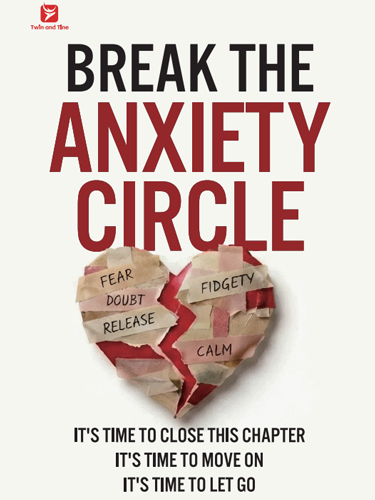
Break the Anxiety Circle
Miles CarterA mental reset for people trapped in the overthinking loop. Understand why your mind won’t stop racing — and how to break free from anxiety, people-pleasing, and emotional exhaustion.
Why Breaking Anxious Thinking Takes Practice
Changing a long-standing mental habit rarely happens instantly. The goal is not to stop every anxious thought from appearing, because thoughts will naturally come and go.
The more realistic goal is to change what happens after the thought appears. With practice, you can become better at recognizing repetitive worry, creating distance from it, and returning your attention to what is actually happening in the present.
How Break the Anxiety Circle Can Help
Break the Anxiety Circle by Miles Carter focuses on the repeating patterns that can keep anxious thinking active. Rather than treating worry as a collection of unrelated problems, the book encourages readers to look at the cycle connecting thoughts, emotions, and reactions.
For anyone learning how to break anxious thinking, the book provides a practical perspective on recognizing those patterns and developing healthier ways to respond.