I was stuck. I had watched every motivational video on YouTube. I nodded along to the speeches about discipline and grit. But when it came time to open that textbook? Nothing. I could not do it. Meanwhile I was at the gym three times a week with my neighbor. Sweating, laughing, showing up without fail. Why could I stick to one habit and not the other? I needed to figure out how to build a habit that actually stuck. The gym worked because I had a friend. Studying didn’t. That tiny difference showed me everything I was doing wrong.
Quick Habit-Building Tips Today
If you’re struggling to make a habit stick, try these:
- Start with a ridiculously small version of the task.
- Attach the new habit to something you already do every day.
- Stop relying on motivation. Build a small system instead.
- Tell a friend your exact plan and ask them to check in.
Why Did Motivation Videos Fail Me Completely?
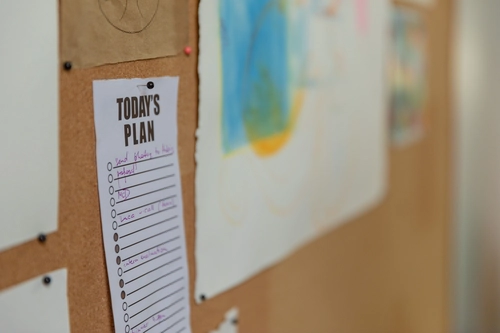
I consumed hours of self-discipline content. And it felt good in the moment. I’d get a rush. I’d tell myself, “Tomorrow I’ll study for three hours.” Then tomorrow came and I’d scroll on my phone. Sound familiar? The problem is that motivation spikes and then fades. It’s like a sugar high. It cannot sustain a daily practice. What sustains a habit is a tiny, repeatable action that requires almost no willpower. I realized I was trying to leap from zero to marathon. No wonder I crashed.
The Tiny Step That Unlocked Everything
A fellow parent at school pickup told me about the “two-minute rule.” She said she started flossing just one tooth. That’s it. After a week, she was flossing them all without thinking. I decided to try it with studying. My new plan: open the textbook and read one paragraph. That’s my whole session. I didn’t need to understand it. I just needed to open the book. The first day I read that paragraph and closed the book. The second day I read two. By day five I was reading half a chapter without force. This is how you build a habit. You shrink it until your brain stops fighting back.
A Simple Anchor That Made It Automatic
I gave this practice a name so my scattered parent brain could remember it. After I pour my coffee each morning, I sit at the desk and read for two minutes. The coffee is the cue. The reading is the anchor. This technique is called “habit stacking,” and it works like glue. I do not decide to study. The coffee decides for me. Some days I read longer. Some days I literally read one sentence. The anchor holds. What happened? Studying stopped feeling like a mountain. It became as automatic as putting on the kettle.
How I Built Accountability Like a Gym Buddy for Studying
My gym habit stuck because of my neighbor. Without her, I’d skip half the workouts. So I borrowed that same muscle for studying. I texted my sister: “I’m going to read for five minutes every morning after coffee. I’ll send you a thumbs-up emoji when I’m done.” She agreed to be my accountability partner. That tiny check-in changed everything. I didn’t want to admit I hadn’t done it. Some days the only reason I opened the book was to earn that emoji. Over time, the habit built its own momentum. An accountability partner doesn’t need to study with you. They just need to know what you promised yourself.
Who Do You Want to Become?
One afternoon I asked myself a harder question. Not “What habit should I build?” but “Who is the person I want to be?” I wanted to be a parent who modeled curiosity. A person who learns things just because they matter. When I saw studying as an expression of that identity, the resistance softened. Every opened book was a vote for the person I wanted to become. That shift, more than any tactic, made the habit feel natural. It wasn’t willpower anymore. It was just me being me.
FAQ: How to Build a Habit
Q: How long does it really take to build a habit?
A: It varies wildly. Some research suggests an average of 66 days, but I stopped counting. Focus on repeating the tiny action, not the calendar. My study anchor felt automatic after about three weeks of never missing.
Q: Can a two-minute habit really change anything?
A: Yes, because it builds the identity of someone who shows up. Once the pattern is set, you naturally increase the time. The first step is always the hardest. Shrink that step and you win.
Q: What if I miss a day? How do I recover?
A: Never miss twice. That’s the only rule I gave myself. If life explodes and I miss a morning, I do the anchor later in the day, even if it’s just 30 seconds. Skipping once is a blip. Skipping twice starts a new pattern.
Q: I have ADHD and habit advice never seems to work. What now?
A: Some brains need more novelty and immediate rewards. Try gamifying your anchor with a points app or changing your study location weekly. Experiment with what feels engaging, and don’t blame yourself for struggling.
Q: Does habit stacking work with unpredictable parenting schedules?
A: Yes, but pick a rock-solid anchor. Something you do no matter what: brushing teeth, pouring coffee, buckling the seatbelt. Attach your new habit to that guaranteed moment. The stack survives chaos because the anchor is automatic.
One Last Thing
I still have days when the textbook feels like a brick wall. But now I know the secret isn’t more motivation. It’s a two-minute anchor and a text to my sister. The studying got done, little by little. And somewhere along the way, I became the person who studies. That’s the quiet magic of building a habit.
References
- Clear, J. (2018). Atomic Habits: An Easy & Proven Way to Build Good Habits & Break Bad Ones. Avery.
- Fogg, B. J. (2019). Tiny Habits: The Small Changes That Change Everything. Houghton Mifflin Harcourt.
- Duhigg, C. (2012). The Power of Habit: Why We Do What We Do in Life and Business. Random House.
